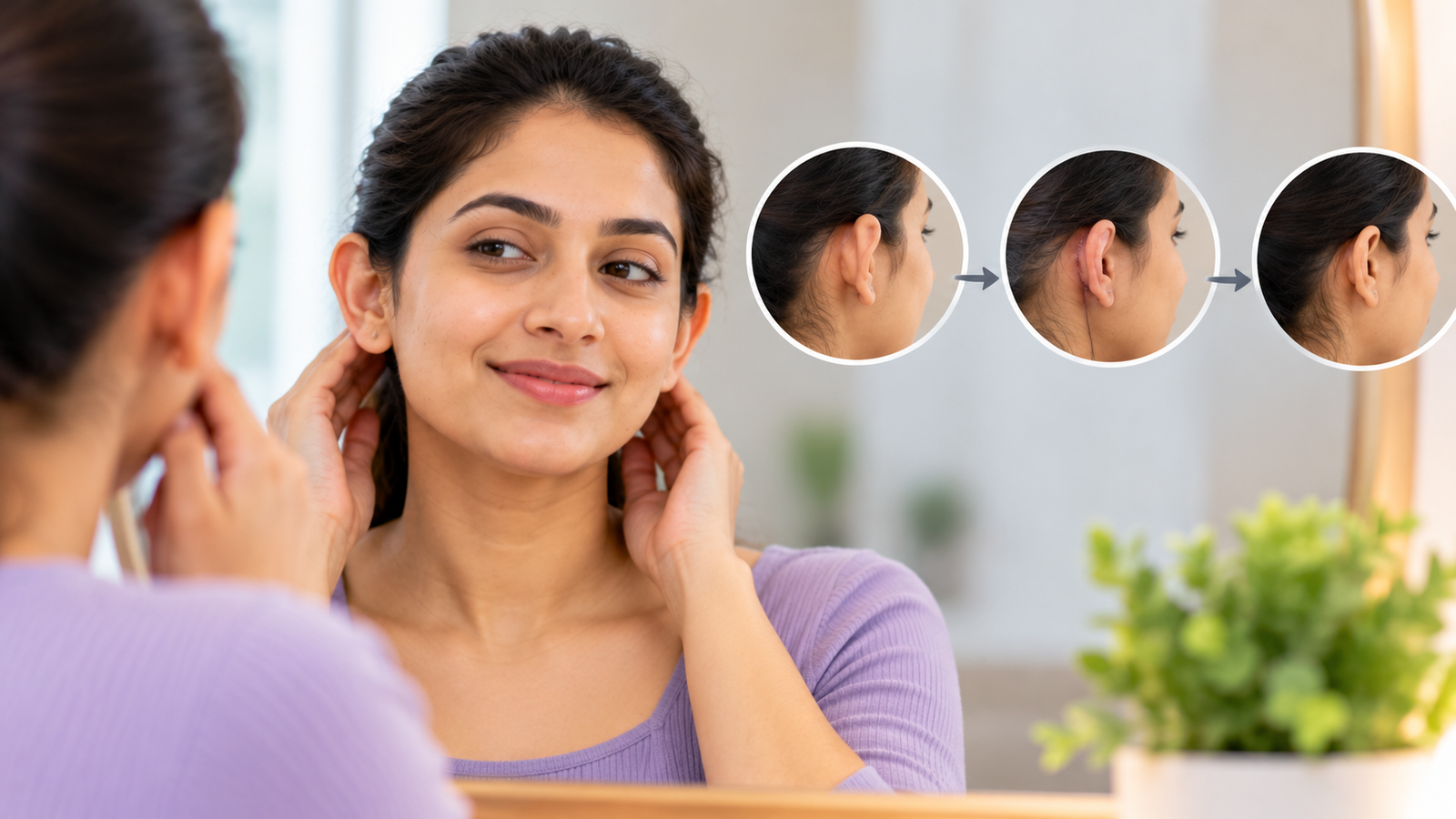

Headband After Otoplasty: Why and How Long
A headband after otoplasty helps protect the ears from accidental bending, pulling or pressure while they heal. Many surgeons recommend an initial protective dressing followed by a soft headband, particularly during sleep. The duration varies, but nighttime use for several weeks is common. Your surgeon's instructions should always determine when and how to wear it.
Patients planning ear correction surgery often ask whether they must wear a headband all day, how tight it should be and when they can sleep without one.
Understanding the purpose of postoperative ear protection can help patients manage recovery more comfortably and avoid unnecessary pressure on healing tissues.
Why Do You Need a Headband After Otoplasty?
Otoplasty, also called ear pinning or ear reshaping surgery, changes the position or shape of the external ears.
Depending on the technique, the surgeon may reshape cartilage, create folds or use internal sutures to maintain the corrected ear position.
During the early healing period, the ears may be swollen, tender and vulnerable to accidental trauma.
A headband after otoplasty may be recommended to:
-
Protect the ears from accidental folding during sleep.
-
Reduce the risk of pulling or catching the ears on bedding.
-
Help patients avoid pressure or trauma to healing tissues.
-
Provide gentle external protection after the initial dressing is removed.
-
Remind patients to be cautious during recovery.
A headband does not replace the internal sutures or surgical correction. It should not be relied upon to force the ears into a new position.
For an overview of the procedure, read the otoplasty surgery guide.
How Long Should You Wear a Headband After Otoplasty?
The recommended duration depends on the surgical technique, the patient's age, the surgeon's protocol and the progress of healing.
Some surgeons use a bulky postoperative dressing for the first several days and then recommend a soft headband at night.
Others may recommend more frequent headband use during early recovery.
|
Recovery Period |
Common Headband or Dressing Advice |
|---|---|
|
First 24–72 hours |
A surgical dressing may remain in place, depending on the procedure |
|
Days 3–7 |
The surgeon may remove or change the initial dressing and recommend a soft headband |
|
Weeks 1–2 |
Daytime or nighttime protection may be recommended according to the surgeon's instructions |
|
Weeks 3–4 |
Some patients continue wearing a headband while sleeping |
|
Weeks 4–6 |
Nighttime protection may continue in selected cases |
|
After 6 weeks |
Many patients no longer require a headband, although individual instructions vary |
Important: This is an illustrative timeline, not a universal protocol. Some patients need shorter or longer protection, and some surgeons use different dressing techniques.
Never remove the initial surgical dressing earlier than instructed.
Do You Need to Wear the Otoplasty Headband All Day?
Not necessarily.
The need for full-time headband use depends on the stage of recovery and the surgeon's instructions.
During the First Week
Patients may have a protective surgical dressing rather than a removable headband.
The dressing may cover both ears and help protect the surgical area.
It should remain in place until the surgeon advises removal or replacement.
During the Second Week
Some patients transition to a soft, removable headband.
Depending on the surgeon's protocol, it may be worn during the day, at night or both.
After the Initial Healing Period
Nighttime headband use is commonly recommended because patients cannot control their sleeping movements.
A headband may help prevent the ears from folding forward against the pillow.
However, patients should not assume they can discontinue daytime protection without medical clearance.
What Is the Difference Between an Ear Surgery Bandage and a Headband?
An ear surgery bandage and a postoperative headband serve related but different purposes.
|
Feature |
Surgical Ear Bandage |
Otoplasty Headband |
|---|---|---|
|
Purpose |
Covers and protects the surgical area |
Helps protect healing ears from accidental bending |
|
Material |
Surgical gauze, padding and bandaging materials |
Soft, flexible fabric |
|
Application |
Usually placed by the surgical team |
May be removable when permitted |
|
Timing |
Commonly used immediately after surgery |
Often introduced after the initial dressing |
|
Removal |
According to surgeon's instructions |
According to the prescribed wearing schedule |
Patients should not replace a surgical dressing with a regular headband unless the surgeon has specifically approved the change.
What Type of Headband Is Best After Otoplasty?
A postoperative headband should be comfortable, soft and appropriately fitted.
The surgeon may provide a specific headband or recommend suitable characteristics.
Features to Look For
-
Soft, breathable fabric
-
Sufficient width to cover the ears
-
Gentle and even support
-
No hard seams pressing against incisions
-
No excessive tightness
-
Easy application without pulling the ears
-
Washable material, when appropriate
A sports-style sweatband may be suitable in some cases, but not every commercially available headband is appropriate after surgery.
Patients should confirm the recommended type before purchasing or using one.
How Tight Should a Headband After Otoplasty Be?
A headband after otoplasty should generally feel secure without creating painful pressure.
It should not:
-
Cause throbbing or increasing pain.
-
Produce deep pressure marks.
-
Fold the ears into an unnatural position.
-
Rub against healing incisions.
-
Cause numbness or changes in skin colour.
-
Interfere with comfort or sleep.
Excessive compression may irritate healing tissues and should be avoided.
If the headband repeatedly slips off, feels too tight or causes discomfort, contact the surgical team for advice rather than making major adjustments yourself.
How Should You Sleep With a Headband After Otoplasty?
Sleeping comfortably is an important part of otoplasty aftercare.
During the early recovery period, patients are commonly advised to avoid direct pressure on the operated ears.
Sleep on Your Back When Recommended
Back sleeping may reduce the likelihood of pressing an ear against the pillow.
Some patients find that sleeping with the head slightly elevated is more comfortable during the first few days.
Avoid Folding the Ears
When turning in bed, take care not to bend or trap the ears against the pillow.
A properly fitted headband may offer protection, but it does not eliminate every risk.
Keep the Headband in Position
If the surgeon has recommended nighttime use, put the headband on as instructed before going to sleep.
Do not pull it tightly across the ears.
Follow Individual Sleeping Instructions
The appropriate sleeping position and headband schedule depend on the procedure.
Patients who undergo extensive cartilage reshaping may receive different advice from those having a more limited correction.
Can You Remove the Headband for Bathing or Washing Your Hair?
Removal depends on the surgeon's instructions.
During early recovery, incisions and dressings may need to remain dry.
Patients should ask their surgical team:
-
When the first hair wash is permitted.
-
Whether the headband can be removed for bathing.
-
How to clean around the ears.
-
When shampoo may contact the incision.
-
How to dry the ears safely.
-
Whether the headband should be washed or replaced.
Avoid soaking the ears, scrubbing incisions or using unapproved products during early healing.
What Happens if You Stop Wearing the Headband Too Early?
Stopping the headband earlier than recommended may expose healing ears to accidental bending or pressure, particularly during sleep.
Potential concerns include:
-
Increased irritation from contact with pillows.
-
Accidental pulling or folding of the ears.
-
Discomfort around healing incisions.
-
Trauma to the surgical area.
However, missing one night does not automatically mean the surgical result will change.
If you accidentally forget to wear the headband, resume the prescribed schedule and contact your surgeon if the ear has been injured, becomes painful or changes position unexpectedly.
Do not attempt to correct a perceived change in ear shape by applying tighter compression.
Can a Headband Prevent the Ears From Becoming Prominent Again?
A headband may protect healing ears, but it cannot guarantee that the ears will maintain their corrected position.
Long-term results depend on factors such as:
-
Ear cartilage characteristics
-
Surgical technique
-
Internal suture stability
-
Individual healing
-
Scar formation
-
Postoperative trauma
Recurrence of ear prominence is a recognised possibility after otoplasty.
The headband is one part of postoperative protection rather than a substitute for appropriate surgical technique.
Patients considering ear correction in adulthood can also read Otoplasty for Adults: Is It Ever Too Late?.
Is Wearing a Headband After Otoplasty Painful?
A properly fitted headband should not cause significant pain.
Mild tenderness is common because the ears remain sensitive after surgery.
Patients may initially notice:
-
Gentle pressure around the ears
-
Mild tightness
-
Temporary skin sensitivity
-
Discomfort when adjusting the headband
These symptoms should generally improve as healing progresses.
Persistent or increasing pain may indicate excessive pressure or another postoperative concern.
For more information about expected discomfort, see Is Otoplasty Painful? What Recovery Feels Like.
Can Children Wear a Headband After Ear Surgery?
Yes. Children may be advised to wear a protective headband after otoplasty, depending on the surgeon's instructions.
However, children may require additional supervision because they can accidentally pull at dressings or remove a headband during sleep.
Parents and caregivers should:
-
Use only the recommended headband.
-
Check that it fits comfortably.
-
Avoid overtightening.
-
Help the child follow the wearing schedule.
-
Watch for irritation or increasing pain.
-
Attend scheduled follow-up appointments.
Parents should also ask when their child can return to school, sports and other activities where the ears might be bumped.
When Can You Stop Wearing a Headband Completely?
The decision to stop wearing a headband after otoplasty should be based on the surgeon's assessment.
During follow-up, the surgeon may evaluate:
-
Incision healing
-
Swelling
-
Ear position
-
Tenderness
-
Cartilage stability
-
Any signs of complications
Some patients may discontinue the headband within a few weeks, while others may be advised to continue nighttime protection for longer.
Avoid relying on an online timeline alone to decide when to stop.
Other Important Otoplasty Aftercare Instructions
Headband use is only one part of ear surgery recovery.
Other common postoperative precautions include:
Avoid Pressure on the Ears
Do not deliberately bend, pull or manipulate the ears during healing.
Limit Strenuous Activities
Heavy exercise and contact sports may need to be avoided for several weeks.
Take Medication as Prescribed
Follow instructions for pain medication and any other prescribed treatment.
Protect Healing Incisions
Keep the surgical area clean and dry according to the postoperative care plan.
Avoid Smoking and Nicotine
Nicotine can impair blood circulation and wound healing.
Attend Follow-Up Appointments
Follow-up visits allow the surgeon to monitor healing and address concerns.
Patients planning surgery can also review Preparing for Facial Cosmetic Surgery.
When Should You Contact Your Surgeon?
Some swelling, bruising and tenderness are expected after ear correction surgery.
However, certain symptoms require prompt medical assessment.
Contact your surgical team urgently if you notice:
-
Severe or increasing ear pain
-
Sudden swelling or a rapidly enlarging lump
-
Persistent bleeding
-
Fever
-
Spreading redness
-
Pus or unusual discharge
-
Skin becoming unusually dark or pale
-
A headband causing significant pressure or skin injury
-
Sudden changes in ear position following trauma
Do not simply tighten the headband to manage swelling or changes in ear shape.
Otoplasty Recovery Guidance From Dr. Ashutosh Shah
At Elegance Clinic, Dr. Ashutosh Shah discusses ear correction techniques, protective dressings, headband use and individual recovery instructions with patients considering otoplasty. Patients who have questions about wearing a headband after otoplasty can discuss the recommended fit, nighttime use, bathing precautions and activity restrictions during consultation and follow-up. The aftercare plan depends on the surgical technique and progress of healing.
Conclusion
A headband after otoplasty is commonly recommended to protect healing ears from accidental bending, pulling and pressure.
Patients may initially wear a surgical dressing before transitioning to a soft headband, often for nighttime protection.
The exact duration varies, and some patients may need several weeks of use.
Following the prescribed wearing schedule, avoiding excessive compression and attending postoperative appointments are important parts of recovery.
For information about ear correction surgery and consultation options, visit Elegance Face Makeover