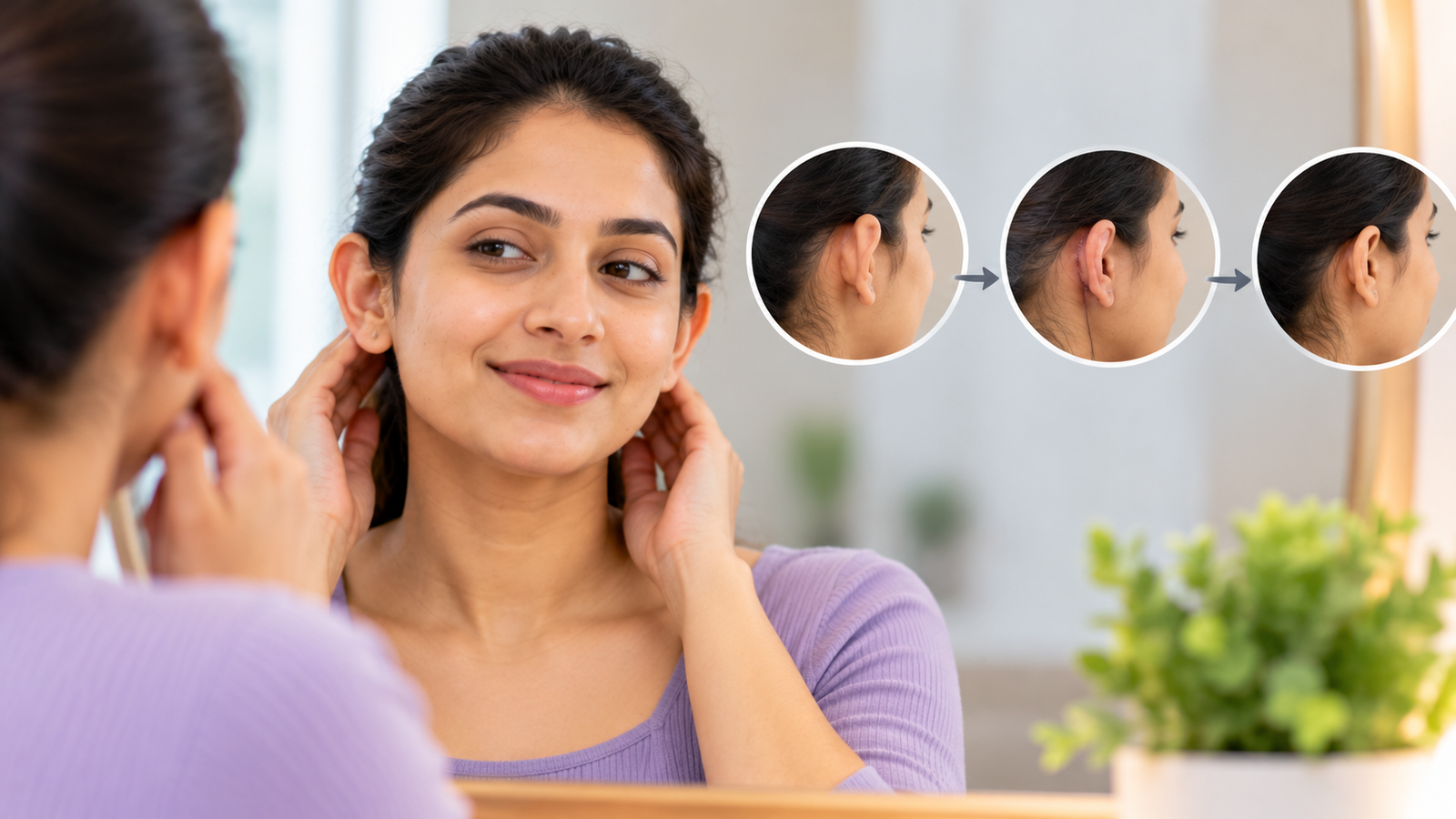

Is Otoplasty Painful? What Recovery Feels Like
Ear correction surgery is performed under anaesthesia, so patients should not feel surgical pain during the procedure. After surgery, mild to moderate discomfort, tenderness, tightness and swelling are common, particularly during the first few days. Pain usually improves gradually with prescribed medication, protective dressings and appropriate postoperative care.
Many people considering ear correction surgery worry about pain during the operation, sleeping discomfort and how long recovery will take.
Understanding what to expect can help patients prepare for the procedure and recognise when symptoms require medical attention.
Is Otoplasty Painful During Surgery?
Otoplasty is a surgical procedure used to reshape or reposition prominent, protruding or asymmetrical ears.
The procedure may be performed under local anaesthesia, local anaesthesia with sedation or general anaesthesia, depending on the patient's age, health and surgical requirements.
Local Anaesthesia
Local anaesthesia numbs the surgical area.
Patients may feel pressure or movement during the procedure, but sharp pain should not occur once the area is adequately numb.
If discomfort develops, the patient should inform the surgical team.
General Anaesthesia
Under general anaesthesia, the patient is unconscious and does not experience the operation.
General anaesthesia is commonly used for younger children and may also be appropriate for selected adults.
Sedation With Local Anaesthesia
Some adults may undergo ear correction with local anaesthesia and sedation.
Sedation can reduce anxiety and awareness, while local anaesthesia provides pain control.
Patients considering the procedure can read the otoplasty surgery guide for more information about ear correction techniques.
How Much Pain Is Normal After Otoplasty?
After the anaesthesia wears off, patients may experience discomfort around the operated ears.
Common symptoms include:
-
Mild to moderate aching
-
Tenderness behind the ears
-
A sensation of tightness
-
Pressure from protective dressings
-
Swelling around the cartilage
-
Temporary sensitivity to touch
Pain intensity varies depending on the extent of cartilage reshaping, surgical technique and individual pain tolerance.
Most patients experience gradual improvement during the first week.
However, severe, increasing or uncontrolled pain is not considered routine and requires medical assessment.
Otoplasty Pain and Recovery: Day-by-Day Timeline
|
Recovery Period |
What Patients May Feel |
General Expectations |
|---|---|---|
|
First 24 hours |
Aching, pressure and tenderness |
Discomfort may increase as anaesthesia wears off |
|
Days 2–3 |
Swelling, tightness and soreness |
Symptoms may remain noticeable |
|
Days 4–7 |
Gradually reducing discomfort |
Many patients need less pain medication |
|
Week 2 |
Mild tenderness or sensitivity |
Routine activities often become easier |
|
Weeks 3–4 |
Occasional sensitivity or numbness |
Healing continues |
|
Weeks 4–6 |
Reduced discomfort during normal activities |
Some physical activities may resume with approval |
|
Following months |
Gradual improvement in residual sensitivity |
Scar and cartilage healing continue |
These are general recovery patterns rather than guaranteed timelines.
Patients undergoing complex reconstructive ear surgery may experience a different recovery process.
Why Do Ears Feel Tight After Otoplasty?
A sensation of tightness is common after ear pinning surgery.
During otoplasty, the surgeon may reshape cartilage or use sutures to maintain the ear's new position.
Temporary tightness can result from:
-
Postoperative swelling
-
Cartilage repositioning
-
Internal sutures
-
Healing tissues
-
Protective dressings
This sensation often improves gradually as swelling decreases.
Patients should avoid pulling, bending or pressing on the ears during early recovery.
Is Pain After Ear Surgery Worse at Night?
Some patients notice greater discomfort when lying down or changing sleeping positions.
Pressure on the operated ear can increase tenderness.
Sleeping with the head slightly elevated may help reduce swelling, depending on the surgeon's instructions.
Patients are commonly advised to avoid sleeping directly on the operated ears during early recovery.
A protective headband may be recommended at night for several weeks.
The exact sleeping instructions depend on the surgical technique.
How Can You Manage Pain After Otoplasty?
Managing pain after ear surgery involves following the surgeon's postoperative instructions.
1. Take Prescribed Pain Medication
Use medications exactly as directed.
Some patients may be advised to use paracetamol or other suitable pain relief.
Do not independently start aspirin or anti-inflammatory medication without checking with your surgeon, as some medicines can increase bleeding risk.
2. Protect the Ears From Pressure
Avoid pressing the ears against pillows, helmets or tight clothing during early healing.
3. Keep Dressings in Place as Directed
Protective dressings help support the ears after surgery.
Do not remove or adjust them unless instructed by the surgical team.
4. Sleep in the Recommended Position
Follow advice about head elevation and avoiding direct pressure on the ears.
5. Avoid Strenuous Exercise
Heavy exercise and contact sports may increase swelling or risk injury.
Resume activities only after receiving medical clearance.
6. Attend Follow-Up Appointments
Regular follow-up allows the surgeon to check healing, dressings and ear position.
For additional preparation advice, review the facial cosmetic surgery preparation guide.
Does Otoplasty Hurt More for Adults Than Children?
There is no reliable rule that otoplasty is more painful for adults than children.
Pain perception varies between individuals.
Adults may have firmer ear cartilage, while children often have more flexible cartilage.
However, postoperative discomfort depends on many factors, including:
-
Surgical technique
-
Extent of cartilage reshaping
-
Individual pain sensitivity
-
Swelling
-
Medication response
-
Recovery care
Both adults and children require appropriate pain management and postoperative monitoring.
Can Otoplasty Cause Long-Term Ear Pain?
Most postoperative discomfort improves during the early healing period.
However, some patients may experience prolonged sensitivity, numbness or discomfort.
Possible causes include:
-
Persistent inflammation
-
Suture irritation
-
Scar sensitivity
-
Nerve irritation
-
Infection
-
Cartilage-related complications
Long-lasting or worsening pain should be evaluated by the treating surgeon.
Is Otoplasty Recovery Painful When Removing Stitches?
Some otoplasty procedures use absorbable stitches, while others require removal of external sutures.
When stitch removal is necessary, patients may experience mild pulling or brief discomfort.
Significant pain is not usually expected during routine suture removal.
The surgeon will advise when and whether stitches need to be removed.
Can Ear Surgery Pain Affect Hearing?
Cosmetic otoplasty primarily involves the external ear cartilage and does not usually affect hearing.
However, swelling, dressings or temporary blockage around the ear may cause a sensation of muffled hearing.
Persistent hearing changes, severe ear pain, dizziness or discharge should be assessed promptly.
Otoplasty is not a treatment for hearing loss.
What Are the Warning Signs After Otoplasty?
Mild discomfort, swelling and tenderness are expected after surgery.
However, some symptoms may indicate complications.
Contact your surgeon urgently if you experience:
-
Severe or rapidly increasing ear pain
-
Sudden swelling or a firm, expanding lump
-
Persistent bleeding
-
Fever
-
Spreading redness
-
Pus or unusual discharge
-
Skin becoming unusually dark or pale
-
Wound separation
-
Significant hearing changes
Severe pain that does not respond to prescribed medication should not be ignored.
Does Ear Shape Affect Otoplasty Pain?
The amount of surgical correction required can influence postoperative discomfort.
For example, treatment may involve:
-
Creating an antihelical fold
-
Reducing excessive ear projection
-
Reshaping cartilage
-
Correcting asymmetry
-
Addressing selected congenital deformities
More complex surgery may involve additional tissue manipulation and potentially longer recovery.
Patients with uneven ears can explore the ear asymmetry correction guide for information about different correction approaches.
Will the Scar Behind the Ear Be Painful?
Traditional otoplasty commonly involves an incision behind the ear.
The incision may feel tender during early healing.
Temporary itching, numbness or tightness may also occur as the scar matures.
Most scars gradually become less sensitive, although individual healing varies.
Patients concerned about incision placement can read the otoplasty scar guide.
When Can You Return to Work or School After Otoplasty?
Many patients can return to desk-based work or school within approximately one to two weeks.
However, recovery depends on the procedure and individual healing.
|
Activity |
Approximate Return |
|---|---|
|
Gentle walking |
Usually within the first few days |
|
Desk work |
Often within 1–2 weeks |
|
School |
Commonly within 1–2 weeks |
|
Light exercise |
With surgeon approval |
|
Heavy exercise |
Often after several weeks |
|
Contact sports |
Only after the surgeon confirms adequate healing |
Patients should avoid activities that could bend, pull or injure the ears during recovery.
Otoplasty Consultation With Dr. Ashutosh Shah
At Elegance Clinic, Dr. Ashutosh Shah evaluates ear shape, cartilage structure, medical history and individual concerns before discussing ear correction surgery. Patients asking is otoplasty painful can discuss anaesthesia options, expected postoperative discomfort, pain management, recovery requirements and potential complications. The consultation helps patients understand the procedure and prepare for a safe recovery plan.
Conclusion
Is otoplasty painful? Most patients experience mild to moderate discomfort after ear correction surgery, particularly during the first few days.
Anaesthesia helps prevent pain during the operation, while prescribed medication and proper postoperative care support recovery.
Pain generally decreases as swelling improves, although tenderness and sensitivity may continue for several weeks.
Patients should follow their surgeon's instructions and seek prompt medical advice if symptoms become severe or unusual.
For information about ear correction surgery and consultation options, visit Elegance Face Makeover