
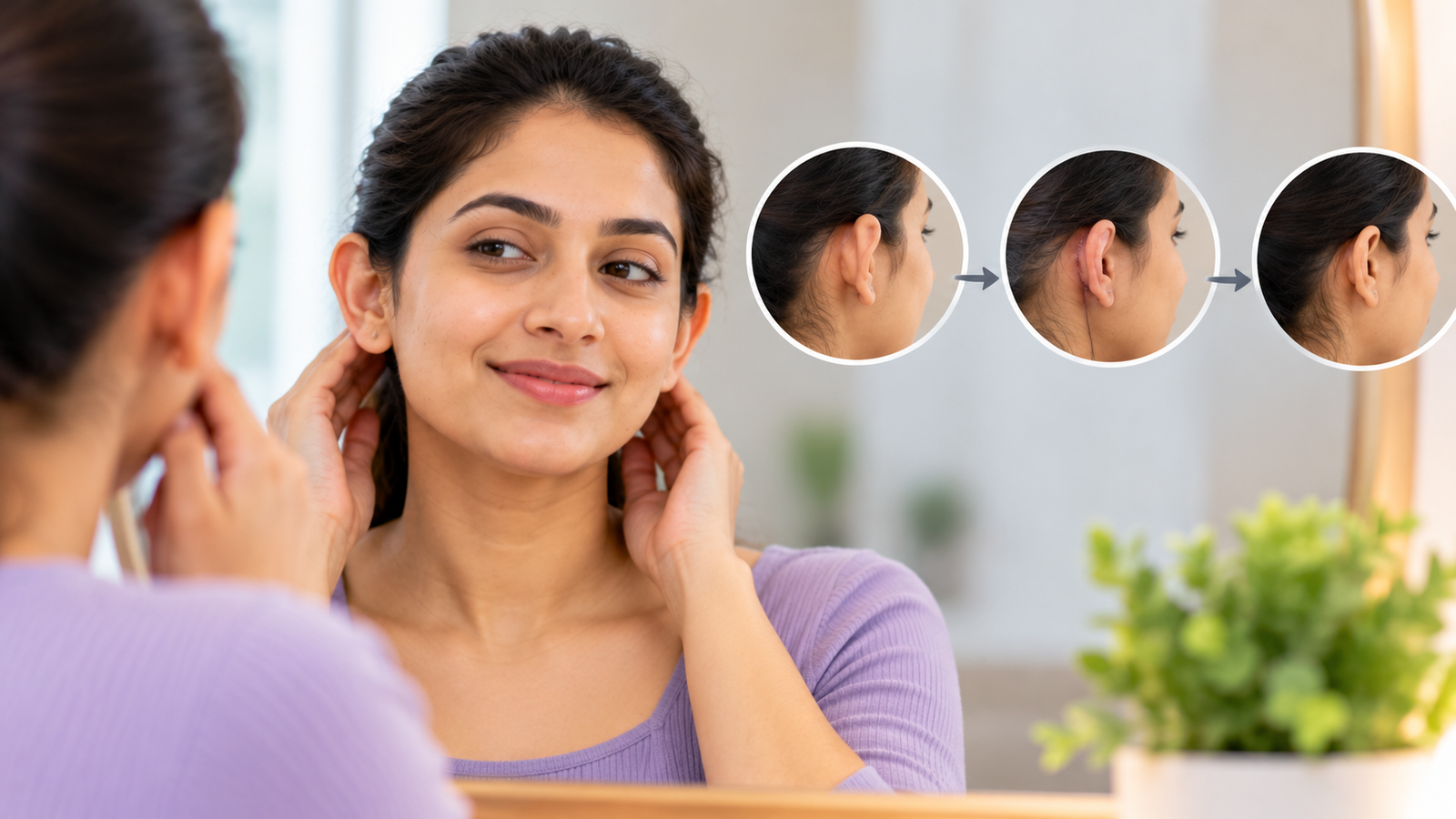
are otoplasty results permanent
Are otoplasty results permanent? Ear correction surgery is designed to provide long-lasting changes to ear shape and position. Most patients maintain their improved ear appearance for many years, often permanently. However, cartilage memory, suture problems, healing differences or injury can sometimes cause partial recurrence. A small number of patients may require revision surgery.
Otoplasty, also called ear pinning or ear reshaping surgery, is commonly performed to correct prominent, protruding or asymmetrical ears.
Patients considering the procedure often want to know whether their ears will remain in the corrected position throughout their lives.
Understanding how cartilage heals, why recurrence can occur and what affects long-term results helps patients develop realistic expectations.
Are Otoplasty Results Permanent for Most Patients?
For most patients, otoplasty provides a lasting improvement in ear position and appearance.
During surgery, the surgeon may reshape the cartilage, create or strengthen natural ear folds, reduce excessive projection or use internal sutures to maintain the corrected position.
As the tissues heal, scar formation helps stabilise the new shape.
However, permanent results cannot be guaranteed.
Some patients experience minor changes in ear position over time, while others may develop more noticeable recurrence.
The long-term outcome depends on the original ear anatomy, surgical technique, cartilage characteristics and healing response.
For an overview of the procedure, read the otoplasty surgery guide.
How Does Otoplasty Create Long-Lasting Ear Correction?
The external ear is primarily supported by elastic cartilage covered by skin.
Otoplasty changes the shape or position of this cartilage.
Depending on the problem being corrected, the surgeon may:
-
Create a more defined antihelical fold.
-
Reduce excessive projection from the head.
-
Reposition the conchal cartilage.
-
Use permanent or long-lasting internal sutures.
-
Reshape selected cartilage areas.
-
Correct differences between the two ears.
The goal is to achieve an improved ear shape while preserving natural contours.
Successful healing helps maintain the corrected position, but the cartilage may retain some tendency to return toward its previous shape.
Can Ears Move Back After Otoplasty?
Yes. Ears moving back after otoplasty is a recognised possibility, although many patients maintain their correction.
This is sometimes called recurrence or relapse.
Recurrence may involve:
-
One ear becoming more prominent.
-
Both ears gradually projecting outward.
-
Partial loss of the corrected ear fold.
-
Changes in the upper or middle ear position.
-
Increasing asymmetry between the ears.
A small amount of postoperative settling does not necessarily mean the surgery has failed.
The surgeon must distinguish normal healing changes from true recurrence.
Why Do Ears Sometimes Stick Out Again After Surgery?
Several factors may contribute to recurrence.
1. Cartilage Memory
Ear cartilage has natural elasticity.
After reshaping, some cartilage may exert force toward its original position.
This tendency is sometimes described as cartilage memory.
2. Internal Suture Problems
Some otoplasty techniques rely on internal sutures to maintain cartilage position.
If a suture loosens, breaks or pulls through tissue, the corrected shape may change.
3. Strong or Thick Cartilage
Cartilage thickness and stiffness vary between patients.
Some ears require more extensive correction to achieve stable results.
4. Healing Differences
Scar formation and tissue healing differ between individuals.
These differences can influence the long-term position of the ear.
5. Trauma During Recovery
Accidental pulling, bending or impact may place stress on healing tissues.
This is one reason surgeons recommend protecting the ears during early recovery.
6. Incomplete Correction
In some cases, the initial procedure may not adequately address all anatomical causes of ear prominence.
This can contribute to persistent or recurrent projection.
Otoplasty Results Timeline: What Changes Over Time?
Ear appearance changes during recovery as swelling decreases and tissues settle.
|
Time After Surgery |
Expected Changes |
|---|---|
|
First 1–3 days |
Swelling, tenderness and protective dressings |
|
First 1–2 weeks |
Gradual reduction in swelling and discomfort |
|
Weeks 3–6 |
Ear position becomes easier to assess as healing progresses |
|
Months 2–3 |
Continued tissue settling and improvement in sensitivity |
|
Months 3–6 |
More stable appearance in many patients |
|
Months 6–12 |
Scar maturation and gradual softening continue |
|
Following years |
Most patients retain improvement, although recurrence remains possible |
This is a general timeline. Individual recovery varies, and some changes may take longer.
Patients preparing for surgery can review Sleeping, Work and School After Ear Surgery for practical recovery guidance.
Is Otoplasty More Permanent in Children or Adults?
Otoplasty can provide long-lasting results in both children and adults.
Children generally have more flexible ear cartilage, while adult cartilage may be firmer.
However, cartilage flexibility alone does not determine whether the results will last.
Other important factors include:
-
Ear anatomy
-
Degree of prominence
-
Surgical technique
-
Cartilage strength
-
Healing response
-
Postoperative care
There is no guarantee that surgery performed at a particular age will produce permanent results.
Patients considering adult ear correction can read Otoplasty for Adults: Is It Ever Too Late?.
Can One Ear Change Position While the Other Stays Corrected?
Yes. The two ears may heal differently.
Even when both ears undergo similar correction, differences in cartilage structure, swelling, scarring and tissue tension can affect the final appearance.
Mild asymmetry is common in natural ears and may remain after surgery.
However, a significant change in one ear's position should be evaluated.
Patients with concerns about uneven ears can explore Ear Asymmetry Correction.
Does Wearing a Headband Make Otoplasty Results Permanent?
A postoperative headband may help protect healing ears from accidental bending or pulling.
However, a headband does not guarantee permanent correction.
Its purpose is to support safe recovery rather than replace the surgical changes.
The recommended wearing schedule depends on the surgeon's technique and postoperative protocol.
Some patients are advised to wear a headband at night for several weeks.
For detailed guidance, read Headband After Otoplasty: Why and How Long.
Can Sleeping on Your Side Cause Otoplasty Recurrence?
During early recovery, sleeping directly on an operated ear may cause pressure, discomfort or accidental bending.
Patients are commonly advised to sleep on their backs until the surgeon confirms that side sleeping is safe.
However, once the ears have healed adequately, normal sleeping positions generally do not cause recurrence.
The key concern is protecting healing tissues during the period when they are most vulnerable.
Can Exercise or Sports Affect Long-Term Otoplasty Results?
Gentle exercise does not usually affect the corrected ear position.
However, contact sports and activities involving direct ear trauma can be risky during early recovery.
Patients may need to avoid:
-
Wrestling
-
Boxing
-
Martial arts
-
Football
-
Rugby
-
Other contact sports
-
Activities requiring tight helmets
The duration of restrictions depends on the surgical technique and healing progress.
For more information, read Sports and Exercise After Otoplasty: Safe Timeline.
What Is Otoplasty Revision Surgery?
Otoplasty revision is a secondary procedure performed to address concerns following previous ear correction surgery.
Revision may be considered when:
-
Ear prominence returns.
-
The original correction is insufficient.
-
One ear differs significantly from the other.
-
An unnatural fold develops.
-
A visible contour irregularity remains.
-
Internal sutures cause persistent problems.
Not every minor difference requires another operation.
The surgeon must assess the patient's anatomy, previous surgical technique, scar tissue and treatment goals before recommending revision.
Is Revision Otoplasty More Difficult Than the First Surgery?
Revision otoplasty can be more complex because the ear has already undergone surgery.
Previous procedures may alter cartilage structure and produce scar tissue.
Potential challenges include:
-
Existing internal sutures
-
Changes in cartilage flexibility
-
Scar tissue around the surgical area
-
Limited remaining cartilage
-
Previous overcorrection or undercorrection
-
Altered tissue planes
The revision plan depends on the reason for the original result and the condition of the ear.
A surgeon may recommend waiting until healing has stabilised before considering elective revision.
How Soon Can Revision Otoplasty Be Performed?
Revision timing depends on the problem.
For cosmetic concerns, surgeons commonly prefer to allow several months for swelling and scar tissue to settle before making a final assessment.
In some cases, waiting six to twelve months may be appropriate.
However, complications such as infection, exposed sutures or significant tissue problems may require earlier treatment.
Patients should not attempt to correct ear position using tight headbands or self-applied pressure.
How Can You Maintain Otoplasty Results?
Although recurrence cannot always be prevented, following postoperative instructions can reduce avoidable risks.
Protect the Ears During Early Healing
Avoid pulling, bending or placing excessive pressure on the ears.
Wear the Recommended Headband
Follow the surgeon's instructions for daytime or nighttime protection.
Avoid Contact Sports Until Cleared
Direct ear trauma may affect healing tissues.
Follow Wound-Care Instructions
Keep the surgical area clean and follow dressing and medication advice.
Attend Follow-Up Appointments
Postoperative reviews allow the surgeon to monitor healing and identify concerns.
Avoid Smoking and Nicotine
Nicotine can interfere with blood circulation and wound healing.
Report Unexpected Changes
Contact your surgeon if an ear suddenly changes position or develops unusual pain or swelling.
Can Otoplasty Results Change Naturally With Age?
The ears continue to undergo age-related changes throughout life.
Skin elasticity, cartilage characteristics and overall ear appearance may change gradually.
These changes do not necessarily mean the surgical correction has failed.
Most patients can expect the corrected ear position to remain improved, although natural ageing and individual tissue changes continue.
When Should You Contact Your Surgeon About Ear Position?
Contact your surgical team if you notice:
-
Sudden changes in ear position
-
Increasing asymmetry
-
Severe or worsening pain
-
Rapid swelling
-
Persistent bleeding
-
Redness or unusual discharge
-
Exposed or irritating sutures
-
Wound separation
-
Changes following an injury
Sudden swelling, severe pain or signs of infection require prompt assessment.
Otoplasty Results Consultation With Dr. Ashutosh Shah
At Elegance Clinic, Dr. Ashutosh Shah evaluates ear cartilage, prominence, symmetry and individual treatment goals before discussing ear correction surgery. Patients asking are otoplasty results permanent can discuss realistic long-term expectations, recurrence risks, postoperative precautions and the circumstances in which revision surgery may be considered. The consultation helps patients understand both the benefits and limitations of otoplasty.
Conclusion
Are otoplasty results permanent? Ear correction surgery is designed to provide long-lasting improvements, and many patients maintain their corrected ear shape throughout life.
However, cartilage elasticity, internal suture problems, healing differences and trauma can occasionally contribute to recurrence.
Following postoperative instructions, protecting the ears during recovery and attending follow-up appointments can help reduce avoidable complications.
Patients with persistent or recurrent prominence may benefit from an assessment to determine whether revision surgery is appropriate.
For information about ear correction surgery and consultation options, visit Elegance Face Makeover