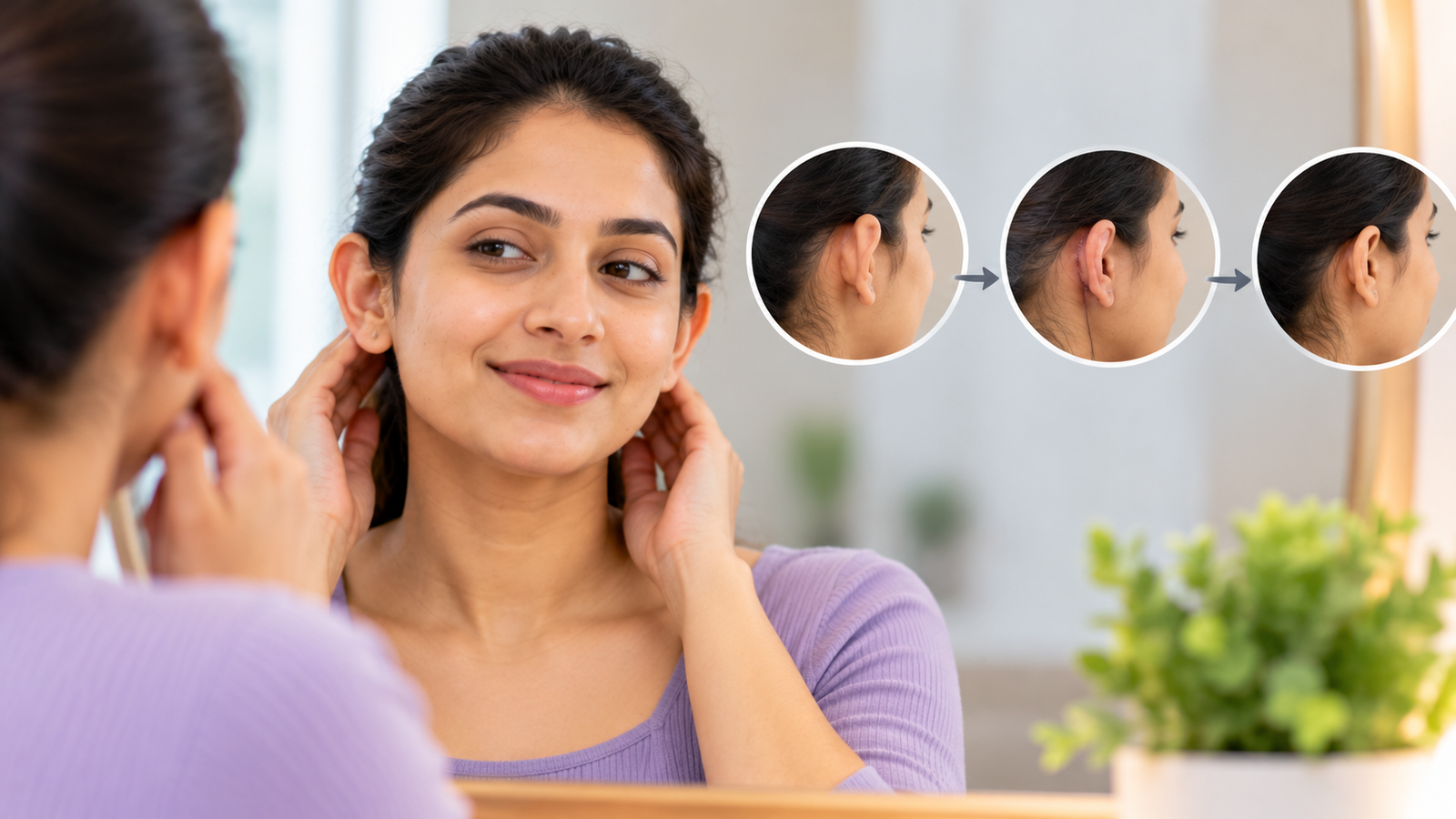

Facelift Scars: Where Are They Hidden?
Facelift scars are usually positioned around the natural contours of the ears and hairline to make them less noticeable after healing. Although every surgical incision creates a scar, careful placement and proper wound care can help improve its appearance. Scar visibility depends on surgical technique, skin characteristics, individual healing and postoperative care.
One of the most common concerns among patients considering facial cosmetic surgery is whether other people will notice their surgical scars.
Understanding where incisions are placed, how they heal and what affects their appearance can help patients develop realistic expectations before surgery.
Where Are Facelift Scars Usually Hidden?
Facelift surgery involves incisions that allow the surgeon to reposition facial tissues and remove selected excess skin.
The exact incision pattern depends on the surgical technique, facial anatomy and degree of correction required.
Common incision locations include:
1. Along the Hairline
Some facelift incisions begin near the temple hairline.
The surgeon may position the incision within or along the hairline, depending on the patient's anatomy and surgical plan.
This placement can help conceal part of the scar, although hair density and hairstyle influence visibility.
2. Around the Front of the Ear
A common facelift incision follows natural contours in front of the ear.
The incision may pass along the crease where the ear meets the face or around the tragus, depending on the technique.
Careful placement aims to reduce visible scarring while preserving the natural appearance of the ear.
3. Behind the Ear
Many facelift procedures include an incision behind the ear.
This area is less visible from the front and may help conceal part of the surgical scar.
4. Within the Posterior Hairline
When additional skin adjustment is necessary, the incision may extend into the hair-bearing area behind the ear.
The exact placement depends on the amount of correction required.
Patients considering facial rejuvenation can explore the facial cosmetic surgery guide for an overview of different surgical options.
Are Facelift Scars Visible After Surgery?
Yes. Facelift scars are visible to some extent, particularly during early healing.
However, they often become less noticeable as redness and swelling decrease.
Several factors influence scar visibility:
-
Incision placement
-
Surgical closure technique
-
Individual skin characteristics
-
Genetic tendency toward raised scars
-
Smoking habits
-
Wound healing
-
Infection or wound complications
-
Sun exposure
-
Postoperative scar care
Even with careful surgical techniques, completely invisible scars cannot be guaranteed.
What Do Facelift Scars Look Like During Recovery?
The appearance of facelift scars changes gradually as the skin heals.
|
Recovery Stage |
Common Scar Appearance |
|---|---|
|
First 1–2 weeks |
Incision lines may appear red, swollen or slightly raised |
|
Weeks 3–6 |
Redness and swelling generally begin improving |
|
Months 2–3 |
Scars may remain pink or firm while healing continues |
|
Months 3–6 |
Many scars gradually soften and become less noticeable |
|
Months 6–12 |
Continued improvement in scar colour and texture |
|
12–18 months or longer |
Further scar maturation may occur |
These are approximate healing stages. Individual recovery can vary significantly.
Patients should follow their surgeon's instructions rather than applying scar products immediately after surgery.
Do Different Facelift Techniques Leave Different Scars?
Yes. Incision length and location can vary according to the facelift technique.
|
Facelift Technique |
Typical Incision Pattern |
Important Consideration |
|---|---|---|
|
Traditional facelift |
Around the ear, often extending into hairline areas |
Allows broader lower-face correction |
|
Mini facelift |
Often a shorter incision around the ear |
Suitable only for selected patients |
|
SMAS facelift |
Incisions vary with the surgical approach |
Addresses deeper facial support tissues |
|
Deep plane facelift |
Incision pattern depends on technique |
Deep tissue approach does not eliminate external scars |
|
Facelift with neck lift |
May include additional incisions behind the ear or under the chin |
Addresses selected neck concerns |
A shorter incision does not automatically produce a better result.
The most suitable technique depends on facial anatomy, skin laxity and treatment goals.
Where Are Neck Lift Scars Hidden?
Neck lift surgery may be recommended when a patient has loose neck skin, prominent neck bands or reduced jawline definition.
Depending on the procedure, incisions may be positioned:
-
Behind the ears
-
Around the lower ear contours
-
Within the hairline behind the ears
-
Beneath the chin in a natural crease
A small incision under the chin may be used when the surgeon needs access to the underlying neck muscles or tissues.
Not every neck lift requires the same incision pattern.
Where Is an Eyelid Surgery Scar Located?
An eyelid surgery scar is usually placed within natural eyelid contours whenever possible.
Eyelid surgery, also called blepharoplasty, may address excess skin, selected fat deposits or other eyelid concerns.
Upper Eyelid Surgery Scars
Upper eyelid incisions are commonly positioned within the natural upper eyelid crease.
When the eyes are open, the crease can help conceal much of the healed incision.
Lower Eyelid Surgery Scars
Lower eyelid surgery may involve an incision:
-
Just below the lower eyelashes
-
Inside the lower eyelid, depending on the technique
An internal lower eyelid incision does not create an external skin scar, although it is not suitable for every patient.
Patients considering this procedure can review eyelid lift surgery to understand the available treatment approach.
Are Facial Surgery Scars Different From Other Surgical Scars?
Facial surgery scars may heal differently from scars on other parts of the body because facial skin has distinct characteristics and blood supply.
However, scar appearance still depends on multiple factors.
For example:
-
Thin eyelid skin may produce relatively fine scars.
-
Hairline incisions may be partly concealed by hair.
-
Scars around the ears may be less noticeable because of natural contours.
-
Patients prone to hypertrophic scars or keloids may experience more visible scarring.
Careful surgical planning aims to balance scar placement with effective correction of the underlying facial concern.
How Can You Reduce the Appearance of Facelift Scars?
Although scars cannot be completely prevented, appropriate postoperative care can support healing.
1. Follow Wound Care Instructions
Keep the incision area clean and follow the surgeon's advice regarding dressings, cleansing and medications.
Avoid applying unapproved creams or home remedies to fresh wounds.
2. Avoid Smoking and Nicotine
Nicotine exposure can reduce blood flow and increase the risk of wound-healing complications.
Patients should discuss smoking cessation and nicotine use with their surgeon before and after surgery.
3. Protect Healing Scars From Sun Exposure
Sun exposure can worsen pigmentation changes in healing scars.
Once the surgeon confirms that the wound has healed sufficiently, sun protection may help reduce discolouration.
4. Consider Silicone Scar Products When Appropriate
Silicone gels or sheets may help improve certain raised or developing scars after the incision has fully closed.
Patients should use these products only when recommended by their treating surgeon.
5. Avoid Excessive Tension on Incisions
Stretching or placing unnecessary pressure on healing wounds may affect scar quality.
Follow activity restrictions during recovery.
6. Attend Follow-Up Appointments
Regular follow-up allows the surgeon to assess healing and identify complications early.
Patients preparing for surgery can also review the facial cosmetic surgery preparation guide.
Can Facelift Scars Be Removed Completely?
No. Once a surgical incision heals, some scar tissue remains.
However, the appearance of certain scars may be improved through appropriate treatments.
Depending on the scar type, options may include:
-
Silicone-based scar management
-
Selected laser treatments
-
Steroid injections for appropriate raised scars
-
Scar revision surgery
-
Other dermatologist- or surgeon-directed treatments
Not every scar requires treatment.
Scar revision may improve appearance but creates a new healing incision and cannot guarantee an invisible result.
What Happens if a Facelift Scar Becomes Thick or Raised?
Some patients develop hypertrophic scars, which remain raised within the original wound boundaries.
Others may develop keloids, which extend beyond the original incision.
Possible warning signs include:
-
Increasing scar thickness
-
Persistent redness
-
Itching or tenderness
-
Raised scar tissue
-
Scar growth beyond the incision line
Patients should consult their surgeon if these changes occur.
Treatment depends on the type, location and maturity of the scar.
Can You Have a Natural Looking Facelift With Minimal Scarring?
A natural-looking facelift involves more than hiding incisions.
It also requires appropriate tissue repositioning, balanced facial contours and realistic surgical planning.
Poorly positioned incisions or excessive skin tension can affect both scar appearance and the natural contours around the ears.
Patients concerned about looking overly tight or operated on can review the natural-looking facelift guide.
The goal is to improve facial ageing while preserving individual facial characteristics.
Does Combining Facial Procedures Increase Scarring?
Combining procedures may involve additional incisions, depending on which areas are treated.
For example:
-
Facelift surgery may involve incisions around the ears and hairline.
-
Eyelid surgery may involve incisions within eyelid creases.
-
Neck lift surgery may require an additional incision beneath the chin.
-
Facial fat grafting usually involves small access points for fat harvesting and injection.
Combining procedures does not necessarily mean that scars will be more visible, but it can increase surgical complexity and the number of healing sites.
Patients considering multiple treatments can review the face makeover treatment order guide.
When Should You Be Concerned About Facelift Scar Healing?
Mild redness, swelling and tenderness are common during early recovery.
However, patients should seek medical advice if they notice:
-
Increasing redness spreading around the incision
-
Worsening pain rather than gradual improvement
-
Pus or unusual discharge
-
Fever
-
Wound separation
-
Sudden swelling or bleeding
-
Darkening skin around the incision
These symptoms may indicate complications requiring prompt assessment.
Facelift Scar Consultation With Dr. Ashutosh Shah
At Elegance Clinic, Dr. Ashutosh Shah evaluates facial anatomy, skin quality, hairline position and individual treatment goals when discussing facial rejuvenation surgery. Patients concerned about facelift scars can discuss expected incision locations, scar visibility, wound-healing risks and postoperative care. A personalised consultation helps patients understand the potential benefits and limitations of surgery before making a treatment decision.
Conclusion
Facelift scars are an unavoidable part of surgical facial rejuvenation, but careful incision placement can help make them less noticeable.
Most facelift incisions are positioned around the ears and hairline, while eyelid and neck procedures may use different natural creases or concealed areas.
Scar appearance improves gradually, and proper postoperative care can support healing.
Patients considering facial surgery should discuss incision placement, realistic scar expectations and individual healing risks with a qualified plastic surgeon.
For information about facial cosmetic surgery and consultation options, visit Elegance Face Makeover.