Zygoma Reduction For Wide Cheekbones: Who Is A Candidate And Why Some Cheeks Sag Afterwards
Zygoma reduction plasty narrows prominent cheekbones by cutting and repositioning the zygomatic body and arch, usually through incisions inside the mouth and near the sideburn. It suits people whose facial width comes from bone, not fat or masseter muscle. Older patients or those with thin, loose cheek skin face a higher risk of cheek sagging afterwards.
People with naturally prominent cheekbones may feel that their face appears wider than they would prefer, especially in front-facing photographs.
However, not every wide-looking face is caused by prominent cheekbones.
Facial width may come from the underlying bone, enlarged jaw muscles, facial fat or a combination of these factors.
Before choosing surgery, it is important to understand the cause of facial width, the expected improvement and the possibility of postoperative soft-tissue sagging.
Is Your Wide Face Caused by Bone, Fat or Muscle?
The first step in deciding whether zygoma reduction surgery is appropriate is identifying which facial structures create the appearance of width.
Three main factors influence facial width.
1. Prominent Cheekbone Structure
The zygomatic bones form the visible cheekbone prominence on both sides of the face.
Some people naturally have a wider zygomatic arch or more laterally projecting cheekbones.
This can create a broad appearance across the middle third of the face.
Common signs include:
-
Cheekbones appear prominent from the front.
-
The widest part of the face is around the cheekbones.
-
Facial width remains similar despite changes in body weight.
-
The cheekbone structure feels prominent beneath the skin.
-
Facial imaging confirms significant bony projection.
For patients whose facial width is primarily skeletal, cheekbone reduction may be considered.
2. Excess Facial Fat
Some people have fuller cheeks because of subcutaneous fat or prominent buccal fat pads.
This creates a rounded facial appearance without necessarily indicating wide cheekbones.
Reducing cheekbone width in these patients may not produce the desired result.
Removing facial fat also requires caution because excessive volume loss can make the face appear hollow with ageing.
3. Enlarged Masseter Muscles
The masseter muscles are located near the back of the jaw.
These muscles may become prominent due to natural anatomy or habitual jaw clenching.
Enlarged masseter muscles typically increase lower-face width rather than cheekbone width.
Selected patients may benefit from non-surgical muscle-reducing treatment rather than bone surgery.
How Can You Identify the Cause?
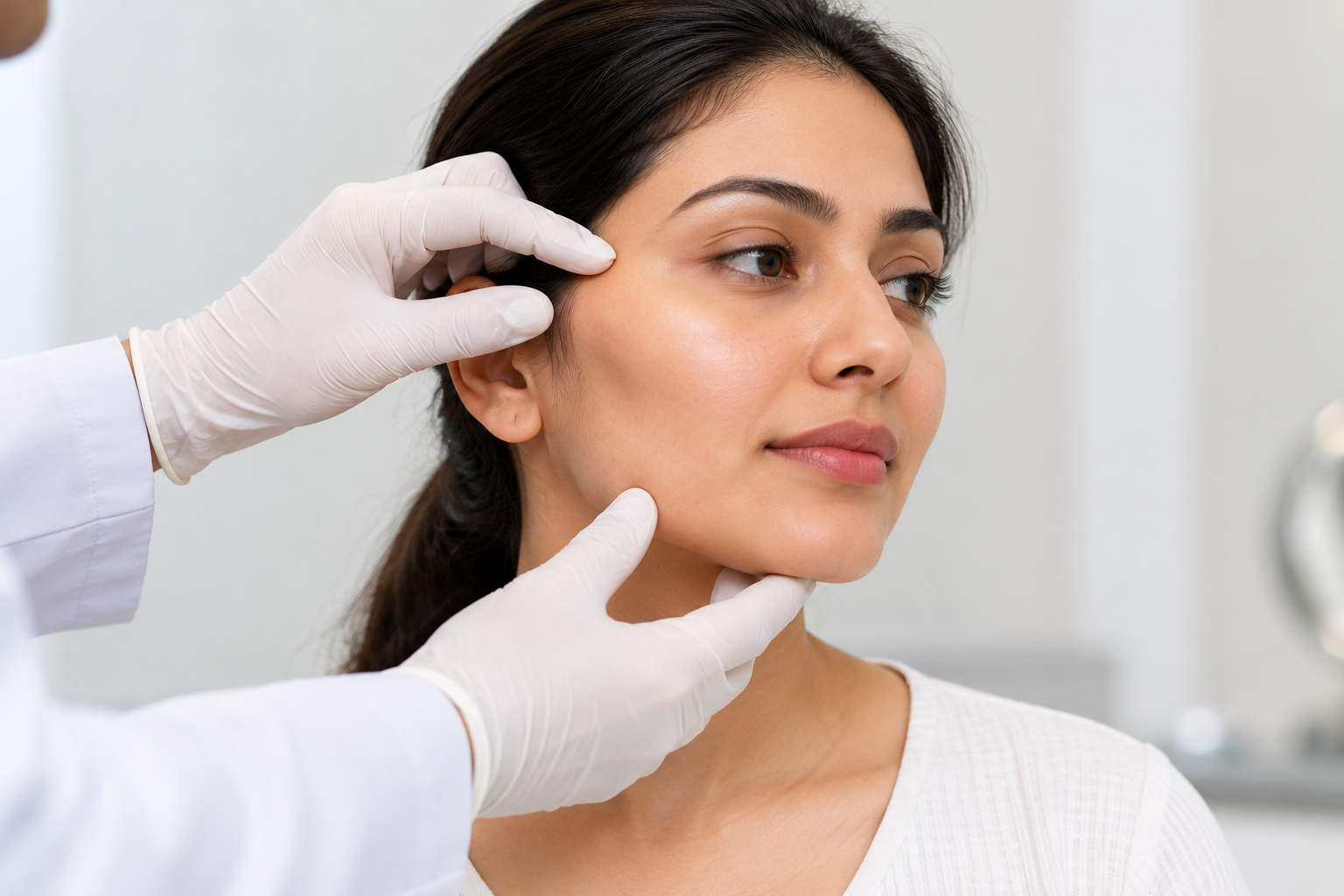
A professional face analysis can help distinguish skeletal width from fat distribution and muscle prominence.
Clinical examination is essential, and 3D CT imaging may be recommended when skeletal surgery is being considered.
A CT scan can help assess the zygomatic body, arch, asymmetry and nearby anatomical structures.
Important: A wide facial appearance alone does not establish the need for surgery.
How Is Zygoma Reduction Surgery Performed?
Zygoma reduction plasty is a facial bone-contouring procedure intended to reduce excessive cheekbone projection.
The operation involves carefully planned cuts in the zygomatic bone and arch, followed by repositioning and stabilisation.
Step 1: Facial Examination and Surgical Planning
Before surgery, the surgeon evaluates:
-
Facial symmetry
-
Cheekbone projection
-
Zygomatic arch width
-
Skin thickness and elasticity
-
Midface soft-tissue support
-
Dental and jaw relationships
-
Existing medical conditions
-
Patient expectations
3D CT imaging is commonly used to assess the bony anatomy and plan the amount and direction of reduction.
The surgeon should also explain how the proposed bone movement may affect the surrounding soft tissues.
Step 2: Anaesthesia
The procedure is generally performed under general anaesthesia.
The anaesthesia team assesses the patient's health and determines the appropriate precautions.
Step 3: Surgical Incisions
Depending on the technique, the surgeon may make incisions:
-
Inside the mouth, near the upper gum
-
Near the sideburn or hair-bearing temple region
The intraoral incision provides access to the cheekbone body.
A small external incision may provide access to the zygomatic arch.
The exact approach depends on the patient's anatomy and the planned reduction.
Step 4: Bone Repositioning
The surgeon performs controlled bone cuts and moves the cheekbone segments inward or in another planned direction.
The goal is to reduce unwanted skeletal projection while preserving facial balance.
Excessive inward movement can increase the risk of contour irregularities and inadequate soft-tissue support.
Step 5: Bone Fixation
The repositioned bone segments may be secured using small plates and screws.
Stable fixation is important for bone healing and maintaining the intended contour.
Step 6: Closure and Recovery
The incisions are closed, and the patient is monitored during the initial recovery period.
Swelling and discomfort are expected.
The surgeon provides instructions about oral hygiene, food consistency, medications and physical activity.
Patients comparing facial bone procedures with other chin and cheek procedures should understand that augmentation and reduction have different goals and risks.
Why Can the Cheeks Sag After Cheekbone Reduction?
One of the most important concerns associated with this procedure is zygoma reduction sagging.
Cheek sagging can occur when the soft tissues covering the cheekbones lose some of their underlying support.
The cheekbones help support the overlying skin, fat compartments and connective tissues.
When the bones are repositioned inward, the relationship between these structures changes.
1. Reduced Skeletal Support
The cheekbone provides structural support to the middle portion of the face.
When its projection is reduced, the soft tissues may not adapt completely to the new contour.
This can result in a lower or less defined cheek appearance.
2. Weak Skin Elasticity
Younger patients with good skin elasticity may have better soft-tissue adaptation.
However, age alone does not predict the outcome.
Patients with significant skin laxity may have a greater risk of visible sagging after reduction.
3. Thin or Loose Facial Skin
Patients with thin or already loose cheek tissues may be more likely to notice changes in the cheek contour.
The degree of risk depends on individual anatomy and surgical technique.
4. Excessive Bone Reduction
Large inward movements can reduce the structural support available to the surrounding tissues.
This may increase the likelihood of cheek flattening, hollowing or sagging.
A conservative, anatomically appropriate reduction may help limit this risk, although it cannot eliminate it.
5. Soft-Tissue Dissection
Surgical dissection can affect the tissues that help maintain cheek position.
The extent of tissue release and the methods used to preserve or support these structures may influence postoperative results.
Can Cheek Sagging Be Prevented?
There is no technique that guarantees sagging will not occur.
However, careful planning may reduce the risk.
Important considerations include:
-
Evaluating pre-existing cheek laxity
-
Avoiding unnecessary bone reduction
-
Preserving soft-tissue attachments when feasible
-
Using stable bone fixation
-
Considering soft-tissue support when clinically indicated
-
Discussing realistic contour changes
Some patients may require additional procedures if significant sagging develops.
However, revision surgery is more complex and does not guarantee complete correction.
Who Is a Good Candidate for Zygoma Reduction Surgery?
A suitable candidate has prominent cheekbone width that can reasonably be improved through skeletal repositioning.
The decision should be based on anatomy, general health and expectations.
Zygoma Reduction Candidacy Checklist
| Assessment | Green flag | Amber flag | Red flag |
|---|---|---|---|
| Cause of facial width | Confirmed prominent zygomatic bone | Mixed bone and soft-tissue width | Width mainly caused by fat or muscle |
| Skin elasticity | Good tissue support | Mild skin laxity | Significant existing cheek sagging |
| Age | Good tissue quality regardless of age | Over 40 with age-related tissue changes | Age alone is not an absolute contraindication |
| CT findings | Skeletal prominence suitable for reduction | Asymmetry or complex anatomy | No clear skeletal indication |
| Expectations | Understands realistic narrowing | Requests major facial change | Expects guaranteed symmetry or perfection |
| Medical condition | Medically fit for surgery | Conditions requiring optimisation | Uncontrolled condition creating unacceptable surgical risk |
| Combined procedures | Clear anatomical indication | Multiple procedures under consideration | Unnecessary or excessively risky combination |
Decision rule: The source of facial width should be established before planning bone reduction. When CT confirms that skeletal prominence is the principal concern, the surgeon can evaluate whether the expected benefit justifies the risks.
Why Is Age Over 40 a Consideration?
Age over 40 is not an automatic reason to avoid surgery.
However, patients may have reduced skin elasticity or pre-existing midface descent.
These changes can increase concern about postoperative sagging.
The surgeon should evaluate tissue support individually rather than relying on age alone.
Who Should Not Have Zygoma Reduction?
Not every person with a wide face is an appropriate candidate.
Patients Whose Width Comes Mainly From Fat
If facial fullness is caused primarily by fat rather than bone, skeletal reduction may provide limited improvement.
Patients With Significant Existing Cheek Sagging
Patients who already have noticeable midface descent may experience further soft-tissue changes after bone repositioning.
Alternative approaches or additional support procedures may need consideration.
Patients With Unrealistic Expectations
Zygoma reduction cannot guarantee a particular celebrity facial shape, perfect symmetry or a permanently youthful appearance.
Patients With Uncontrolled Medical Conditions
Certain medical conditions can increase anaesthesia, infection, bleeding or healing risks.
Elective surgery should be delayed when the patient's health is not adequately optimised.
Patients Seeking an Extremely Narrow Face
Excessive narrowing can create unnatural proportions, hollowing and soft-tissue problems.
The surgical objective should be balanced facial contour rather than maximum possible bone reduction.
What Are the Risks of Cheekbone Reduction Surgery?
Like other facial bone procedures, zygoma reduction carries potential complications.
These include:
-
Swelling and bruising
-
Bleeding or infection
-
Facial asymmetry
-
Cheek sagging or hollowing
-
Numbness or altered facial sensation
-
Injury to nearby nerves
-
Bone displacement or delayed healing
-
Problems with plates or screws
-
Difficulty opening the mouth
-
Persistent discomfort
-
Unfavourable contour changes
-
Need for revision surgery
Rare but serious complications can occur because the operation is performed near important facial structures.
Can Facial Nerves Be Injured?
Yes.
Sensory nerves near the cheekbone may be affected, potentially causing temporary or persistent numbness.
Injury to branches involved in facial movement is less common but possible, depending on the surgical approach.
Patients should discuss nerve-related risks before consenting to surgery.
Can the Face Become Asymmetrical?
Some asymmetry exists naturally in almost every face.
Surgery may improve selected skeletal differences, but perfect symmetry cannot be guaranteed.
Uneven bone repositioning, swelling or healing can contribute to visible differences.
What Does Cheekbone Reduction Recovery Involve in the First Six Weeks?
Cheekbone reduction recovery varies according to the surgical technique, degree of bone movement and individual healing.
The first six weeks are particularly important for swelling reduction, wound healing and protection of the repositioned bone.
Week-by-Week Recovery Timeline
| Recovery period | Expected changes | Important precautions |
|---|---|---|
| Days 1–3 | Significant swelling, tightness and discomfort | Rest, follow medication instructions and maintain recommended head elevation |
| Days 4–7 | Swelling may remain prominent; bruising begins changing | Follow oral hygiene and dietary instructions |
| Week 2 | Bruising and swelling often improve | Attend follow-up and avoid pressure on the cheeks |
| Weeks 3–4 | Facial contour becomes gradually clearer | Continue avoiding impact and strenuous activity unless cleared |
| Weeks 5–6 | Further swelling reduction and ongoing bone healing | Resume activities only according to surgeon guidance |
| After 6 weeks | Residual swelling may remain | Continue follow-up until healing and contour are assessed |
When Can You Return to Work?
Many patients require approximately one to two weeks away from routine work.
However, visible swelling may last longer.
Physically demanding jobs may require additional recovery time.
When Can You Eat Normally?
A soft or modified diet is often recommended initially.
The duration depends on the surgical technique and fixation.
Patients should follow their surgeon's instructions rather than return immediately to hard or chewy foods.
How Long Does Swelling Last?
Significant swelling commonly improves over several weeks.
Residual swelling and subtle contour changes may take several months to settle.
The final appearance should not be judged during the earliest stages of recovery.
When Should You Contact Your Surgeon?
Seek prompt medical attention for:
-
Fever with worsening facial swelling
-
Increasing redness or discharge
-
Severe or worsening pain
-
Sudden facial asymmetry
-
New facial weakness
-
Difficulty breathing or swallowing
-
Uncontrolled bleeding
These symptoms should not be treated as routine postoperative swelling.
Face Contouring Surgery Near Udhna: What Should You Discuss Before Treatment?
Patients considering face contouring surgery near udhna should begin with an assessment of their facial anatomy rather than choosing a procedure based only on photographs.
At Elegance Clinic, Dr. Ashutosh Shah, Plastic and Cosmetic Surgeon, can discuss facial proportions, skin quality, patient expectations and the suitability of available facial contouring treatments. Whether zygoma reduction itself is available and appropriate should be confirmed during consultation, including any need for specialist facial skeletal surgery assessment.
Important questions to discuss include:
-
Is my facial width mainly caused by bone, fat or muscle?
-
Do I need 3D CT imaging?
-
How much skeletal reduction would be appropriate?
-
What is my individual risk of cheek sagging?
-
Could the procedure make my face appear hollow?
-
What complications are possible?
-
What is the expected recovery period?
-
Are non-surgical or less invasive alternatives appropriate?
A comprehensive V-shape face assessment can also help patients understand how the cheekbones, chin and jawline contribute to overall facial proportions.
Is There a Non-Surgical Alternative for Wide Cheekbones?
Non-surgical treatments cannot physically narrow the zygomatic bones.
However, some patients can improve the appearance of facial balance without undergoing bone surgery.
1. Masseter Botox
Botulinum toxin injections may reduce lower-face width in selected patients with enlarged masseter muscles.
They do not reduce cheekbone width.
2. Chin Augmentation
Some patients have prominent cheekbones partly because their chin is relatively small or recessed.
Improving chin projection may change the perceived balance of the face.
Patients can compare chin implant or filler when exploring options for lower-face proportion.
3. Facial Volume Adjustment
In selected patients, carefully planned volume restoration may improve facial contour.
However, adding volume does not reduce bony cheekbone width.
4. Skin Tightening Treatments
Certain treatments may improve mild skin laxity.
They cannot replace skeletal reduction when the underlying concern is excessive bone projection.
Which Option Is Best?
The correct option depends on the cause of facial width.
If the cheekbones themselves are excessively prominent, non-surgical treatments cannot achieve the same anatomical change as bone surgery.
However, surgery should not be recommended when a less invasive approach can reasonably address the patient's concern.
Zygoma Reduction Cost in India: What Affects the Price?
The zygoma reduction cost in india varies according to the surgical plan, facility and complexity of the procedure.
Important cost factors include:
-
Surgeon qualifications and experience
-
Hospital and operating theatre charges
-
Anaesthesia fees
-
Preoperative consultation and investigations
-
CT imaging and surgical planning
-
Bone fixation materials
-
Hospital stay
-
Follow-up appointments
-
Additional procedures, when clinically necessary
A reliable quotation should explain what is included and whether investigations, medications, follow-up or treatment of complications involve additional charges.
Patients should avoid choosing complex facial bone surgery based only on the lowest advertised price.
The qualifications of the surgical team, hospital facilities and postoperative care arrangements are important safety considerations.
Key Takeaways
-
Zygoma reduction surgery is intended to narrow prominent cheekbones caused by skeletal anatomy.
-
A wide-looking face may result from bone, fat, muscle or a combination of factors.
-
Clinical examination and appropriate imaging are important before planning skeletal reduction.
-
Cheek sagging is a recognised concern after cheekbone repositioning.
-
Patients with significant skin laxity or substantial planned reduction may face greater soft-tissue risks.
-
Age over 40 is a consideration, not an automatic contraindication.
-
Excessive bone reduction may produce hollowing or unnatural facial proportions.
-
Recovery commonly involves several weeks of swelling and activity restrictions.
-
Non-surgical treatments cannot reduce the actual width of the cheekbones.
-
A personalised surgical assessment is essential before choosing treatment.
Conclusion: Is Zygoma Reduction Surgery Right for You?
Zygoma reduction surgery may be appropriate for patients with prominent skeletal cheekbones who want a narrower facial contour.
However, the procedure is not suitable for every person with a wide face.
The most important considerations are the cause of facial width, the amount of reduction required, existing skin support and the possibility of postoperative cheek sagging.
A carefully planned consultation can help patients compare the expected benefits, surgical risks and alternative treatments before making a decision.
The goal should be a balanced facial appearance while preserving natural proportions and minimising avoidable complications.