Swelling and Bruising After Facial Surgery: Timeline
Swelling after facelift surgery is a normal part of healing and is usually most noticeable during the first few days. Bruising and facial tightness are also common. Most visible swelling improves over two to four weeks, while subtle swelling may continue for several months. Recovery depends on the procedure, individual healing and postoperative care.
Patients planning facial rejuvenation often ask how long their face will remain swollen, when bruising will disappear and when they can return to work or social activities.
Understanding the recovery timeline can help patients prepare for surgery and recognise symptoms that require medical attention.
Why Does Swelling Occur After Facelift Surgery?
Facelift surgery involves repositioning facial tissues and removing selected excess skin.
During surgery, tissues are manipulated, and small blood vessels and lymphatic channels may be temporarily disrupted.
The body's natural healing response causes fluid to accumulate in the treated areas.
Common reasons for postoperative swelling include:
-
Tissue inflammation
-
Temporary fluid accumulation
-
Changes in lymphatic drainage
-
Surgical tissue manipulation
-
Individual healing response
Mild to moderate swelling is expected after many facial procedures.
Patients considering facial rejuvenation can explore the facial cosmetic surgery guide for an overview of available procedures.
Swelling After Facelift: Day-by-Day Recovery Timeline
The amount of swelling after facelift surgery varies, but many patients follow a broadly similar healing pattern.
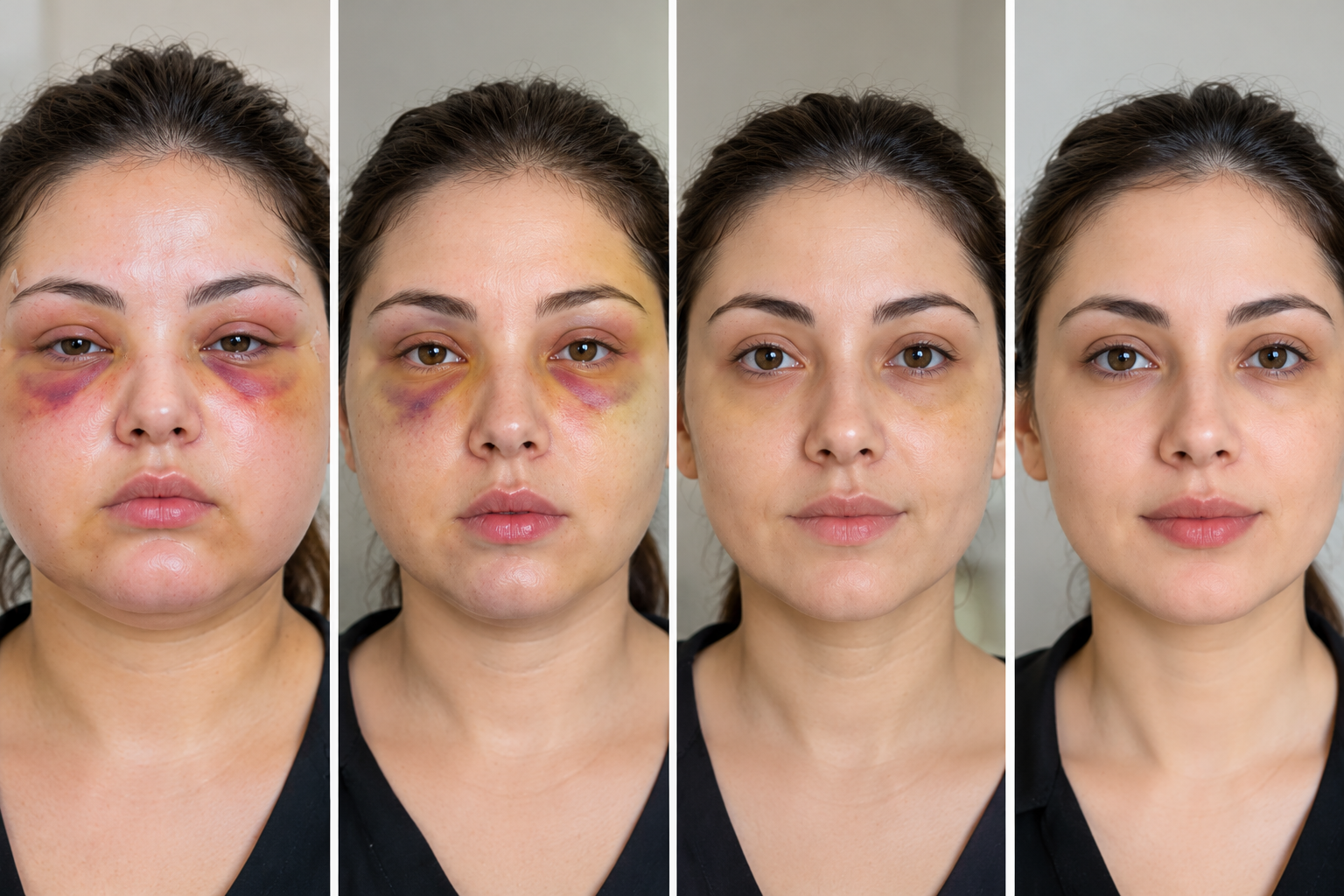
Facelift swelling and bruising timeline
Illustrative recovery pattern — not an individual prediction
-
Days 1–3: Swelling increases
Facial puffiness, tightness and bruising are common. Swelling often peaks around 48–72 hours after surgery.
-
Days 4–7: Early improvement begins
Swelling may gradually decrease. Bruising can change from purple or blue to greenish or yellow as it resolves.
-
Week 2: Bruising becomes less noticeable
Many patients see substantial improvement, although the face may still appear puffy or uneven.
-
Weeks 3–4: More defined contours
Much of the obvious swelling has often settled, and many patients feel more comfortable returning to social activities.
-
Weeks 5–8: Continued tissue settling
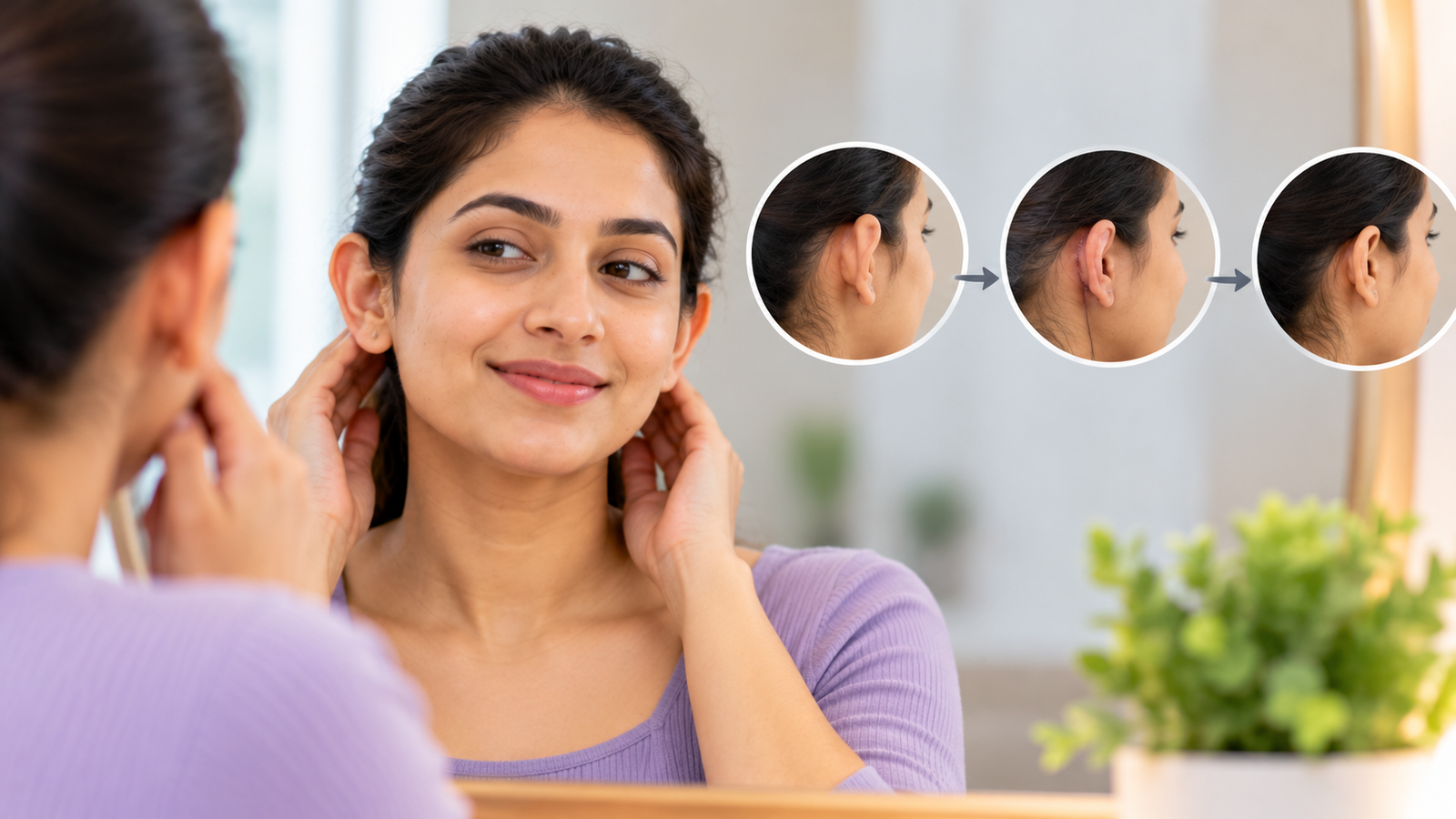
Residual firmness, numbness and subtle swelling may persist, especially around the jawline and ears.
-
Months 3–6 and beyond: Gradual refinement
Remaining swelling continues to improve. Final tissue settling and scar maturation can take longer.
These stages are approximate. More extensive surgery, combined procedures and individual medical factors can change the timeline.
How Much Bruising Is Normal After Facial Surgery?
Bruising after facial surgery occurs when small blood vessels release blood into the surrounding tissues.
Bruising may appear around:
-
Cheeks
-
Jawline
-
Neck
-
Areas near the ears
-
Lower eyelids, depending on the procedure
Bruises often change colour as the body gradually breaks down and absorbs the blood.
|
Recovery Period |
Typical Bruising Appearance |
|---|---|
|
Days 1–3 |
Red, purple or blue discolouration |
|
Days 4–7 |
Bruising may spread slightly downward and begin changing colour |
|
Days 7–14 |
Greenish or yellow discolouration as bruises fade |
|
Weeks 2–3 |
Most visible bruising improves in many patients |
|
After 3 weeks |
Residual discolouration may remain in some patients |
The amount of bruising depends on surgical technique, medications, skin characteristics and individual healing.
Is Swelling Worse in the Morning After a Facelift?
Some patients notice more facial puffiness after waking up.
This can happen because fluid redistributes while lying down.
Swelling may gradually improve during the day as the patient remains upright and moves around gently.
However, sudden, rapidly increasing or one-sided swelling should not be assumed to be normal.
Patients should contact their surgical team promptly if swelling is severe, painful or accompanied by unusual symptoms.
How Can You Reduce Swelling After Facelift Surgery?
Managing swelling after facelift surgery involves following the surgeon's specific postoperative instructions.
1. Keep Your Head Elevated
Sleeping with the head slightly elevated may help reduce fluid accumulation.
The surgeon may recommend using extra pillows or an appropriate elevated sleeping position.
2. Use Cold Compresses Only if Approved
Cold compresses may be recommended for some procedures, but direct ice application or pressure over operated tissues can be harmful.
Always follow the treating surgeon's instructions.
3. Avoid Strenuous Physical Activity
Heavy exercise, lifting and activities that increase blood pressure may worsen swelling or increase bleeding risk during early recovery.
Resume activities only after medical clearance.
4. Maintain Adequate Hydration
Drinking sufficient fluids supports normal recovery.
Avoid dehydration and follow any specific medical advice regarding fluid intake.
5. Follow Medication Instructions
Take prescribed medications as directed.
Do not independently start aspirin, anti-inflammatory medication, herbal supplements or other products that may affect bleeding.
Patients who take prescribed blood thinners should never stop them without guidance from their treating clinicians.
6. Avoid Smoking and Nicotine
Smoking and nicotine can impair circulation and wound healing.
Patients should discuss nicotine cessation before and after surgery.
7. Attend Scheduled Follow-Up Visits
Regular follow-up helps the surgeon monitor swelling, wound healing and recovery progress.
For additional preparation advice, read the facial cosmetic surgery preparation guide.
What Should You Avoid During Facelift Recovery?
Certain activities may increase swelling, interfere with healing or raise the risk of complications.
During early recovery, patients may be advised to avoid:
-
Heavy lifting
-
Strenuous exercise
-
Bending or straining excessively
-
Smoking and nicotine use
-
Alcohol during periods restricted by the surgeon or medication instructions
-
Applying pressure to healing facial tissues
-
Sleeping directly on operated areas
-
Unapproved facial massage
-
Saunas and excessive heat exposure
Restrictions vary according to the surgical procedure.
Is One Side of the Face More Swollen Than the Other?
Mild differences in swelling can occur after facial surgery.
The two sides of the face may not heal at exactly the same rate.
However, marked asymmetry, sudden swelling or increasing pain may indicate a complication such as a haematoma.
A haematoma is a collection of blood beneath the skin that may require urgent treatment.
Contact your surgeon immediately if one side becomes rapidly larger, firmer or more painful.
How Does Swelling Differ Between Facial Procedures?
Different facial cosmetic procedures involve different tissues and recovery patterns.
|
Procedure |
Common Swelling Areas |
General Recovery Considerations |
|---|---|---|
|
Facelift |
Cheeks, jawline and areas near the ears |
Obvious swelling often improves over 2–4 weeks |
|
Neck lift |
Under the chin and neck |
Tightness and swelling may persist for several weeks |
|
Eyelid surgery |
Upper or lower eyelids |
Bruising and swelling often improve substantially within 1–2 weeks |
|
Facial fat grafting |
Areas receiving fat and donor sites |
Swelling can temporarily exaggerate facial fullness |
|
Brow lift |
Forehead and around the eyes |
Swelling may extend toward the eyelids |
These are general estimates rather than guaranteed recovery periods.
Patients considering eyelid rejuvenation can review eyelid lift surgery.
For procedures involving facial volume restoration, see facial fat grafting.
Can Facial Swelling Affect the Final Facelift Result?
Yes. Temporary swelling can make the face appear unusually full, tight or asymmetrical during recovery.
Early changes do not necessarily reflect the final surgical outcome.
As swelling decreases, the underlying facial contours become easier to assess.
Patients may notice:
-
Gradual improvement in jawline definition
-
Reduced puffiness around the cheeks
-
More natural tissue movement
-
Softening of areas that initially felt firm
-
Gradual improvement in scar appearance
For patients concerned about an overly tight appearance, the natural-looking facelift guide explains how surgical planning and healing influence results.
How Long Should You Take Off Work After a Facelift?
Many patients plan approximately two to three weeks away from work or major social events.
However, recovery needs vary.
|
Activity |
Approximate Return |
|---|---|
|
Gentle walking |
Often within the first few days, as advised |
|
Desk-based work |
Around 2–3 weeks |
|
Social events |
Often after 2–4 weeks, depending on visible bruising |
|
Light exercise |
When cleared by the surgeon |
|
Heavy exercise |
Often after 4–6 weeks or longer, with approval |
|
Final appearance assessment |
Several months after surgery |
Patients undergoing multiple procedures may require additional recovery time.
When Is Swelling After Facelift Surgery Dangerous?
Most postoperative swelling is expected, but certain symptoms require prompt attention.
Warning signs that need medical attention
-
Sudden or rapidly increasing swelling, especially on one side
-
Severe or worsening pain
-
Significant bleeding or a rapidly expanding firm area
-
Fever, spreading redness or pus
-
Skin becoming unusually dark, pale or blistered
-
Wound separation
-
New facial weakness or unexpected changes in movement
Contact your surgeon urgently for these symptoms. Difficulty breathing, chest pain or other life-threatening symptoms require emergency medical care.
Can Facial Massage Reduce Swelling After Surgery?
Facial massage should not be started without the surgeon's approval.
During early recovery, pressure on healing tissues may interfere with surgical repair or cause discomfort.
Some surgeons may recommend specific techniques later in recovery, but these should be individualised.
Avoid self-directed lymphatic drainage massage or facial treatments until cleared by the surgical team.
How Can You Prepare for Facelift Recovery Before Surgery?
Preparing in advance can make recovery more manageable.
Consider:
-
Arranging transportation after surgery.
-
Having someone available to help during the initial recovery period.
-
Preparing a comfortable sleeping arrangement.
-
Planning time away from work and social commitments.
-
Keeping prescribed medications and wound-care supplies ready.
-
Following instructions about medications and supplements.
-
Scheduling postoperative follow-up appointments.
Patients considering more than one facial procedure can review the face makeover treatment order guide for information about treatment planning.
Facelift Recovery Consultation With Dr. Ashutosh Shah
At Elegance Clinic, Dr. Ashutosh Shah discusses expected recovery stages, wound care, swelling, bruising and individual risk factors with patients considering facial rejuvenation surgery. Patients concerned about swelling after facelift surgery can discuss how the planned procedure may affect their recovery, when they may return to routine activities and which warning signs require medical attention. Postoperative instructions are tailored to the patient's treatment and healing progress.
Conclusion
Swelling after facelift surgery is a normal part of recovery, particularly during the first several days.
Most visible bruising and swelling gradually improve over the first few weeks, although subtle changes may continue for months.
Following postoperative instructions, allowing adequate healing time and attending scheduled follow-up visits can support recovery.
Patients should also recognise warning signs such as rapidly increasing swelling, severe pain or unusual wound changes.
For information about facial rejuvenation surgery and recovery planning, visit Elegance Face Makeover