Otoplasty Scar: Where Is It and Does It Show?
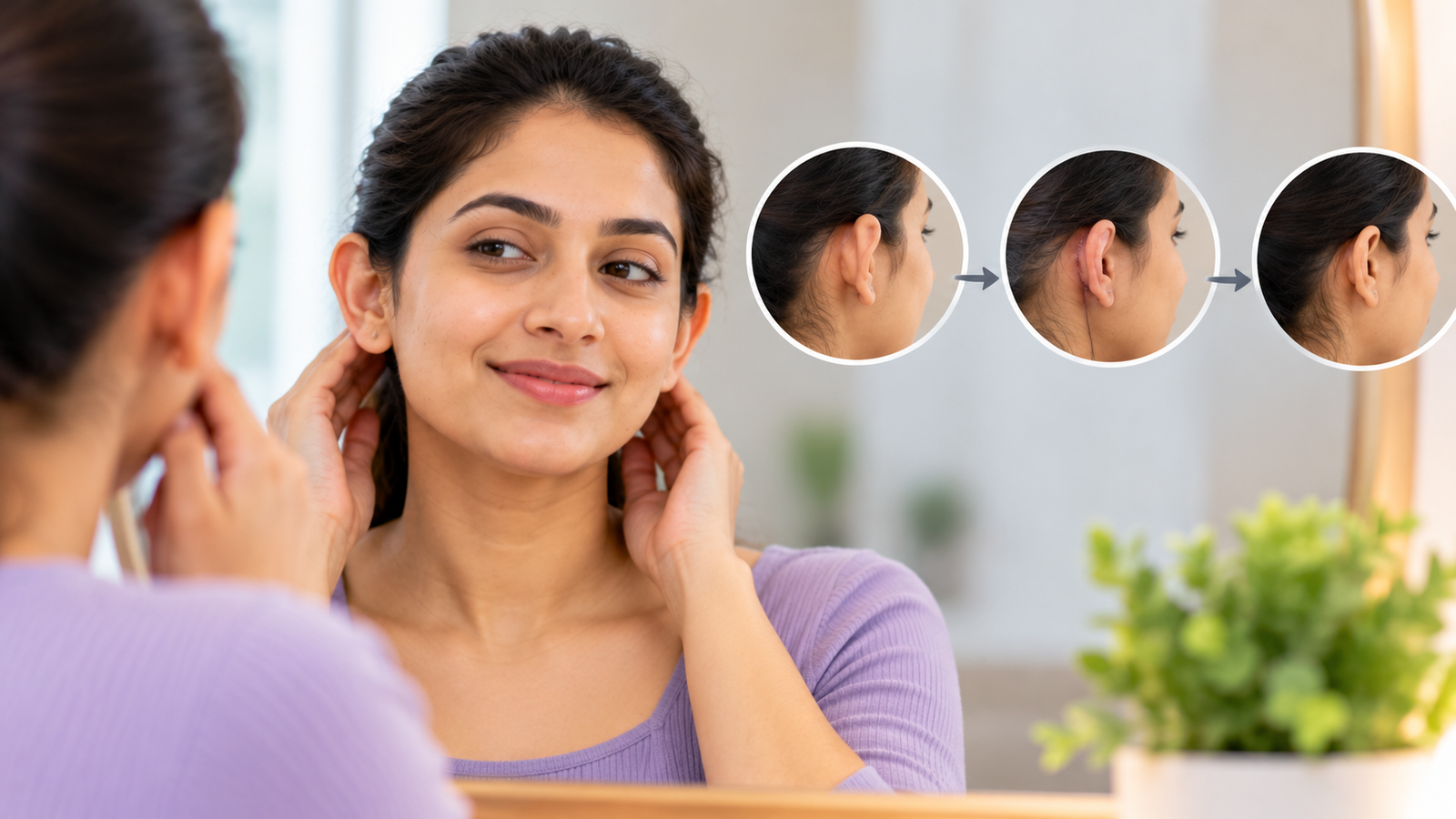
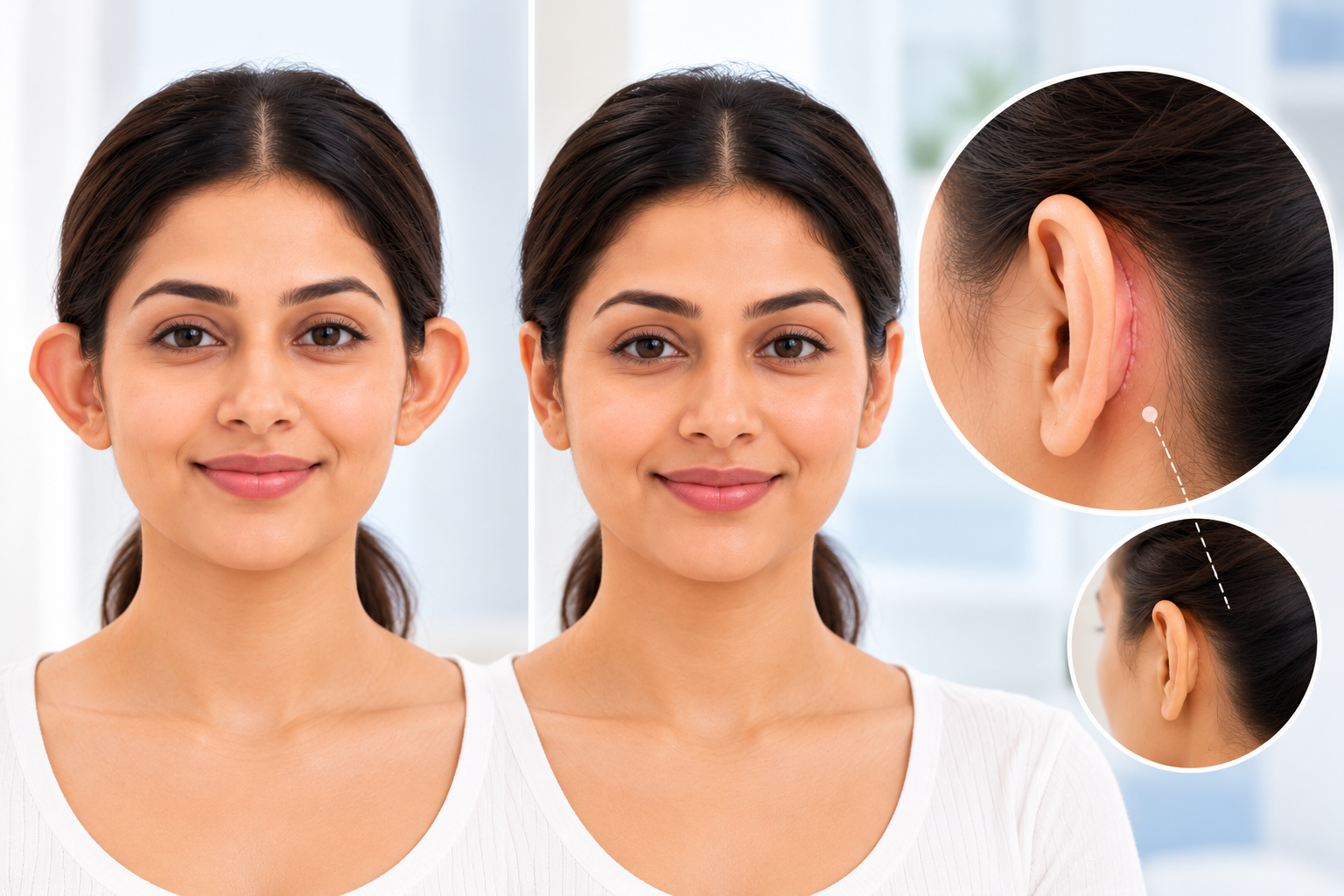
An otoplasty scar is usually located in the natural crease behind the ear, where it is less noticeable from the front. Ear correction surgery requires incisions, so some scarring is unavoidable. However, careful incision placement and proper healing can help scars become less visible over time. The final appearance depends on surgical technique, skin characteristics and postoperative care.
Many patients considering ear correction worry about whether others will notice their surgical scars.
Understanding incision placement, scar healing and the factors affecting scar visibility can help patients make informed decisions.
Where Is an Otoplasty Scar Usually Located?
During otoplasty surgery, the surgeon reshapes or repositions the outer ear cartilage to improve ear prominence, shape or symmetry.
In many traditional ear pinning procedures, the incision is made behind the ear.
Common incision locations include:
1. Behind the Ear
The most common incision location is the natural fold between the back of the ear and the side of the head.
This area is called the postauricular crease.
A scar behind the ear is generally less visible because it is partly concealed by the ear itself.
2. Within Natural Ear Folds
Some ear reshaping techniques may involve incisions within natural folds of the outer ear.
The exact location depends on the deformity being corrected and the surgical approach.
3. On the Front of the Ear
Certain cartilage reshaping or reconstructive procedures may require an incision on the front surface of the ear.
These incisions are usually positioned carefully to reduce visibility, but they may be more noticeable than scars behind the ear.
The surgeon should explain the planned incision pattern before surgery.
Will an Otoplasty Scar Be Visible?
An otoplasty scar may be visible when someone looks closely behind the ear, especially during early healing.
However, scars positioned within the natural crease behind the ear are often difficult to notice during everyday interactions.
Scar visibility depends on several factors:
-
Incision location
-
Skin type and pigmentation
-
Individual wound healing
-
Surgical closure technique
-
Genetic tendency toward raised scars
-
Infection or wound complications
-
Postoperative scar care
No surgeon can guarantee completely invisible scars.
What Does an Otoplasty Scar Look Like During Healing?
The appearance of an ear surgery scar changes gradually after the procedure.
|
Healing Period |
Common Scar Appearance |
|---|---|
|
First 1–2 weeks |
Redness, mild swelling and tenderness |
|
Weeks 3–4 |
Incision becomes more settled as swelling improves |
|
Months 2–3 |
Scar may remain pink or slightly firm |
|
Months 3–6 |
Gradual softening and fading |
|
Months 6–12 |
Scar colour and texture continue improving |
|
12–18 months or longer |
Further scar maturation may occur |
These timelines are approximate.
Some patients develop fine, flat scars, while others may experience raised or more noticeable scarring.
Why Are Otoplasty Incisions Usually Made Behind the Ear?
The area behind the ear provides surgical access to the cartilage while helping conceal the incision.
This approach offers several potential advantages.
Less Visible Scar Placement
The natural fold behind the ear can hide much of the incision line.
Access to Ear Cartilage
The surgeon can reshape cartilage or place sutures through a posterior approach in many standard otoplasty procedures.
Preservation of Natural Ear Appearance
Careful incision placement can help maintain the normal contours of the external ear.
Suitable for Many Ear Pinning Procedures
Posterior incisions are commonly used when correcting prominent or protruding ears.
However, not every ear deformity can be treated using only an incision behind the ear.
Patients considering ear correction and facial cosmetic procedures should discuss the appropriate technique during consultation.
Do Children and Adults Have Different Otoplasty Scars?
The incision location is often similar for children and adults undergoing standard ear pinning surgery.
However, healing can vary according to age, skin characteristics, surgical technique and individual health.
|
Factor |
Children |
Adults |
|---|---|---|
|
Common incision location |
Behind the ear |
Behind the ear |
|
Cartilage characteristics |
Often more flexible |
May be firmer |
|
Scar healing |
Depends on individual healing |
Depends on individual healing |
|
Postoperative care |
Requires caregiver support |
Patient manages recovery |
|
Scar visibility |
Influenced by technique and healing |
Influenced by technique and healing |
Neither age group is guaranteed to have invisible scars.
For patients considering the timing of treatment, the ear surgery information page provides an overview of otoplasty.
Can Otoplasty Be Performed Without Scars?
All procedures involving surgical incisions can produce scars.
Some selected ear correction techniques use small access points or suture-based methods, but they are not suitable for every patient and are not necessarily scar-free.
Even very small incisions may leave visible marks.
The most appropriate technique should be selected according to ear anatomy and the correction required, not only the desire to avoid scars.
How Can You Reduce the Appearance of an Otoplasty Scar?
Although scars cannot be completely prevented, appropriate care can support healing.
1. Follow Postoperative Wound Care Instructions
Keep the surgical area clean and follow the surgeon's advice regarding dressings and wound care.
Avoid applying unapproved creams or oils to fresh incisions.
2. Avoid Pressure on the Ears
Sleeping directly on the operated ear or placing unnecessary pressure on the incision may cause discomfort and affect healing.
Use protective dressings or headbands as instructed.
3. Avoid Smoking and Nicotine
Smoking and nicotine exposure can impair wound healing and increase the risk of complications.
Patients should discuss nicotine cessation with their surgeon.
4. Protect Healing Skin From Sun Exposure
Once the wound has healed sufficiently, appropriate sun protection may help reduce pigmentation changes.
5. Use Silicone Scar Products Only When Recommended
Silicone gel or sheets may help improve selected raised scars after the wound has fully closed.
Do not begin scar treatment without medical guidance.
6. Attend Follow-Up Appointments
Regular follow-up helps identify wound-healing problems and monitor scar development.
Patients preparing for surgery can review the facial cosmetic surgery preparation guide.
Can an Otoplasty Scar Become Thick or Raised?
Yes. Some patients may develop hypertrophic scars or keloids.
Hypertrophic Scars
These scars become raised but generally remain within the original incision boundaries.
Keloid Scars
Keloids grow beyond the original wound edges and may continue enlarging.
The ear region can be susceptible to keloid formation, particularly in individuals with a personal or family history of keloids.
Signs of abnormal scarring may include:
-
Increasing scar thickness
-
Persistent itching
-
Raised scar tissue
-
Tenderness
-
Scar growth beyond the incision line
Patients noticing these changes should seek medical assessment.
What Treatments Can Improve a Visible Otoplasty Scar?
Treatment depends on the type, location and maturity of the scar.
Possible options include:
-
Silicone-based scar management
-
Corticosteroid injections for selected raised scars
-
Laser treatments for appropriate scar concerns
-
Other specialist-directed scar treatments
-
Scar revision surgery in selected cases
Scar revision may improve appearance but cannot guarantee complete scar removal.
Some treatments may need to be delayed until the scar has matured.
Does Otoplasty Scar Healing Affect the Final Ear Shape?
An otoplasty scar is only one part of the healing process.
During recovery, swelling and tissue tightness can temporarily affect ear appearance.
The final ear position also depends on:
-
Cartilage reshaping technique
-
Suture placement
-
Individual cartilage characteristics
-
Postoperative swelling
-
Healing response
-
Recurrence or changes in ear position
Patients should avoid judging the final result during the first few weeks.
How Long Does Otoplasty Recovery Take?
Recovery depends on whether one or both ears are treated and the complexity of the procedure.
|
Recovery Stage |
Expected Changes |
|---|---|
|
First 2–3 days |
Swelling, tenderness and protective dressing |
|
First week |
Early discomfort and swelling begin improving |
|
1–2 weeks |
Many patients return to desk work or school |
|
3–4 weeks |
Continued improvement in ear sensitivity |
|
4–6 weeks |
Some physical activities may resume with approval |
|
Following months |
Scar maturation and ear contour settling continue |
Contact sports and activities that could bend or injure the ears may need to be avoided for longer.
Patients should follow individual postoperative instructions.
When Should You Be Concerned About an Ear Surgery Scar?
Mild redness and tenderness are common during early healing.
However, seek medical advice if you notice:
-
Increasing redness spreading beyond the incision
-
Worsening pain
-
Pus or unusual discharge
-
Fever
-
Sudden swelling or bleeding
-
Wound separation
-
Rapidly increasing scar thickness
These symptoms may indicate infection, haematoma or abnormal wound healing.
Otoplasty Scar Consultation With Dr. Ashutosh Shah
At Elegance Clinic, Dr. Ashutosh Shah evaluates patients considering ear correction surgery and explains the expected incision location, cartilage reshaping technique and postoperative healing process. Patients concerned about an otoplasty scar can discuss scar visibility, individual risk factors, wound care and realistic surgical outcomes before choosing treatment.
A personalised consultation helps determine the appropriate approach for each patient's ear anatomy and concerns.
Conclusion
An otoplasty scar is usually located behind the ear, where natural folds help make it less noticeable.
Although ear correction surgery cannot be completely scar-free, careful incision placement and appropriate postoperative care can support better scar healing.
Patients should understand that scar appearance varies and that perfectly invisible scars cannot be guaranteed.
For information about ear correction surgery and facial cosmetic treatment options, visit Elegance Face Makeover.