Vampire Facial Or PRP Injections: Which One Your Skin Problem Actually Calls For
<style type="text/css"> </style> A vampire facial combines microneedling with platelet-rich plasma (PRP) spread on the skin, so it mainly helps texture, fine scars and pores. PRP injections place plasma under the skin for under-eye and dullness concerns, while a vampire facelift adds hyaluronic filler for volume. Most people need 3 sessions about 4 weeks apart to judge results.
Vampire facial vs PRP injections comes down to how platelet-rich plasma is delivered and which skin concern needs treatment. A vampire facial combines microneedling with PRP to address texture and selected acne scars. PRP injections target specific areas, while a vampire facelift combines PRP with dermal fillers. Results vary, and no option guarantees skin rejuvenation.
PRP treatments have become popular for facial rejuvenation, acne scars and under-eye concerns. However, terms such as vampire facial, PRP injections and vampire facelift are often used interchangeably, even though they describe different approaches.
The main difference is not the blood sample. All three may involve platelet-rich plasma prepared from the patient's blood.
What changes is how the PRP is delivered, whether another procedure is added and what the treatment is intended to achieve.
Understanding these differences helps patients avoid choosing a procedure based on its name rather than their skin condition.
What Is the Difference Between a Vampire Facial, PRP Injections and a Vampire Facelift?
PRP stands for platelet-rich plasma. It is a concentrated component of blood containing platelets and associated growth factors.
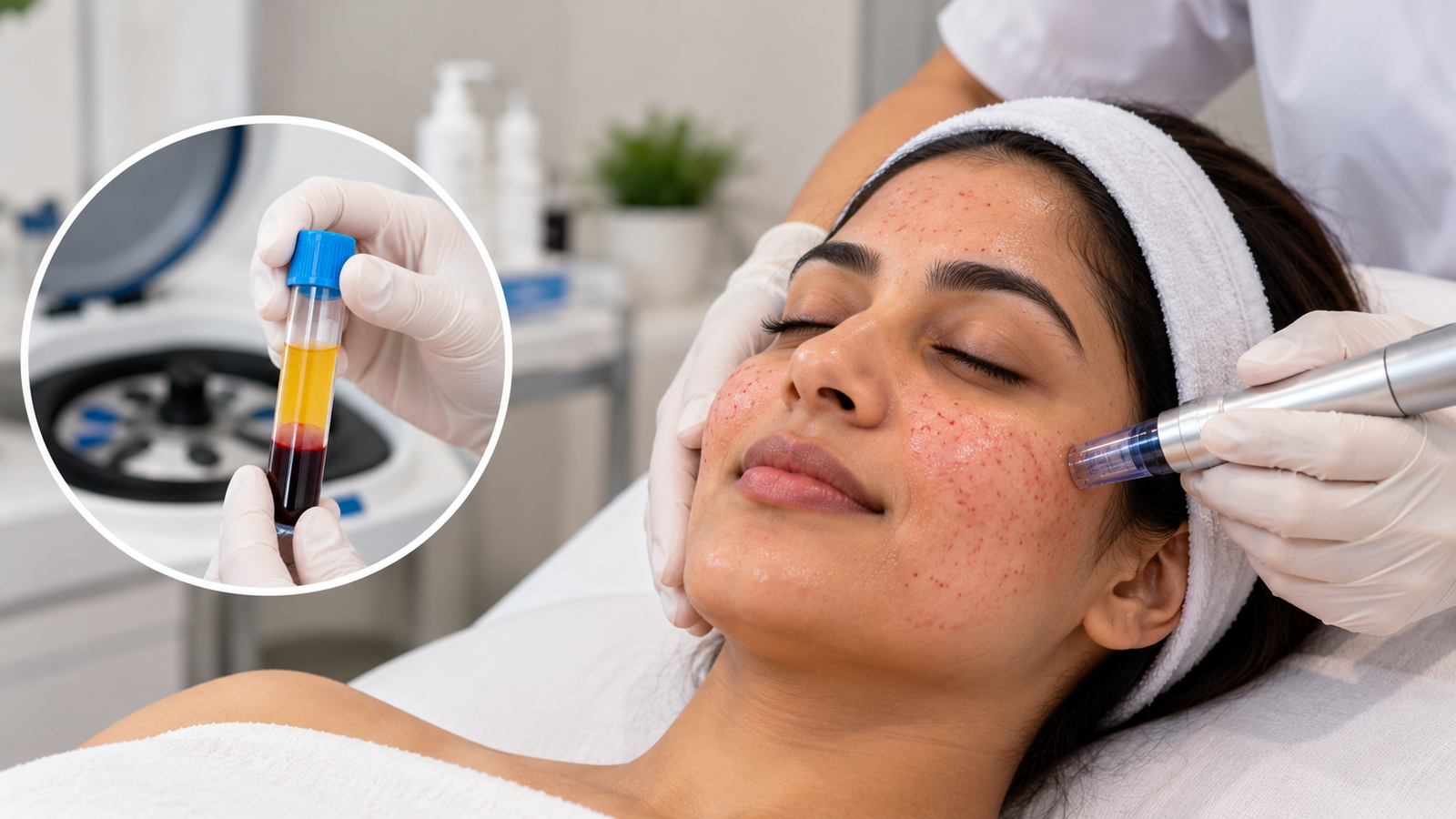
PRP is prepared by collecting a small blood sample and processing it in a centrifuge.
The resulting plasma is then used according to the planned treatment.
1. Vampire Facial: PRP With Microneedling
A vampire facial usually combines microneedling with PRP applied to the skin.
Microneedling uses fine sterile needles to create controlled micro-injuries in the skin.
This process stimulates the skin's wound-healing response.
PRP is then applied during or after microneedling, depending on the treatment protocol.
The procedure is commonly considered for:
-
Uneven skin texture
-
Selected atrophic acne scars
-
Mild fine lines
-
General skin-quality concerns
Microneedling has evidence supporting improvement in certain acne scars. Adding PRP may provide additional benefits in some patients, but studies vary in quality and results.
PRP should not be described as a guaranteed way to remove scars or close enlarged pores.
2. PRP Injections: Plasma Delivered Into Selected Areas
PRP injections involve placing prepared platelet-rich plasma for face into targeted tissue using small needles.
Facial PRP injections are sometimes offered for:
-
Selected under-eye concerns
-
Fine lines
-
Skin-quality improvement
-
Areas with mild changes in texture
However, the clinical evidence for many cosmetic facial injection indications remains limited or inconsistent.
PRP injections do not replace lost facial volume in the same predictable way as hyaluronic acid fillers.
They also cannot reliably correct every type of dark circle.
3. Vampire Facelift: PRP Combined With Filler
A vampire facelift generally refers to a combination treatment involving PRP and a dermal filler, commonly hyaluronic acid.
The filler provides structural volume or contour, while PRP is used as an additional skin-quality treatment.
It may be considered when facial volume loss is a major concern.
Unlike a surgical facelift, this treatment does not remove excess skin or reposition deeper facial tissues.
Patients interested in volume restoration can also explore a liquid facelift with filler.
The term vampire facelift is a marketing description, so patients should confirm exactly which products and procedures are included.
Vampire Facial vs PRP Injections: Treatment Comparison Table
| Treatment | How PRP is delivered | Commonly targeted concerns | Typical sessions | Downtime | When treatment may be unsuitable |
|---|---|---|---|---|---|
| Vampire facial | PRP applied with microneedling | Texture, selected acne scars, fine lines | Often 3 sessions, approximately 4 weeks apart | Redness for 1–3 days, sometimes longer | Active skin infection, inflamed acne cysts, impaired healing |
| PRP injections | PRP injected into selected facial areas | Selected skin-quality and under-eye concerns | Often 3 or more, depending on indication | Temporary swelling or bruising | Platelet disorders, infection, certain bleeding risks |
| Vampire facelift | PRP combined with dermal filler | Facial volume and selected skin-quality concerns | Individualised; filler and PRP schedules differ | Swelling or bruising for several days or longer | Unsuitable filler candidates, active infection or relevant blood disorders |
Important: These session counts and recovery periods are approximate. PRP protocols are not fully standardised, and treatment suitability must be assessed individually.
Which Skin Problems Does Each PRP Treatment Address?
Choosing between a vampire facial vs PRP injection approach begins with identifying the actual skin problem.
A treatment that improves texture may not correct volume loss, pigmentation or deep scars.
Acne Scars
Microneedling is commonly used for certain depressed acne scars.
These include selected rolling and boxcar scars.
The controlled skin injury encourages collagen remodelling over time.
Combining microneedling with PRP may improve outcomes in some patients, but the additional benefit is not consistent across all studies.
Deep ice-pick scars or tethered scars may need other procedures.
Patients with different scar types may benefit from a broader acne scar management plan.
Enlarged Pores and Uneven Texture
Microneedling may improve the appearance of uneven texture in selected patients.
However, pores are normal anatomical structures and cannot be permanently eliminated.
PRP itself has limited evidence for reliably reducing pore size.
The best approach depends on whether the visible pores are associated with oily skin, scarring or reduced skin elasticity.
Under-Eye Dark Circles
PRP for under eye concerns is sometimes promoted for improving skin quality.
However, dark circles have several possible causes:
-
Pigmentation
-
Thin skin
-
Visible blood vessels
-
Tear-trough hollowing
-
Allergies
-
Shadowing caused by facial anatomy
PRP cannot reliably treat every cause.
For example, dark circles caused mainly by pigmentation may need a different treatment from shadows caused by volume loss.
Fine Lines
Microneedling may provide modest improvement in selected fine lines through collagen remodelling.
PRP injections have also been studied for skin rejuvenation, but evidence remains variable.
Deeper wrinkles and significant skin laxity may require other approaches.
Facial Volume Loss
PRP alone is not a dependable substitute for a volumising filler.
When volume loss is the main concern, a properly selected filler treatment may be more appropriate.
Filler injections also carry distinct risks, including rare but serious vascular complications, and require appropriately trained medical practitioners.
Treatment-to-Concern Matrix
| Skin concern | Treatment commonly considered | Important limitation |
|---|---|---|
| Mild atrophic acne scars | Microneedling, sometimes combined with PRP | Deep or tethered scars may need additional procedures |
| Uneven texture | Microneedling-based treatment | Improvement is gradual and variable |
| Dark circles | Cause-specific assessment; PRP only in selected cases | PRP does not reliably correct pigmentation or hollowing |
| Fine lines | Microneedling or other skin treatments | Results are usually modest |
| Facial volume loss | Dermal filler when appropriate | PRP alone does not provide predictable volume |
| Active cystic acne | Treat active acne first | Microneedling should generally be postponed |
How Many PRP Sessions Are Needed and How Long Do Results Last?
Patients often ask how many PRP for face sessions are required.
There is no universally accepted number because PRP preparation methods, treatment depth and skin conditions differ.
Vampire Facial Session Count
A commonly used schedule is approximately three sessions, spaced around four weeks apart.
However, some patients may need fewer or more sessions depending on the treatment plan.
Visible improvement in acne scars may take several months because collagen remodelling occurs gradually.
PRP Injection Session Count
Facial PRP injection protocols frequently involve multiple appointments.
Three sessions are often discussed in cosmetic practice, but this is not a proven universal requirement.
The treatment schedule should be based on the specific indication and available clinical evidence.
Vampire Facelift Session Count
When PRP is combined with filler, the filler component may provide a visible contour change earlier.
PRP-related skin changes, if they occur, may develop more gradually.
The longevity of filler depends on the product, treatment site and individual factors.
How Long Do Results Last?
Results are not permanent.
Skin ageing, sun exposure, smoking, skin condition and other factors influence the appearance over time.
Microneedling-related scar improvements may persist, but maintenance treatments are sometimes recommended.
For cosmetic PRP injections, long-term durability is not well established.
Patients should be cautious of claims promising permanent rejuvenation.
What Is the Downtime After PRP Microneedling?
A vampire facial involves controlled skin injury, so temporary inflammation is expected.
The recovery period depends on treatment depth, skin sensitivity and whether additional procedures are performed.
First 24 Hours
Patients may experience:
-
Redness
-
Mild swelling
-
Tightness
-
Skin sensitivity
-
A warm or sunburn-like sensation
The treated skin should be protected from irritation.
Days 2–3
Redness and sensitivity usually begin improving.
Some patients experience mild dryness or flaking.
More intensive microneedling may cause longer-lasting redness.
Days 4–7
Many patients notice substantial improvement in visible irritation.
However, skin recovery varies, and some individuals need additional time.
After One Week
Most routine surface irritation should have settled, although deeper collagen remodelling continues for weeks to months.
Post-Treatment Care
Follow the treating clinician's instructions, which may include:
-
Gentle cleansing
-
Avoiding harsh exfoliants
-
Avoiding retinoids temporarily
-
Protecting the skin from sun exposure
-
Avoiding unnecessary touching
-
Using recommended moisturisers
-
Waiting before applying makeup
Professional derma roller microneedling and other needling procedures should be performed with appropriate infection-control measures.
Do not attempt a blood-based vampire facial at home. Improper blood handling, reused equipment or poor sterilisation can transmit infections.
How Is the Blood Sample Processed for PRP?
PRP preparation typically involves collecting a small sample of the patient's blood into an appropriate sterile collection tube.
The blood is processed using a centrifuge, which separates its components according to density.
The clinician then prepares the platelet-containing plasma fraction according to the equipment and treatment protocol.
Basic PRP Preparation Steps
-
A blood sample is collected using sterile equipment.
-
The sample is placed in an appropriate centrifuge system.
-
Centrifugation separates the blood components.
-
The platelet-rich fraction is prepared according to the protocol.
-
The PRP is applied or injected using sterile technique.
The platelet concentration and composition can vary between preparation systems.
Higher platelet concentration does not automatically guarantee a better cosmetic result.
Appropriate blood handling, sterile equipment and trained staff are essential.
Who Should Not Have PRP Treatment?
PRP uses the patient's own blood, but that does not mean it is suitable for everyone.
A medical assessment is necessary before treatment.
1. Platelet or Blood Disorders
Patients with significant thrombocytopenia, platelet dysfunction or certain blood disorders may not be suitable candidates.
The clinician may request relevant blood tests when indicated.
2. Anticoagulant or Antiplatelet Medication
Blood-thinning medications can increase bruising or bleeding risk and may affect treatment planning.
Do not stop prescribed anticoagulants or antiplatelet medicines without approval from the prescribing doctor.
3. Active Skin Infection
Microneedling and injections should generally be postponed when there is an active infection at the treatment site.
4. Active Inflamed Acne
Deep inflammatory acne lesions or active cysts can increase irritation and infection concerns.
Active acne should usually be controlled before scar-focused microneedling.
5. Pregnancy
Elective cosmetic PRP procedures are generally deferred during pregnancy because adequate safety evidence is lacking.
6. Poorly Controlled Diabetes
Diabetes is not an automatic exclusion, but poor blood glucose control can affect healing and infection risk.
The clinician should assess the patient's overall health before treatment.
7. Other Healing or Immune Problems
Patients with significant immunosuppression, impaired wound healing or relevant systemic illness may require additional assessment.
Safety Checklist
| Medical condition | Why it matters | Usual approach |
|---|---|---|
| Low platelet count | May affect PRP suitability | Medical evaluation before treatment |
| Platelet dysfunction | May reduce suitability | Specialist assessment |
| Blood-thinning medication | Increased bruising or bleeding risk | Review medication with prescribing doctor |
| Active skin infection | Risk of worsening or spreading infection | Postpone treatment |
| Active acne cysts | Increased inflammation and infection concerns | Treat acne first |
| Pregnancy | Limited cosmetic safety evidence | Defer elective treatment |
| Poorly controlled diabetes | Healing and infection concerns | Improve control and assess suitability |
Vampire Facial Near Dindoli: Which Treatment Should You Choose?
Patients considering a vampire facial near dindoli should begin with a skin assessment rather than selecting a procedure based on promotional claims.
At Elegance Clinic, Dr. Ashutosh Shah, Plastic and Cosmetic Surgeon, can discuss facial skin concerns, available treatment approaches and realistic expectations for PRP-based procedures.
During consultation, the following questions are useful:
-
Is the main problem acne scarring, texture, pigmentation or volume loss?
-
Would microneedling alone be sufficient?
-
Is there evidence that adding PRP would benefit my skin concern?
-
Would injections be more appropriate than topical PRP?
-
How many sessions are recommended?
-
What degree of improvement is realistic?
-
What downtime should I expect?
-
Are there any medical reasons to avoid treatment?
-
How is the blood sample processed and handled?
-
What is the total cost of the recommended treatment course?
A suitable treatment plan should explain both the expected benefits and the limitations.
Key Takeaways
-
Vampire facial vs PRP refers to different ways of delivering platelet-rich plasma.
-
A vampire facial combines microneedling with topical PRP.
-
PRP injections deliver plasma into selected tissues.
-
A vampire facelift generally combines PRP with dermal filler.
-
Microneedling may improve selected acne scars and uneven texture.
-
Evidence for cosmetic PRP injections remains variable, especially for under-eye concerns.
-
PRP alone does not reliably replace lost facial volume.
-
Approximately three sessions are commonly proposed for some treatments, but protocols vary.
-
Redness and sensitivity after microneedling often improve within several days.
-
Patients with platelet disorders, active infections or certain medical conditions may need to avoid or postpone treatment.
-
A personalised assessment is more useful than choosing a treatment by its marketing name.
Conclusion: Vampire Facial or PRP Injections?
The choice between a vampire facial vs PRP injection treatment depends on the skin concern, delivery method and expected outcome.
Microneedling-based treatments are generally more relevant when texture or selected acne scars are the main concern. PRP injections may be considered for certain skin-quality indications, although supporting evidence is less established.
When facial volume loss is the primary concern, a filler-based treatment may be more appropriate than PRP alone.
The safest approach is to have the skin condition assessed, understand the limitations of each procedure and select treatment according to clinical suitability rather than promotional terminology.