Thread Lift Gone Wrong: The Faces Threads Do Not Suit And The Warning Signs After Treatment
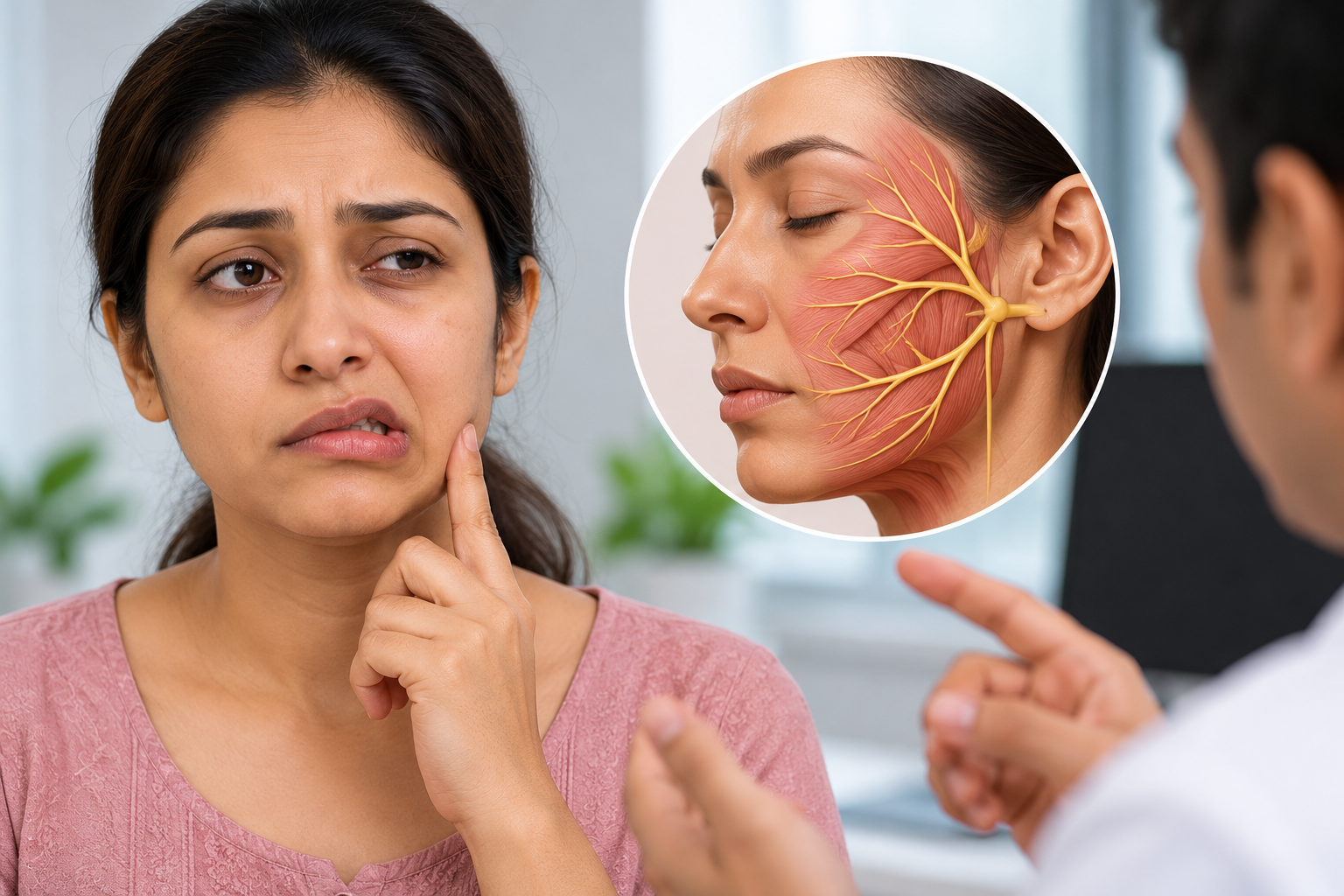
A thread lift gone wrong may involve visible threads, skin dimpling, asymmetry, infection or disappointing lifting results. Complications are more likely when the treatment is poorly matched to facial anatomy, such as very heavy sagging skin or extremely thin cheeks. Mild puckering may improve within one to two weeks, but worsening pain, spreading redness or exposed threads require medical assessment.
Thread lifts are often promoted as a non-surgical alternative to facelifts. They use specially designed threads placed beneath the skin to reposition selected facial tissues and create a modest lifting effect.
However, not every face is suitable for this treatment.
Some patients have excessive skin laxity, heavy facial tissues or very little facial fat. Others expect the same degree of tightening that a surgical facelift can provide.
In these situations, a thread lift may produce limited improvement or an unnatural appearance.
Understanding who should avoid treatment, which side effects are expected and when complications need attention is essential before making a decision.
Which Faces Are Poor Candidates for a Thread Lift?
A successful thread lift depends on facial anatomy, skin quality, tissue weight and realistic expectations.
The procedure generally works best for selected patients with mild to moderate tissue descent who want a subtle improvement.
1. Faces With Very Loose Skin
Patients with significant facial sagging may not achieve enough improvement from threads alone.
Threads can reposition some soft tissue, but they do not remove substantial excess skin.
When skin laxity is severe, the lifting effect may be limited or short-lived.
2. Heavy Facial Tissues
A face with heavy cheeks or substantial lower-face tissue may place greater mechanical demands on the threads.
This can reduce the visible lifting effect and may contribute to early loss of correction.
The surgeon must assess whether the tissue can be repositioned safely and effectively.
3. Very Thin Faces
Patients with very thin skin or limited facial fat may have a greater risk of visible or palpable threads.
Possible concerns include:
-
Visible thread outlines
-
Skin puckering
-
Palpable knots
-
Uneven cheek contours
-
An unnatural appearance during facial movement
Thin skin does not automatically rule out treatment, but it requires careful patient selection.
4. Severely Sun-Damaged Skin
Long-term sun damage can affect skin elasticity and quality.
Threads cannot reverse all structural changes caused by ageing or sun exposure.
Patients with marked skin damage may need a different treatment strategy.
5. Patients Expecting Surgical Facelift Results
A thread lift cannot reproduce the degree of tissue repositioning or skin removal achieved by a surgical facelift.
Patients expecting dramatic jawline tightening or correction of severe jowls may be disappointed.
Thread Lift Candidacy Checklist
| Facial factor | More favourable candidate | Needs careful assessment | Often unsuitable for threads alone |
|---|---|---|---|
| Skin laxity | Mild | Moderate | Severe |
| Facial tissue weight | Light to moderate | Moderately heavy | Very heavy |
| Skin thickness | Adequate tissue coverage | Relatively thin | Extremely thin with high thread visibility risk |
| Facial fat | Balanced distribution | Significant volume loss or heaviness | Anatomy unlikely to support the intended lift |
| Expectations | Subtle improvement | Moderate lifting expectations | Surgical facelift-level expectations |
| Skin health | Healthy skin | Mild inflammatory conditions | Active infection at the treatment site |
This checklist is a practical screening guide, not a validated medical scoring system.
A qualified clinician must assess the face before recommending treatment.
What Are the Common Problems After a Thread Lift?
A thread lift gone wrong can involve temporary side effects, technical complications or dissatisfaction with the result.
Some problems settle naturally, while others require treatment.
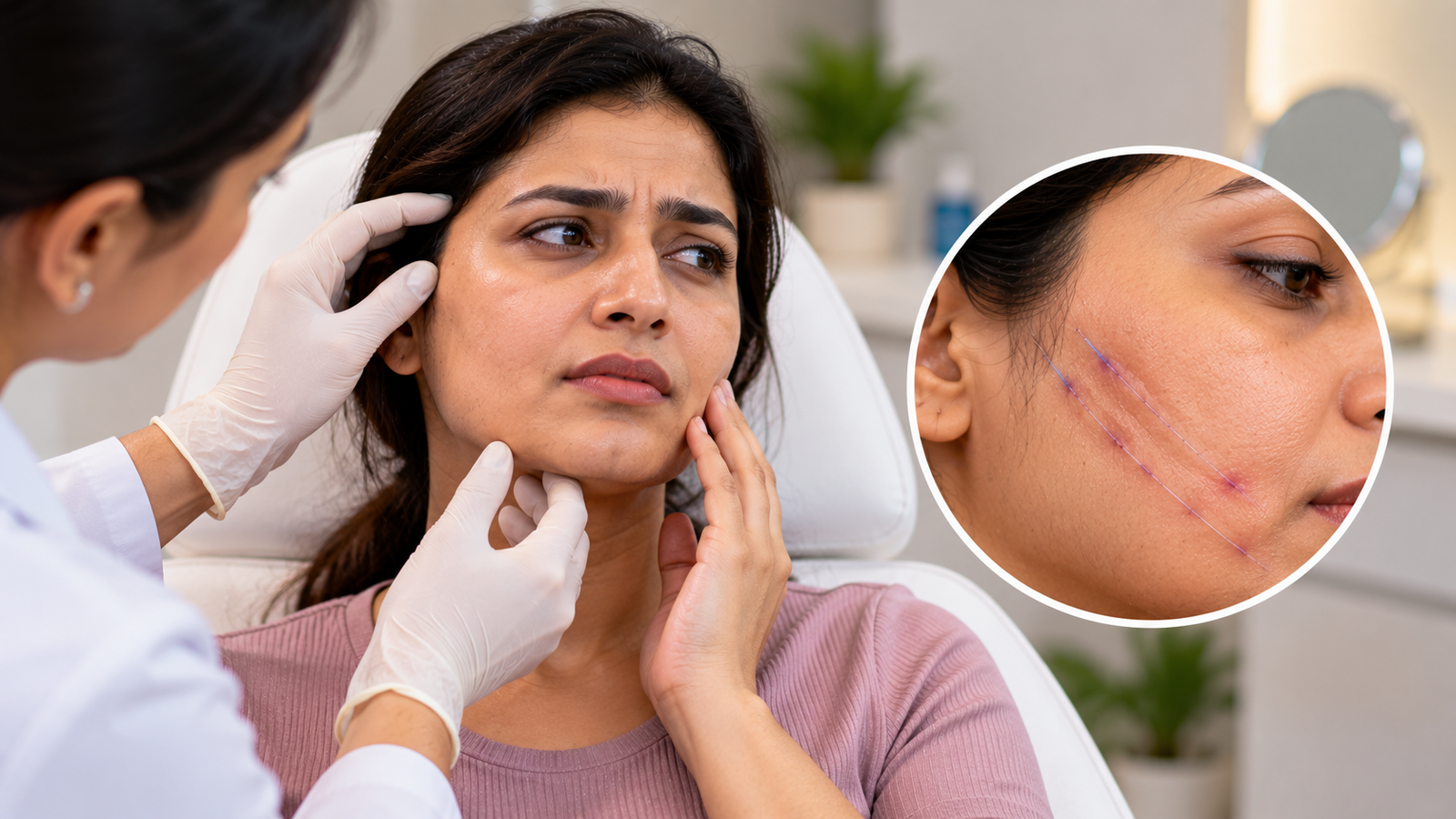
1. Skin Dimpling or Puckering
Dimpling occurs when the skin is pulled inward along the thread pathway.
It may appear as small indentations or uneven areas on the cheek.
Mild early puckering can improve as swelling settles and the tissues relax.
However, pronounced or persistent dimpling may require clinical assessment.
2. Facial Asymmetry
One cheek may appear more lifted than the other.
This can happen because of:
-
Unequal swelling
-
Differences in facial anatomy
-
Uneven tissue repositioning
-
Thread placement differences
-
Changes during healing
Some early asymmetry improves, but persistent imbalance may need correction.
3. Visible or Palpable Threads
Threads placed too superficially may become visible beneath thin skin.
Patients may notice a line, ridge or small lump.
Visible threads do not always resolve without intervention.
4. Thread Extrusion
Thread extrusion occurs when part of a thread emerges through the skin.
This is not considered normal healing.
Patients should contact the treating clinician promptly.
Do not pull, cut or attempt to remove an exposed thread at home.
5. Infection
Infection may develop around the thread pathway.
Warning signs include:
-
Increasing redness
-
Warmth
-
Worsening pain
-
Swelling that increases rather than settles
-
Pus or unusual discharge
-
Fever
An infection requires medical assessment and may need medication, drainage or thread removal.
6. Palpable Lumps
A lump beneath the skin may represent a thread knot, tissue reaction, local inflammation or another complication.
Not every lump indicates infection.
However, painful, growing or persistent lumps should be examined.
Which Thread Lift Side Effects Settle and Which Need Treatment?
Understanding the difference between expected healing and complications can prevent unnecessary worry while helping patients recognise genuine warning signs.
Thread Lift Complication and Recovery Table
| Problem | Possible cause | Usual timeframe | When to contact the clinic | Possible management |
|---|---|---|---|---|
| Mild swelling | Normal tissue response | Often improves over several days | Increasing or persistent swelling | Examination and supportive care |
| Bruising | Small blood vessel injury | Often improves within 1–2 weeks | Extensive or worsening bruising | Assessment and observation |
| Mild dimpling | Tissue puckering | May improve within 1–2 weeks | Severe or persistent indentation | Assessment, observation or adjustment |
| Asymmetry | Uneven swelling or tissue repositioning | May improve as swelling settles | Marked or persistent unevenness | Clinical assessment and possible correction |
| Visible thread | Superficial placement | May persist | Arrange prompt assessment | Adjustment or removal when indicated |
| Thread extrusion | Thread emerging through skin | Not normal healing | Contact clinician promptly | Removal of exposed material |
| Infection | Bacterial infection | Can occur early or later | Spreading redness, pain, discharge or fever | Antibiotics, drainage or removal when indicated |
| Palpable lump | Knot, inflammation or tissue reaction | Variable | Painful, growing or persistent lump | Cause-specific treatment |
Important: These timeframes are general estimates. Severe pain, rapidly increasing swelling, spreading redness, skin discolouration or other concerning symptoms should not be observed at home while waiting for a suggested recovery period to pass.
Is Dimpling After a Thread Lift Normal?
Mild skin puckering can occur during early recovery.
The threads temporarily hold tissue in a repositioned position, and swelling may exaggerate the appearance.
Some dimples soften over the first one to two weeks.
However, not every indentation resolves spontaneously.
When Is Dimpling a Concern?
Contact the treating clinician if:
-
The indentation is deep or worsening.
-
The skin appears unusually tight or distorted.
-
Pain increases rather than improves.
-
The dimple remains prominent after early healing.
-
A thread becomes visible or protrudes.
-
The skin develops redness, warmth or discharge.
How Is Thread Lift Dimpling Corrected?
A thread lift dimpling fix depends on the cause.
Possible approaches include observation, clinician-directed manipulation, adjustment or removal of the responsible thread.
Treatment should only be performed by an appropriately qualified medical professional.
Do not massage a newly treated area unless the treating clinician specifically recommends it.
Unsupervised manipulation may worsen the result or affect thread positioning.
How Long Does a Thread Lift Realistically Last?
Patients frequently ask how long does thread lift last before the skin begins sagging again.
The answer depends on the thread material, technique, facial anatomy and ageing process.
Immediate Lifting Effect
Some improvement may be visible shortly after treatment.
However, early swelling can temporarily change facial contours.
The final appearance should not be judged immediately.
Results Over the Following Months
Absorbable threads gradually break down over time.
The duration varies by material.
Some patients notice a visible lifting effect for approximately 6–18 months, but this is not a guaranteed result and published evidence on long-term durability is limited.
The mechanical lift may diminish before or after the thread material has been absorbed.
Why Do Results Fade?
Several factors influence longevity:
-
Natural ageing
-
Skin elasticity
-
Facial tissue weight
-
Thread type
-
Placement technique
-
Changes in facial fat
-
Individual healing response
Threads do not stop facial ageing.
Patients should avoid treatments marketed as providing permanent lifting without surgery.
When Is a Facelift the Better Choice?
A thread lift and a surgical facelift address facial ageing in different ways.
Threads provide limited tissue repositioning without the extensive dissection involved in surgery.
A surgical facelift can reposition deeper tissues and address excess skin more substantially.
Thread Lift vs Surgical Facelift
| Factor | Thread lift | Surgical facelift |
|---|---|---|
| Best suited for | Selected mild to moderate sagging | More significant tissue descent and skin laxity |
| Treatment type | Minimally invasive | Surgical |
| Skin removal | No significant skin removal | Excess skin may be removed |
| Lifting effect | Usually modest | Can be more substantial |
| Recovery | Often shorter | Generally longer |
| Longevity | Variable, often limited | Usually longer-lasting, though ageing continues |
| Scarring | Small entry points | Surgical incisions and scars |
| Limitations | Cannot correct severe laxity | Greater surgical risks and recovery requirements |
Patients with substantial sagging may benefit from discussing a surgical facelift.
Other patients may prefer a combination of non-surgical approaches.
The guide to sagging face treatment options explains why different causes of facial ageing require different solutions.
Can Thread Lifts Be Combined With Other Treatments?
Some patients have more than one facial concern.
For example, they may have mild tissue descent along with volume loss.
A thread lift may address selected tissue positioning concerns, while fillers may be used for volume restoration.
However, combining procedures is not automatically safer or more effective.
Thread Lift With Dermal Fillers
A liquid facelift uses injectable treatments to address selected contour and volume concerns.
Fillers and threads work differently.
A clinician must assess whether the combination is appropriate, including treatment sequence and timing.
Thread Lift With Skin Treatments
Skin-quality treatments may be considered separately for concerns such as texture or pigmentation.
However, aggressive skin procedures immediately after thread placement may interfere with healing.
Treatment intervals should be planned by the clinician.
When Should Combination Treatment Be Avoided?
Combination procedures may be inappropriate when the patient has:
-
Active infection
-
Significant inflammation
-
Poor wound healing
-
Unrealistic expectations
-
Medical conditions increasing procedural risk
-
Anatomy unsuitable for the proposed treatments
The goal should be to address a clearly identified problem rather than adding more procedures unnecessarily.
Thread Lift Near Godadara: What Should Be Checked Before Treatment?
Patients considering a thread lift near godadara should undergo a facial assessment before deciding whether the procedure is suitable.
At Elegance Clinic, Dr. Ashutosh Shah, MBBS, MS, MCh, DNB, Plastic and Reconstructive Surgeon, can assess facial anatomy, skin laxity, tissue thickness and treatment expectations.
A consultation should evaluate:
-
The degree of skin laxity.
-
The weight of the cheeks and lower-face tissues.
-
Skin thickness and facial fat distribution.
-
Existing facial asymmetry.
-
The presence of active skin conditions.
-
Previous facial procedures.
-
Medical conditions and current medications.
-
The type of improvement expected.
-
Whether threads or another procedure would be more appropriate.
-
Possible complications and how they would be managed.
Patients can also review information about a non-surgical thread lift before their consultation.
Questions to Ask Before Agreeing to Treatment
Ask the treating clinician:
-
What type of thread will be used?
-
Why is that thread suitable for my facial anatomy?
-
How much lifting can I realistically expect?
-
How long might the result remain noticeable?
-
What complications are possible?
-
What happens if the thread becomes visible?
-
How are dimpling and asymmetry managed?
-
Is thread removal possible?
-
What follow-up appointments are included?
-
What alternatives should I consider?
A detailed discussion helps patients understand the benefits and limitations before undergoing treatment.
What Should You Do If Your Thread Lift Has Gone Wrong?
If you are unhappy with the result, the first step is to identify whether the problem is expected early swelling or a complication.
Step 1: Check for Warning Signs
Look for:
-
Increasing pain
-
Spreading redness
-
Fever
-
Discharge
-
Exposed thread material
-
Rapidly worsening swelling
-
Significant skin discolouration
These symptoms require prompt medical assessment.
Step 2: Contact the Treating Clinic
Explain when the symptoms began and whether they are improving or worsening.
The clinician may need to examine the thread pathway and surrounding tissues.
Step 3: Avoid Self-Treatment
Do not attempt to:
-
Pull out a thread
-
Cut a protruding thread
-
Massage a painful lump
-
Apply strong pressure to correct dimpling
-
Use unprescribed medication
These actions may worsen the complication.
Step 4: Discuss Appropriate Management
Depending on the findings, treatment may involve observation, medication, thread adjustment or removal.
Infection or significant tissue injury may require more urgent intervention.
The appropriate solution depends on the specific complication.
Key Takeaways
-
A thread lift gone wrong may involve dimpling, visible threads, asymmetry, infection or disappointing results.
-
Patients with severe skin laxity or very heavy facial tissues may not achieve adequate lifting.
-
Very thin skin can increase the visibility of threads and surface irregularities.
-
Mild dimpling may improve within one to two weeks, but persistent or worsening puckering requires assessment.
-
Exposed threads and spreading redness are not normal healing findings.
-
Thread-lift results are temporary, and long-term durability varies.
-
A surgical facelift may be more appropriate for significant facial sagging.
-
Threads and fillers address different concerns and should not be combined automatically.
-
Treatment suitability depends on facial anatomy, medical history and realistic expectations.
-
Complications should be managed by qualified medical professionals rather than through home adjustments.
Conclusion: Avoiding a Thread Lift Gone Wrong Starts With Patient Selection
A thread lift gone wrong is not always the result of a technical mistake. Some disappointing outcomes occur because the procedure was unsuitable for the patient's facial anatomy or expectations.
Very loose skin, heavy facial tissues and extremely thin cheeks can make satisfactory results more difficult.
Although mild swelling and puckering may improve during recovery, visible threads, worsening pain, spreading redness and persistent asymmetry require medical attention.
The most important step is a detailed consultation that explains whether a thread lift is suitable, what degree of improvement is realistic and which alternatives may offer a better result.
Choosing the right treatment matters more than choosing the least invasive option.