Cheekbone Fracture Or Just A Bruise? The Signs That Need A Scan After A Two-Wheeler Fall
A cheekbone (zygomatic) fracture is likely when a blow is followed by a flattened cheek, numbness of the cheek and upper lip, double vision, pain on opening the mouth or a step felt along the lower eye rim. A plain bruise has swelling only. Displaced fractures are easiest to fix within about 7 to 14 days.
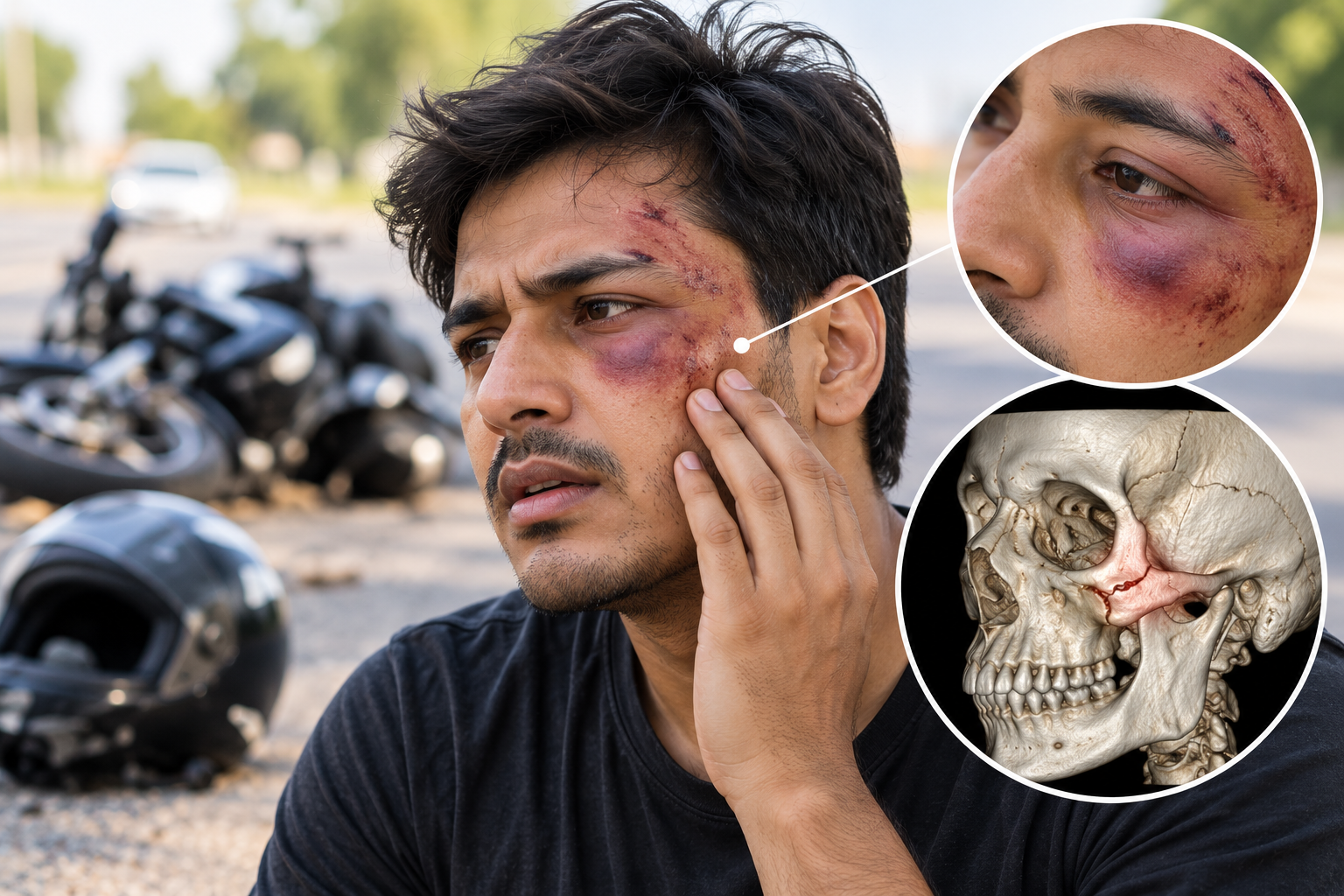
A fall from a two-wheeler can cause swelling, bruising and pain around the cheek. Many people assume these symptoms will settle with rest and ice.
However, the cheekbone, also called the zygomatic bone, forms part of the cheek and the outer wall and floor of the eye socket. A strong impact can fracture this bone or the surrounding zygomaticomaxillary complex.
Some fractures remain stable and heal without surgery. Others affect facial shape, eye movement, sensation or jaw opening.
Recognising the warning signs early helps prevent delays in treatment.
What Are the Warning Signs of a Cheekbone Fracture?
The difference between a cheekbone fracture vs bruise becomes clearer when symptoms extend beyond ordinary swelling and tenderness.
1. Numbness of the Cheek or Upper Lip
The infraorbital nerve supplies sensation to the lower eyelid, cheek, side of the nose and upper lip.
A fracture near this nerve can cause tingling or numbness.
Patients may notice reduced sensation while washing their face or touching the upper lip.
Numbness after an injury does not always mean the nerve is permanently damaged, but it warrants assessment.
2. Double Vision
Double vision, also called diplopia, may occur when trauma affects the eye socket or restricts eye movement.
It can also result from swelling, muscle injury or other eye-related damage.
New double vision after facial trauma requires urgent medical assessment.
3. Flattened Cheek
A displaced cheekbone may lose its normal prominence.
One side of the face can appear flatter than the other.
This change may become more noticeable after swelling decreases.
4. Difficulty Opening the Mouth
A displaced zygomatic arch can interfere with movement of the lower jaw.
Patients may experience pain, restricted mouth opening or difficulty chewing.
Doctors call restricted mouth opening trismus.
5. A Step Along the Lower Eye Socket
A fracture may create an irregular edge along the lower orbital rim.
A clinician may detect a step deformity during examination.
Patients should not repeatedly press or manipulate an injured cheek to check for this sign.
Cheekbone Injury Warning-Sign Checklist
| Sign | Bruise possible | Possible fracture | Emergency assessment |
|---|---|---|---|
| Mild swelling | Yes | Yes | If rapidly worsening |
| Skin bruising | Yes | Yes | If associated with serious symptoms |
| Flattened cheek | Unusual | Yes | Prompt assessment |
| Numb cheek or upper lip | Unusual | Yes | Prompt assessment |
| Double vision | Not typical | Yes | Yes |
| Restricted mouth opening | Possible | Yes | Urgent if severe |
| Step deformity | Unusual | Yes | Prompt assessment |
| Reduced or lost vision | Not typical | Serious eye injury possible | Immediately |
| Severe eye pain or inability to move the eye | Not typical | Orbital injury possible | Immediately |
Important: A fracture may exist even when the cheek looks normal. Physical examination and appropriate imaging are necessary when suspicion remains.
Why Can Swelling Hide a Flattened Cheek?
Swelling can make the cheek appear fuller immediately after an accident.
This may hide the loss of cheekbone projection caused by a displaced fracture.
As swelling decreases over the next several days, facial asymmetry may become easier to recognise.
How Does a Bruise Usually Behave?
A simple soft-tissue bruise commonly causes:
-
Local tenderness
-
Swelling
-
Skin discolouration
-
Mild discomfort when touching the area
Symptoms generally improve gradually.
However, improvement in swelling does not rule out an underlying fracture.
What Suggests a Bone Injury?
Features that increase concern include:
-
Persistent facial asymmetry
-
Numbness beneath the eye
-
Double vision
-
Restricted jaw opening
-
A palpable bony irregularity
-
Significant pain after a direct impact
Patients with these findings should seek medical assessment rather than waiting for the swelling to disappear.
Which Scan Is Needed to Confirm a Fracture?
When a clinician suspects a cheekbone fracture, CT imaging of the facial bones is generally the preferred investigation.
A CT scan provides detailed views of the cheekbone, orbital walls, zygomatic arch and nearby structures.
Why Is CT Better Than a Plain X-Ray?
A plain X-ray may show certain fractures, but it can miss or inadequately define complex facial injuries.
CT helps identify:
-
The exact fracture location
-
Whether the bone is displaced
-
Involvement of the eye socket
-
Fractures of the zygomatic arch
-
Multiple connected fracture lines
-
Whether surgical planning is necessary
Three-dimensional CT reconstruction may help surgeons understand complex displacement.
Does Every Facial Bruise Need a CT Scan?
No.
A mild injury with a reassuring clinical examination may not require imaging.
However, CT becomes important when symptoms or examination findings suggest a fracture.
A clinician should make this decision after assessing the injury.
What About Eye Examination?
Patients with eye symptoms may need an urgent ophthalmology assessment.
Doctors may check visual acuity, pupil responses, eye movements and signs of orbital injury.
A CT scan does not replace a complete eye examination.
For additional information, see facial bone fracture treatment.
Which Cheekbone Fractures Need Surgery and Which Heal Alone?
The decision between observation and surgery depends on displacement, facial appearance and functional problems.
Fractures That May Heal Without Surgery
A fracture may be managed conservatively when:
-
The bone remains minimally displaced
-
Facial symmetry is acceptable
-
Eye movement is normal
-
There is no significant jaw restriction
-
The fracture is stable
-
There is no urgent orbital complication
The patient still needs follow-up to ensure that healing progresses appropriately.
Fractures That May Require Surgery
Surgery may be considered when the patient has:
-
Significant cheekbone displacement
-
Visible flattening of the cheek
-
Restricted mouth opening from a displaced arch
-
Functional orbital problems
-
Unacceptable facial asymmetry
-
Fracture instability
Not every patient with numbness needs surgery. The surgeon considers the complete clinical and imaging findings.
What Is Zygomatic Fracture Surgery?
Zygomatic fracture surgery aims to restore the injured bone to an appropriate position.
Depending on the fracture, the surgeon may reposition the bone and secure it with small plates and screws.
Some isolated arch fractures may need reduction without extensive fixation.
More complex injuries can require several fixation points.
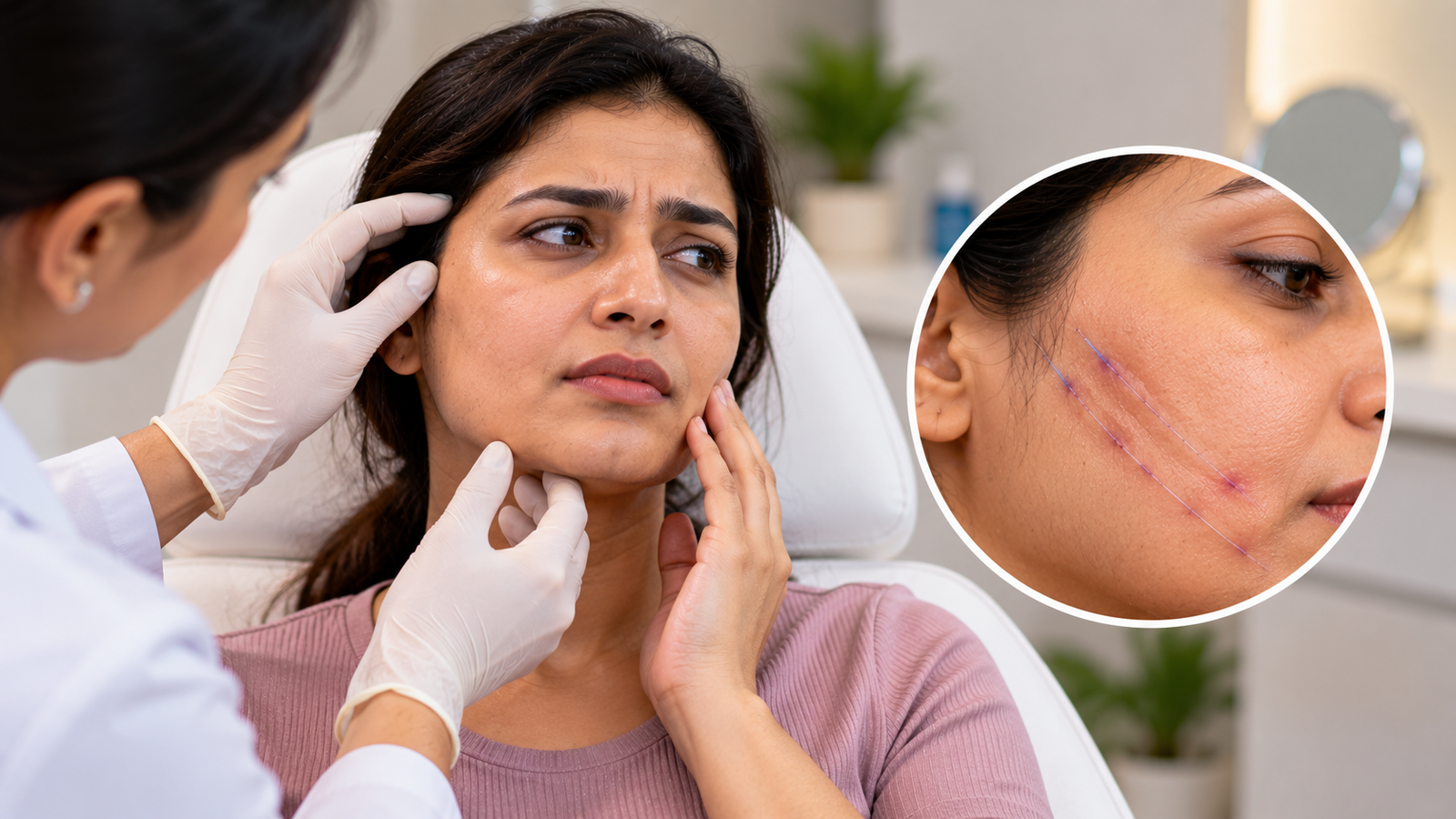
Will Surgery Leave a Scar?
Surgeons often use incisions inside the mouth or carefully positioned around natural eyelid creases.
Some fractures require external incisions.
Scar visibility depends on the approach, injury and individual healing.
No surgical approach guarantees a completely invisible scar.
Why Does the 7–14-Day Treatment Window Matter?
The timing of fracture treatment can affect how easily a displaced bone can be repositioned.
For many suitable displaced cheekbone fractures, surgeons aim to complete planned repair within approximately 7–14 days after injury.
This allows some swelling to settle while avoiding excessive early bone healing in the displaced position.
What Happens If Treatment Is Delayed?
As healing progresses, the fracture becomes less mobile.
Delayed correction may require more extensive surgery.
However, the appropriate timing varies with fracture type, associated injuries and patient condition.
Should You Wait Seven Days Before Seeing a Doctor?
No.
The 7–14-day period describes a common surgical planning window, not a recommended waiting period before diagnosis.
Suspected fractures should be assessed promptly.
Eye-threatening complications and certain other injuries may require immediate intervention.
Timeline After a Cheekbone Injury
| Time after injury | What should happen |
|---|---|
| First 24 hours | Emergency assessment for visual symptoms, serious trauma or suspected fracture |
| Days 1-3 | Clinical examination and CT when indicated |
| Days 3-7 | Specialist review of displacement, eye movement and jaw opening |
| Days 7-14 | Common period for planned fixation of suitable displaced fractures |
| Weeks 2-6 | Healing, follow-up and activity restrictions |
| After 6 weeks | Review persistent numbness, facial asymmetry or functional problems |
Treatment timing should follow the surgeon's assessment rather than a fixed calendar rule.
What Does Recovery After Cheekbone Fixation Involve?
Recovery varies according to the severity of the fracture and whether surgery was required.
Swelling and Bruising
Swelling often improves significantly during the first one to two weeks.
Residual swelling may take longer to settle.
Cold compresses may help during the early period when recommended by the treating team.
Diet and Chewing
Patients may need a soft diet while the fracture heals.
Hard or difficult-to-chew foods can place unnecessary stress on the injured area.
Follow the surgeon's specific instructions.
Sleeping Position
Keeping the head elevated may help reduce swelling during the early recovery period.
Avoid pressure on the injured side of the face.
Physical Activity
Contact sports and activities that risk another facial impact should be avoided until the surgeon confirms adequate healing.
Return to routine work depends on symptoms, injury severity and treatment.
Cheekbone Fracture Healing Time
Initial bone healing commonly takes around six weeks, although complete recovery can take longer.
Numbness and swelling may persist beyond the initial healing period.
What About Numbness?
The infraorbital nerve may recover gradually over weeks or months.
Some patients experience persistent altered sensation, particularly after more severe injuries.
Nerve symptoms should be documented during follow-up.
Patients concerned about associated nerve damage can read about facial nerve injury timing. The infraorbital nerve is a sensory branch of the trigeminal nerve, not the facial nerve that controls expression, so these injuries require different assessments.
What Should You Avoid After a Suspected Cheekbone Fracture?
Until a clinician has assessed the injury:
-
Avoid blowing your nose if an orbital or sinus fracture is suspected.
-
Do not press or massage the injured cheek.
-
Avoid contact sports.
-
Avoid another two-wheeler ride if vision, jaw movement or alertness is affected.
-
Do not ignore worsening eye pain or visual changes.
-
Follow medical advice about pain relief and activity.
Why Should You Avoid Blowing Your Nose?
Some cheekbone fractures involve the orbital walls or nearby sinuses.
Forceful nose blowing can push air into tissues around the eye.
This may cause orbital emphysema and, rarely, serious complications.
Ask your treating clinician when normal nose blowing is safe.
Face Injury Doctor Near Hazira: When Should You Seek Treatment?
If you are looking for a face injury doctor near hazira after a two-wheeler fall, seek assessment promptly when you have persistent swelling with numbness, double vision, a flattened cheek or difficulty opening your mouth.
At Elegance Clinic, Dr. Ashutosh Shah, MBBS, MS, MCh, DNB, Plastic and Reconstructive Surgeon, can assess facial trauma and discuss appropriate reconstructive management. Patients with suspected orbital injury may also need ophthalmology or maxillofacial specialist evaluation.
A facial injury consultation may involve:
-
Reviewing how the accident occurred.
-
Checking cheek symmetry.
-
Assessing sensation around the cheek and upper lip.
-
Examining jaw opening.
-
Checking for signs of orbital injury.
-
Reviewing CT findings when available.
-
Discussing observation or surgical correction.
-
Planning follow-up and recovery.
For a broader overview of injury management, read about facial trauma surgery.
Patients can also review facial fracture FAQs.
Key Takeaways
-
Cheekbone fracture vs bruise cannot always be distinguished by swelling alone.
-
A flattened cheek, numbness, double vision, restricted jaw opening or step deformity raises concern for fracture.
-
CT of the facial bones is generally the preferred imaging test when a fracture is suspected.
-
New double vision or loss of vision after facial trauma requires urgent assessment.
-
Minimally displaced fractures may heal without surgery.
-
Displaced fractures with functional or cosmetic problems may require reduction and fixation.
-
Suitable displaced fractures are often repaired within approximately 7–14 days.
-
Do not delay medical assessment while waiting for swelling to settle.
-
Avoid forceful nose blowing when an orbital or sinus fracture is suspected.
-
Initial bone healing commonly takes around six weeks.
-
Persistent numbness, asymmetry or jaw restriction requires follow-up.
Conclusion: Do Not Ignore Facial Changes After a Fall
The most important distinction in cheekbone fracture vs bruise is whether the injury affects the underlying bone, eye socket or jaw movement.
A simple bruise may cause swelling and tenderness without changing facial structure.
A cheekbone fracture can cause numbness, double vision, a flattened cheek or difficulty opening the mouth.
Because swelling can hide displacement, a normal-looking cheek does not always rule out a fracture.
Early clinical assessment and CT imaging when indicated help identify injuries that need treatment.
Some fractures heal with observation, while displaced fractures may benefit from timely surgical correction.
If facial symptoms persist after a two-wheeler fall, seek medical evaluation rather than waiting for the injury to heal on its own.