
Face Drooping After An Injury Or Surgery: How Long You Can Wait Before Facial Nerve Repair Stops Working
<style type="text/css"> </style> A facial nerve cut by a wound is best repaired within about 72 hours, while the cut ends can still be found by stimulation. Stretch or bruise injuries often recover over weeks to months. After roughly 12 to 18 months without recovery, the muscles may no longer accept nerve repair, and muscle transfer is considered.
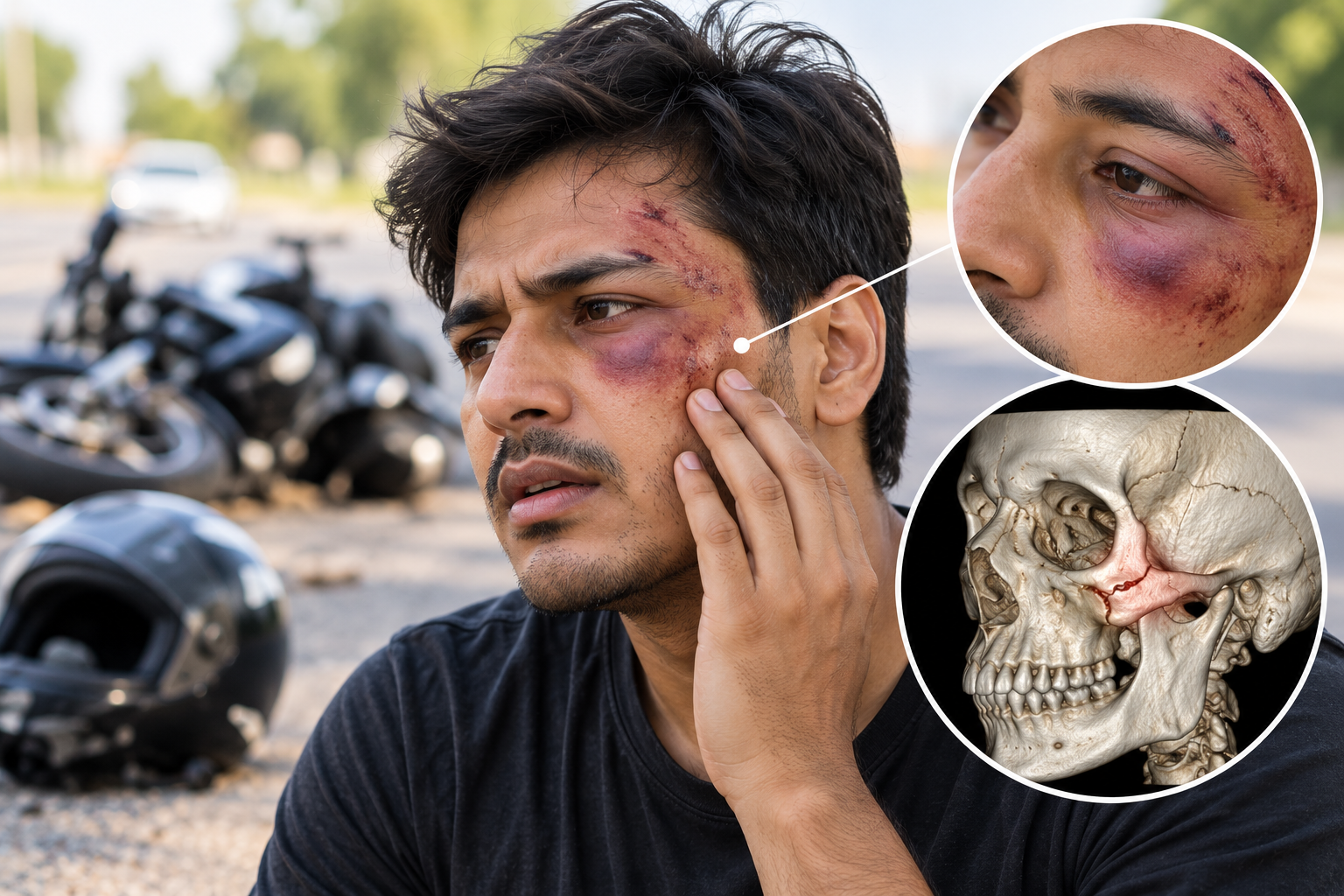
Facial drooping after an accident, deep facial cut or operation can be frightening. One side of the mouth may stop moving, an eyebrow may not rise, or the affected eye may not close properly.
Some facial nerve injuries recover naturally. Others need surgical repair before the facial muscles lose their ability to respond.
The most important questions are: What caused the weakness, is the nerve still connected, and how long has the muscle been without nerve signals?
Understanding these factors helps patients avoid unnecessary surgery while recognising injuries that need urgent treatment.
What Happens When the Facial Nerve Is Injured?
The facial nerve, also called the seventh cranial nerve, controls most muscles responsible for facial expression.
It helps us:
-
Smile and show teeth
-
Raise the eyebrows
-
Close the eyelids
-
Move the lips
-
Make facial expressions
-
Maintain symmetry during movement
The nerve travels from the brainstem through the temporal bone and branches across the face.
Its main branches include the temporal, zygomatic, buccal, marginal mandibular and cervical branches.
An injury to one branch may affect only part of the face, while a more proximal injury can cause widespread facial weakness.
Common Causes of Facial Nerve Injury
Facial nerve damage may occur after:
-
Road traffic accidents
-
Deep cuts across the cheek or jaw
-
Facial fractures
-
Ear or parotid gland surgery
-
Tumour removal
-
Penetrating injuries
-
Severe crushing or stretching injuries
The type and location of damage influence treatment.
A person with a deep facial wound and immediate weakness requires a different assessment from someone who develops temporary weakness after swelling around a nerve.
How Is Facial Nerve Weakness Graded?
Facial nerve injury grading helps clinicians describe the severity of weakness and monitor recovery.
One commonly used system is the House–Brackmann grading scale.
House–Brackmann Facial Nerve Grading Scale
| Grade | Severity | Typical findings |
|---|---|---|
| Grade I | Normal | Normal facial movement and symmetry |
| Grade II | Mild dysfunction | Slight weakness, eye closes completely |
| Grade III | Moderate dysfunction | Obvious weakness, usually complete eye closure with effort |
| Grade IV | Moderately severe | Marked asymmetry, incomplete eye closure may occur |
| Grade V | Severe dysfunction | Barely noticeable facial movement |
| Grade VI | Total paralysis | No visible movement on the affected side |
This scale is useful for documenting overall facial function.
However, it does not determine whether a nerve has been cut.
What Else Does the Doctor Examine?
The examination may include:
-
Asking the patient to raise both eyebrows.
-
Checking eye closure.
-
Observing the smile.
-
Asking the patient to show their teeth.
-
Checking lower lip movement.
-
Comparing facial symmetry at rest.
-
Examining facial wounds and surgical scars.
In patients with isolated branch injuries, a regional facial grading system may provide more useful detail.
Which Facial Nerve Injuries Recover Without Surgery?
Not every facial nerve injury requires an operation.
The likelihood of spontaneous recovery depends on the extent of nerve damage.
1. Bruised or Compressed Nerve
A nerve may temporarily stop conducting signals because of swelling, bruising or pressure.
This is sometimes called neurapraxia.
The nerve remains structurally continuous.
Recovery may occur over days, weeks or several months.
2. Stretched Nerve
Stretching can damage nerve fibres without completely severing the outer nerve structure.
Some patients recover gradually as the nerve regenerates.
Recovery may take several months, and it may be incomplete.
3. Completely Cut Nerve
A completely divided facial nerve generally cannot be expected to recover normally without appropriate repair.
This is particularly important after penetrating facial wounds.
If facial weakness begins immediately after a deep cut, the patient should receive urgent surgical evaluation.
How Long Does Natural Recovery Take?
Facial nerve injury recovery time varies widely.
Mild conduction injuries may improve within weeks, while more substantial axonal injuries can require months.
Serial clinical examinations help determine whether movement is returning.
Persistent complete paralysis without improvement needs specialist reassessment rather than indefinite observation.
Why Do the First 72 Hours Matter After a Facial Cut?
The first 72 hours can be particularly important when a facial nerve has been sharply divided.
During this early period, the distal nerve segment may still respond to electrical stimulation before Wallerian degeneration progresses.
This can help the surgeon identify the injured branches during exploration.
Benefits of Early Repair
Early surgery may allow:
-
Easier identification of nerve ends
-
Direct alignment of injured branches
-
Less scar tissue around the wound
-
Earlier restoration of nerve continuity
-
Better planning for nerve grafting when required
However, 72 hours is not an absolute deadline after which repair becomes impossible.
Delayed repair can still be appropriate, and timing depends on wound condition, nerve location, associated injuries and surgical findings.
Direct Nerve Repair
When the two ends of the nerve can be brought together without excessive tension, the surgeon may perform direct microsurgical repair.
Fine sutures are used to align the nerve ends.
The nerve must then regenerate toward the facial muscles.
Movement does not return immediately after surgery.
Nerve Grafting
If a segment of nerve is missing, the ends may not reach each other safely.
A nerve graft can bridge the gap.
The surgeon may use a suitable donor sensory nerve, depending on the injury.
Recovery remains gradual because nerve fibres must grow through the graft.
Patients can explore facial nerve repair surgery for an overview of reconstructive approaches.
Facial Nerve Injury Treatment: Timeline After an Accident or Surgery
The time since injury strongly influences which treatments are likely to work.
| Time since injury | Likely situation | Useful assessment | Possible treatment |
|---|---|---|---|
| 0–72 hours | Suspected sharp nerve division | Wound and facial movement examination; surgical exploration when indicated | Direct repair or nerve graft |
| 3 days–3 weeks | Delayed presentation, bruising or stretching injury | Clinical assessment, imaging when indicated, planned electrodiagnostic testing | Observation or delayed surgical exploration |
| 3 weeks–3 months | Recovery may begin in nerves that remain continuous | Serial movement assessment, EMG when appropriate | Rehabilitation, monitoring or surgical planning |
| 3–12 months | Persistent weakness or absent recovery | EMG, imaging and assessment of muscle viability | Selected repair, grafting or nerve transfer |
| 12–18 months | Increasing concern about prolonged muscle denervation | Facial muscle and nerve assessment | Selected nerve transfer or other reanimation procedure |
| Beyond 18–24 months | Facial muscles may have significant atrophy | Facial reanimation evaluation | Functional muscle transfer or static support |
Important: These time windows are approximate. The correct procedure depends on nerve continuity, injury location, muscle viability and the patient's overall condition.
What Are the Treatment Options Between Three Months and Two Years?
Patients who remain weak several months after injury need a detailed assessment.
The aim is to determine whether the original nerve can still recover and whether the facial muscles remain capable of responding to new nerve input.
Between Three and Six Months
Some injuries show meaningful recovery during this period.
If movement is gradually returning, observation and guided rehabilitation may be appropriate.
However, complete paralysis without signs of recovery may require electrodiagnostic testing and surgical consultation.
Between Six and Twelve Months
Persistent paralysis raises concern about prolonged denervation.
Depending on the injury, options may include:
-
Nerve grafting
-
Nerve transfer
-
Cross-face nerve grafting
-
Selected facial reanimation procedures
Between Twelve and Eighteen Months
The potential for nerve-based reanimation becomes less predictable as denervated facial muscles lose function.
Some patients remain candidates for nerve transfer if muscle viability is demonstrated.
Others may need a different reconstructive approach.
Between Eighteen Months and Two Years
Long-standing denervation may lead to severe muscle atrophy.
When the original facial muscles are no longer viable, restoring nerve input alone may not produce useful movement.
Functional muscle transfer may then be considered.
These are not rigid cutoffs; individual muscle viability is more important than the calendar alone.
What Can Be Done When the Facial Nerve Cannot Be Repaired?
When the original facial nerve cannot be repaired or the facial muscles no longer respond, facial reanimation surgery may help restore selected movements or improve symmetry.
1. Nerve Transfer
A functioning donor nerve can be connected to a facial nerve branch.
Examples include selected masseteric-to-facial or hypoglossal-to-facial nerve transfers.
These procedures are most useful when the target facial muscles remain viable.
2. Cross-Face Nerve Grafting
A nerve graft can carry signals from the healthy side of the face toward the affected side.
It may be used in selected facial reanimation plans.
Because nerve regeneration takes time, movement develops gradually.
3. Free Functional Muscle Transfer
When the original smile muscles are no longer functional, a surgeon may transfer a muscle from another part of the body.
The gracilis muscle is commonly used for dynamic smile reconstruction.
The transferred muscle is connected to blood vessels and an appropriate motor nerve.
This is a specialised microsurgical procedure.
4. Static Facial Support
Static procedures do not restore active muscle movement but can improve resting symmetry or support facial structures.
Examples include selected slings, eyelid weights and other reconstructive techniques.
5. Botox for Facial Asymmetry
Botulinum toxin may help selected patients with unwanted facial muscle activity, synkinesis or imbalance between the two sides of the face.
It does not repair a severed nerve.
The treatment must be individualised to avoid worsening weakness.
How Is Facial Nerve Damage Diagnosed?
A clinical examination is the starting point.
Additional tests depend on the suspected injury.
Electromyography (EMG)
Needle EMG measures electrical activity within facial muscles.
It may help determine whether muscles are denervated and whether reinnervation is occurring.
Timing matters because certain abnormalities take time to appear after injury.
Electroneuronography (ENoG)
ENoG assesses the electrical response of facial muscles to nerve stimulation.
It is used in selected situations, particularly certain acute complete facial palsies.
It does not independently prove whether a nerve has been physically cut.
CT Scan
CT imaging may be appropriate when facial or temporal bone fractures are suspected.
Patients with associated fractures may also require facial fracture treatment.
MRI
MRI may help evaluate selected nerve lesions, tumours, inflammation or other causes of persistent facial weakness.
Surgical Exploration
When a deep wound and immediate paralysis strongly suggest nerve transection, surgical exploration may be needed.
No single non-invasive test can always confirm nerve continuity.
How Do You Protect an Eye That Will Not Close?
Facial nerve injury can weaken the orbicularis oculi muscle responsible for closing the eyelids.
Incomplete closure can expose the cornea to dryness and injury.
Eye protection is an immediate priority.
Eye-Protection Checklist
- <input tabindex="-1" type="checkbox" />
Use preservative-free artificial tears as advised.
- <input tabindex="-1" type="checkbox" />
Apply lubricating eye ointment when prescribed.
- <input tabindex="-1" type="checkbox" />
Protect the eye from wind, dust and direct airflow.
- <input tabindex="-1" type="checkbox" />
Use appropriate moisture protection during sleep if recommended.
- <input tabindex="-1" type="checkbox" />
Ask a clinician about safe eyelid taping when necessary.
- <input tabindex="-1" type="checkbox" />
Arrange prompt ophthalmology assessment if closure is incomplete.
- <input tabindex="-1" type="checkbox" />
Seek urgent eye care for pain, redness, light sensitivity or reduced vision.
Some patients require temporary or permanent procedures to improve eyelid closure.
Do not wait for facial nerve recovery while the cornea remains exposed.
Can Physiotherapy Improve Facial Nerve Recovery?
Specialised facial neuromuscular rehabilitation may help selected patients improve movement coordination and manage synkinesis during recovery.
Treatment may involve:
-
Gentle movement retraining
-
Facial symmetry exercises
-
Relaxation techniques
-
Biofeedback
-
Education about unwanted muscle co-contraction
Aggressive facial exercises or unsupervised electrical stimulation are not routinely appropriate for every patient.
Rehabilitation should be guided by a clinician or therapist experienced in facial nerve disorders.
Physiotherapy cannot reconnect a completely severed nerve.
Face Drooping Treatment Near Umra: When Should You See a Specialist?
Patients seeking face drooping treatment near umra after an accident, facial cut or surgery should receive timely assessment to identify the cause of weakness.
At Elegance Clinic, Dr. Ashutosh Shah, MBBS, MS, MCh, DNB, Plastic and Reconstructive Surgeon practising since 2004, can assess reconstructive options and determine whether specialist facial nerve evaluation or referral is required.
A consultation may include:
-
Reviewing the injury or operation.
-
Identifying when facial weakness first appeared.
-
Assessing eye closure and facial movement.
-
Documenting the severity of paralysis.
-
Reviewing scans and previous surgical records.
-
Determining whether nerve continuity is suspected.
-
Considering electrodiagnostic testing.
-
Discussing repair, rehabilitation or facial reanimation options.
Patients with complex injuries may require coordinated treatment involving reconstructive surgeons, ENT specialists, neurologists, ophthalmologists and rehabilitation professionals.
For related injury management, see facial trauma surgery and nerve injury surgery FAQs.
When Is Facial Drooping an Emergency?
Sudden facial weakness without a clear traumatic cause may be a sign of stroke.
Seek emergency medical care immediately if facial drooping occurs with:
-
Arm or leg weakness
-
Slurred speech
-
Difficulty understanding speech
-
Sudden vision problems
-
Severe dizziness
-
Sudden severe headache
Do not assume sudden facial drooping is caused by Bell's palsy or an old injury.
Key Takeaways
-
Facial nerve injury treatment depends on the type, location and severity of nerve damage.
-
Bruised or compressed nerves may recover without surgery.
-
A suspected cut facial nerve requires urgent specialist assessment.
-
The first 72 hours can help surgeons identify nerve ends, but delayed repair may still be possible.
-
House–Brackmann grading describes facial weakness from Grade I to Grade VI.
-
EMG, imaging and clinical examinations help guide treatment.
-
Direct repair and nerve grafting may restore nerve continuity in suitable injuries.
-
Nerve transfer is most useful while the target facial muscles remain viable.
-
After prolonged denervation, functional muscle transfer may be considered.
-
Eye protection is essential when the eyelids cannot close.
-
Facial rehabilitation can support selected patients but cannot reconnect a cut nerve.
-
Sudden unexplained facial drooping requires emergency stroke assessment.
Conclusion: Timing Matters in Facial Nerve Repair
The success of facial nerve injury treatment depends on identifying the injury early and choosing the correct intervention.
Some bruised or stretched nerves recover gradually, while completely divided nerves may require microsurgical repair.
When facial paralysis persists, the condition of the facial muscles becomes increasingly important.
Nerve repair or transfer may be considered while those muscles remain capable of responding. In long-standing paralysis, muscle transfer or other facial reanimation procedures may offer alternatives.
The key is not to wait indefinitely for recovery when a structural nerve injury is suspected.
Early assessment, appropriate eye protection and timely reconstructive planning can help preserve treatment options and improve long-term facial function.