Facelift, Neck Lift, Eyelid Surgery or Fat Grafting?
Facelift vs neck lift: which surgery is right for you? A facelift improves sagging cheeks, jowls and lower-face contours, while a neck lift targets loose neck skin and visible neck bands. Eyelid surgery addresses selected eyelid concerns, and facial fat grafting restores lost volume. Some patients benefit from combining procedures after a detailed facial assessment.
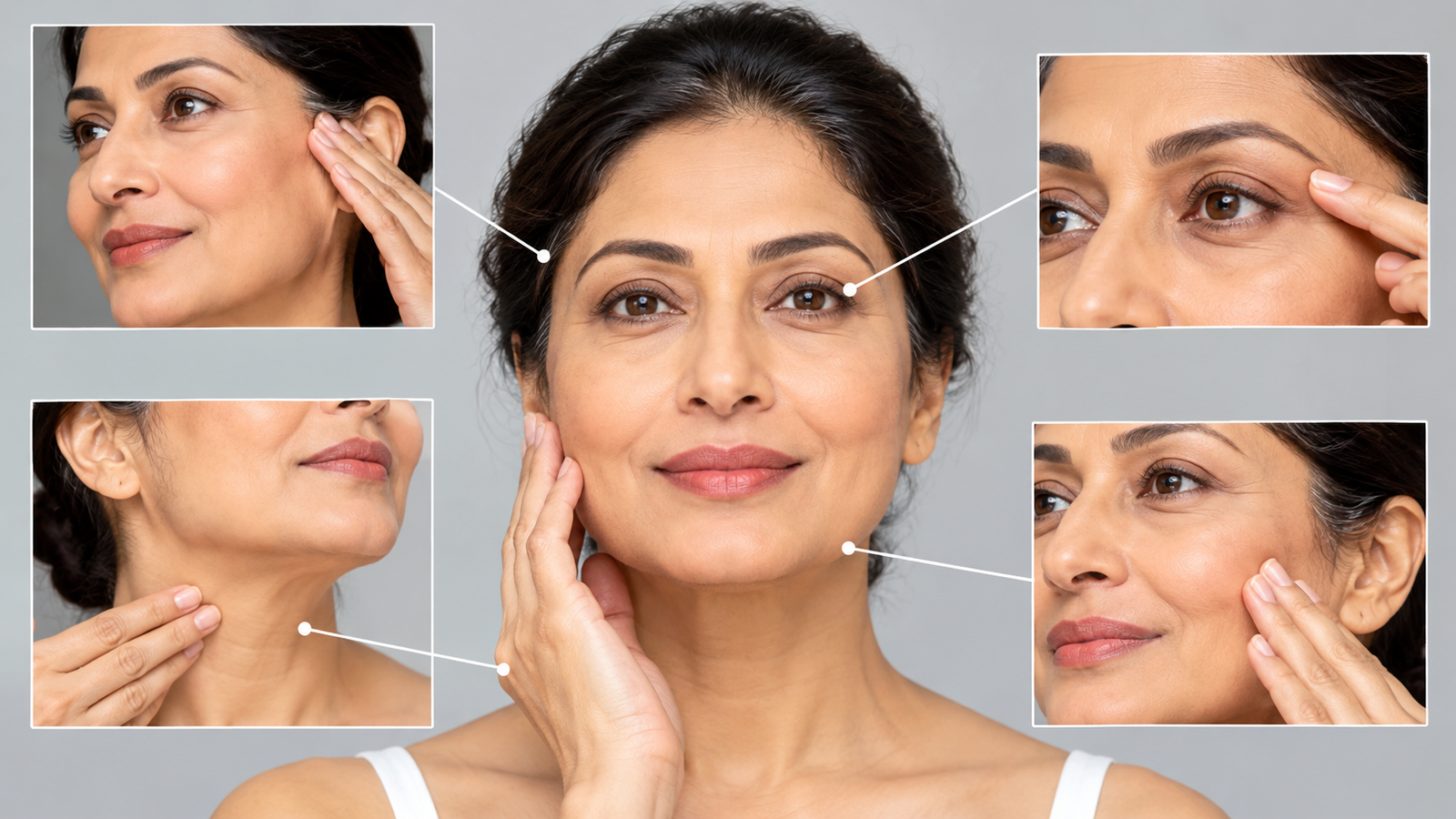
Facial ageing affects different areas at different rates. Some people develop loose skin around the jawline, while others notice drooping eyelids, hollow cheeks or excess skin beneath the chin.
Choosing the right procedure requires understanding whether the main concern involves sagging tissues, skin laxity, lost facial volume or a combination.
At Elegance Clinic, Dr. Ashutosh Shah, Plastic and Cosmetic Surgeon, evaluates facial anatomy, skin quality and individual expectations before discussing suitable facial rejuvenation options.
Patients exploring different treatments can learn more through the clinic's facial cosmetic surgery guide.
Facelift vs Neck Lift: What Is the Main Difference?
A facelift and neck lift address related but different signs of facial ageing.
A facelift, medically called rhytidectomy, primarily improves sagging tissues in the cheeks, jowls and lower face.
A neck lift focuses on loose neck skin, underlying muscle bands and changes in the contour beneath the chin.
|
Feature |
Facelift |
Neck Lift |
|---|---|---|
|
Main treatment area |
Cheeks, jowls and jawline |
Neck and under-chin area |
|
Primary concern |
Sagging lower-face tissues |
Loose neck skin and muscle bands |
|
Jawline improvement |
Often improves jowls |
May improve the jaw-neck transition |
|
Loose neck skin |
May improve during combined surgery |
Directly addresses neck laxity |
|
Facial volume loss |
Does not directly restore volume |
Does not restore facial volume |
|
Combination possible |
Yes |
Yes |
The decision between a facelift vs neck lift depends on facial anatomy, skin laxity, ageing patterns and the desired improvement.
Some patients require only one procedure, while others benefit from treating the lower face and neck together.
When Might You Need a Facelift?
A facelift may be appropriate when the primary concern is sagging in the lower face.
Common signs include:
-
Jowls developing along the jawline
-
Drooping cheek tissues
-
Loss of lower-face definition
-
Deepening facial folds associated with tissue descent
-
Loose skin around the lower cheeks
A facelift repositions selected deeper facial tissues and adjusts excess skin to create smoother contours.
However, facelift surgery does not stop ageing, remove every wrinkle or automatically correct hollow cheeks and drooping eyelids.
Can a Facelift Give Natural-Looking Results?
A carefully planned facelift aims to improve facial contours without producing an excessively tight appearance.
Results depend on facial anatomy, surgical technique, skin quality and healing.
The objective is to create a refreshed appearance while preserving natural facial proportions.
When Is a Neck Lift the Better Option?
A neck lift may be suitable when ageing changes are concentrated beneath the jawline.
Signs that may indicate a need for neck rejuvenation include:
-
Loose or hanging neck skin
-
Visible vertical neck bands
-
Reduced definition between the chin and neck
-
Excess fat beneath the chin
-
Persistent neck laxity despite weight management
Neck lift surgery may involve tightening the platysma muscle, removing or repositioning selected fat deposits and adjusting excess skin.
Can You Have a Neck Lift Without a Facelift?
Yes. Some patients have relatively good cheek and jawline contours but noticeable neck ageing.
An isolated neck lift may be appropriate in these cases.
However, the lower face and neck are anatomically connected. Patients with significant jowls may achieve a more balanced result when both areas receive treatment.
When Should You Consider Eyelid Surgery?
Eyelid surgery, also called blepharoplasty, addresses selected concerns involving the upper or lower eyelids.
You may benefit from an eyelid assessment if you notice:
-
Excess upper eyelid skin
-
Heavy or hooded upper eyelids
-
Lower eyelid bags caused by protruding fat
-
Selected lower eyelid skin changes
-
Eyelid skin interfering with your field of vision
Upper eyelid surgery may remove excess skin and adjust underlying tissue when appropriate.
Lower eyelid surgery may reposition or remove selected fat deposits and address skin laxity.
At Elegance Clinic, Dr. Ashutosh Shah assesses eyelid anatomy, skin excess and individual concerns before discussing treatment options.
Patients can explore eyelid lift surgery to understand the procedure and recovery considerations.
Is Eyelid Surgery Enough to Make the Face Look Younger?
For patients whose primary concern involves the eyes, eyelid surgery alone may provide meaningful improvement.
However, eyelid surgery does not correct sagging jowls, loose neck skin or general facial volume loss.
It is also important to distinguish excess upper eyelid skin from eyebrow drooping because these concerns may require different approaches.
What Is Facial Fat Grafting and Who Needs It?
Facial fat grafting, also called facial fat transfer, restores volume using fat collected from another part of the patient's body.
Ageing can cause facial fat compartments to shrink or change position, contributing to hollow or flattened facial contours.
Common treatment areas include:
-
Hollow cheeks
-
Temples
-
Selected under-eye hollows
-
Areas of facial volume deficiency
-
Selected contour irregularities
During the procedure, a surgeon collects fat through gentle liposuction, processes it and transfers small amounts into selected facial areas.
Patients considering this treatment can explore fat transfer surgery for more information about the technique and recovery.
Is Facial Fat Grafting Better Than a Facelift?
These procedures address different concerns.
A facelift repositions sagging facial tissues, while facial fat grafting restores lost volume.
If a patient has hollow cheeks without significant skin laxity, volume restoration may be more appropriate than facelift surgery.
If the patient has prominent jowls and loose lower-face skin, fat grafting alone cannot correct the underlying tissue descent.
Some transferred fat is naturally reabsorbed, and the amount that survives varies between patients.
Learn more about how long facial fat grafting results may last.
Facelift vs Neck Lift vs Eyelid Surgery vs Fat Grafting: Which Procedure Treats Which Concern?
Each facial rejuvenation procedure addresses specific anatomical changes.
|
Your main concern |
Procedure to discuss |
|---|---|
|
Sagging cheeks and jowls |
Facelift |
|
Loose neck skin |
Neck lift |
|
Visible vertical neck bands |
Neck lift |
|
Heavy upper eyelids |
Upper eyelid surgery |
|
Lower eyelid bags |
Lower eyelid surgery |
|
Hollow cheeks or temples |
Facial fat grafting |
|
Jowls with neck laxity |
Combined facelift and neck lift |
|
Sagging tissues with volume loss |
Facelift with possible fat grafting |
|
Eyelid concerns with lower-face sagging |
Facelift with possible eyelid surgery |
This comparison provides general guidance. A qualified plastic surgeon must examine the facial structures before recommending treatment.
Can You Combine a Facelift, Neck Lift, Eyelid Surgery and Fat Grafting?
Yes. Combining facial rejuvenation procedures may be appropriate when ageing affects several facial areas.
For example, a patient may have sagging jowls, loose neck skin and hollow cheeks.
Treating only one concern may leave the other changes noticeable.
1. Facelift With Neck Lift
This combination may improve lower-face sagging and neck laxity together.
It can help patients seeking better definition around the jawline and neck.
2. Facelift With Facial Fat Grafting
A facelift repositions sagging tissues, while fat grafting restores volume to selected hollow areas.
Combining these approaches may improve facial contours when both tissue descent and volume loss are present.
3. Facelift With Eyelid Surgery
Patients with lower-face sagging and excess eyelid skin may benefit from treating both concerns.
However, eyelid surgery is not automatically necessary during a facelift.
4. Neck Lift With Facial Fat Grafting
This combination may be considered when neck laxity occurs alongside hollow cheeks or temples.
5. Multiple Facial Rejuvenation Procedures
Some carefully selected patients may undergo several procedures during one operation.
However, combining procedures increases operative complexity and may extend recovery.
The surgeon must assess medical conditions, anaesthesia risks, procedure duration and whether staged treatment would be safer.
How Does Age Affect the Choice of Facial Surgery?
Age alone does not determine whether someone needs a facelift, neck lift or another procedure.
|
Age group |
Possible concerns |
Treatment considerations |
|---|---|---|
|
30–40 years |
Early volume loss and eyelid concerns |
Non-surgical treatments, eyelid assessment or selected volume restoration |
|
40–50 years |
Early jowls, cheek descent and neck changes |
Facelift or neck lift assessment when appropriate |
|
50–60 years |
More noticeable skin laxity and volume changes |
Individual or combined rejuvenation procedures |
|
60+ years |
Advanced laxity, eyelid changes and volume loss |
Individualised surgical planning based on health and anatomy |
These are broad examples rather than age-based treatment recommendations.
A healthy older patient may be suitable for surgery, while a younger patient may have medical or anatomical reasons to avoid it.
How Long Does Recovery Take After Facial Rejuvenation Surgery?
Recovery depends on the procedure, surgical extent and individual healing.
|
Procedure |
Approximate initial recovery |
Additional considerations |
|---|---|---|
|
Facelift |
2–3 weeks |
Swelling and firmness may persist longer |
|
Neck lift |
2–3 weeks |
Tightness and swelling gradually improve |
|
Eyelid surgery |
1–2 weeks |
Bruising and swelling may remain visible |
|
Facial fat grafting |
1–2 weeks |
Volume changes continue over several months |
|
Combined surgery |
Often 2–4 weeks or longer |
Recovery varies with surgical complexity |
These timeframes are estimates rather than guarantees of complete healing.
Patients should follow their surgeon's instructions regarding physical activity, wound care, sleeping position, medications and follow-up appointments.
How Should You Prepare for Facial Cosmetic Surgery?
Preparation may include reviewing medical conditions, current medications, smoking habits and recovery arrangements.
Dr. Ashutosh Shah at Elegance Clinic can discuss relevant preparation steps during an individual consultation.
Patients can also read the facial cosmetic surgery preparation checklist to understand common preoperative considerations.
Never stop prescribed medication without guidance from the treating clinician.
What Are the Risks of Facial Rejuvenation Surgery?
Every surgical procedure carries potential risks.
Possible complications include:
-
Bleeding or haematoma
-
Infection
-
Scarring
-
Temporary or persistent numbness
-
Asymmetry
-
Delayed wound healing
-
Anaesthesia-related complications
-
Unsatisfactory cosmetic results
Facelift and neck lift surgery may also involve nerve injury, skin healing problems and hairline changes.
Eyelid surgery carries additional risks, including dry eyes, difficulty closing the eyes, eyelid malposition and, very rarely, vision-threatening bleeding.
Facial fat grafting may cause irregularities, fat necrosis or unpredictable volume retention. Rare but serious vascular complications can occur with facial injections.
Smoking, uncontrolled medical conditions and certain medications may increase surgical risks.
A qualified surgeon should explain procedure-specific complications before obtaining informed consent.
How Does a Plastic Surgeon Decide Which Procedure You Need?
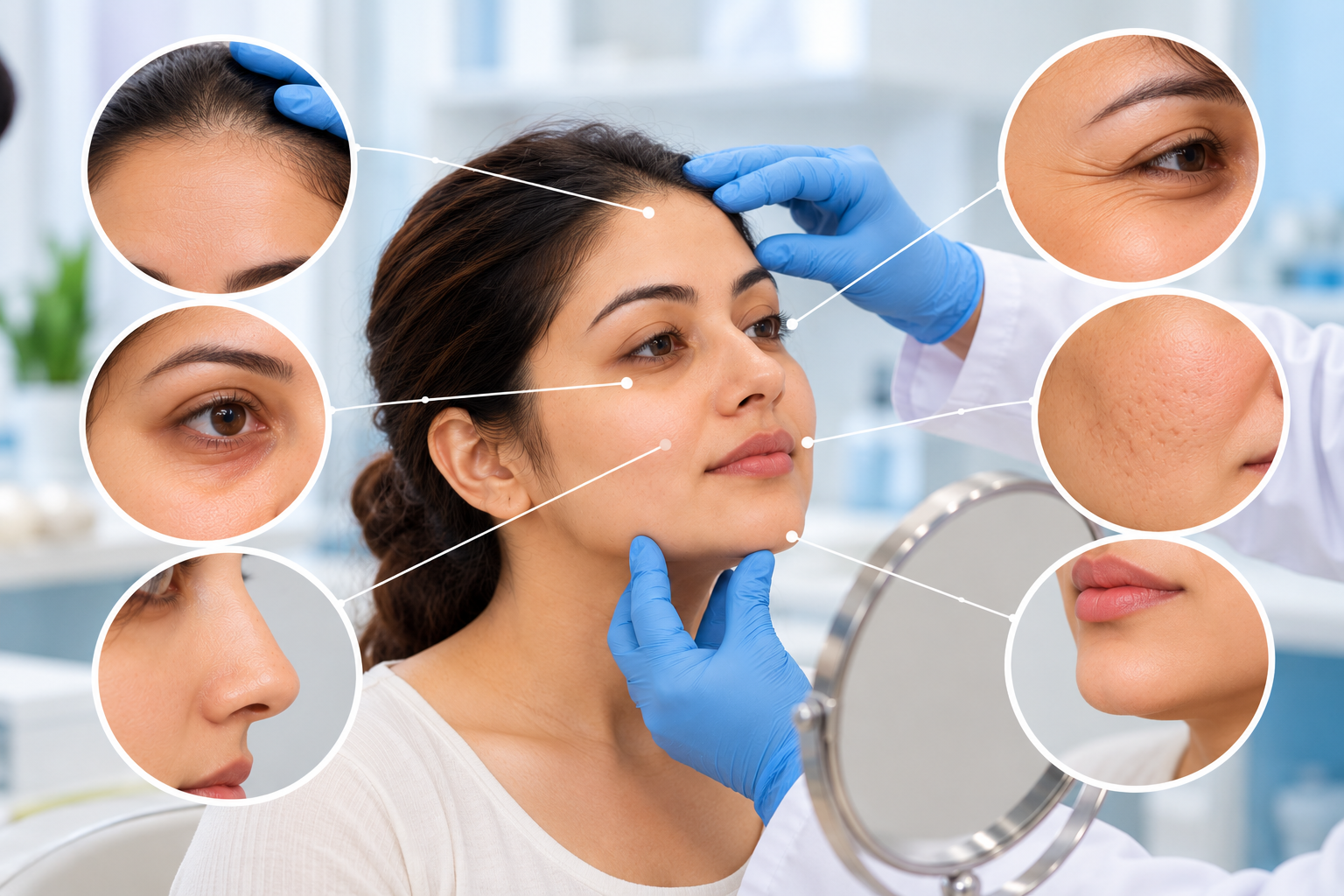
A detailed facial assessment involves more than examining wrinkles.
The surgeon evaluates:
-
Skin quality: Elasticity, thickness and degree of laxity.
-
Facial volume: Hollow cheeks, temples and other areas of volume loss.
-
Tissue position: Whether facial tissues have descended.
-
Jawline and neck: Jowls, submental fat, loose skin and platysmal bands.
-
Eyelid anatomy: Skin excess, fat protrusion, eyebrow position and eye health.
-
Medical suitability: Health conditions, medications, smoking and anaesthesia considerations.
-
Patient expectations: Desired improvements, recovery time and realistic outcomes.
A personalised assessment helps determine whether one procedure can address the main concern or whether combining treatments may provide a more balanced result.
Facial Rejuvenation Consultation With Dr. Ashutosh Shah at Elegance Clinic
Choosing between a facelift, neck lift, eyelid surgery and facial fat grafting requires careful evaluation of facial anatomy and ageing patterns.
Dr. Ashutosh Shah, Plastic, Reconstructive and Cosmetic Surgeon at Elegance Clinic, has more than two decades of surgical experience. During a consultation, he can assess skin laxity, facial volume, jawline definition, eyelid concerns and overall medical suitability before discussing possible treatment options.
Patients can learn more about Dr. Ashutosh Shah and Elegance Clinic, including his professional background and approach to cosmetic surgery.
The goal of facial rejuvenation is to improve selected concerns while considering patient safety, realistic expectations and natural facial proportions.
Is Non-Surgical Facial Rejuvenation an Alternative?
Not every patient requires surgery.
Depending on the concern, non-surgical options may include:
-
Botulinum toxin for selected expression lines
-
Dermal fillers for certain volume deficiencies
-
Energy-based treatments for selected skin concerns
-
Skin treatments to improve texture and pigmentation
However, non-surgical treatments cannot reliably reproduce the tissue repositioning achieved through a facelift or remove substantial loose neck skin.
They also carry risks and limitations.
Patients with mild ageing changes may benefit from conservative treatment, while those with significant tissue laxity may require surgery to achieve the desired contour improvement.
Conclusion
Choosing between a facelift, neck lift, eyelid surgery and facial fat grafting requires identifying the underlying cause of facial ageing.
A facelift addresses sagging lower-face tissues, a neck lift improves neck contours, eyelid surgery treats selected eyelid concerns, and facial fat grafting restores volume.
Some patients benefit from a single procedure, while others may require a carefully planned combination.
At Elegance Clinic, Dr. Ashutosh Shah provides personalised consultations to help patients understand their facial rejuvenation options, potential risks and realistic recovery expectations.
Patients considering facial cosmetic surgery can book a consultation at Elegance Clinic to discuss their concerns and possible treatment approaches.