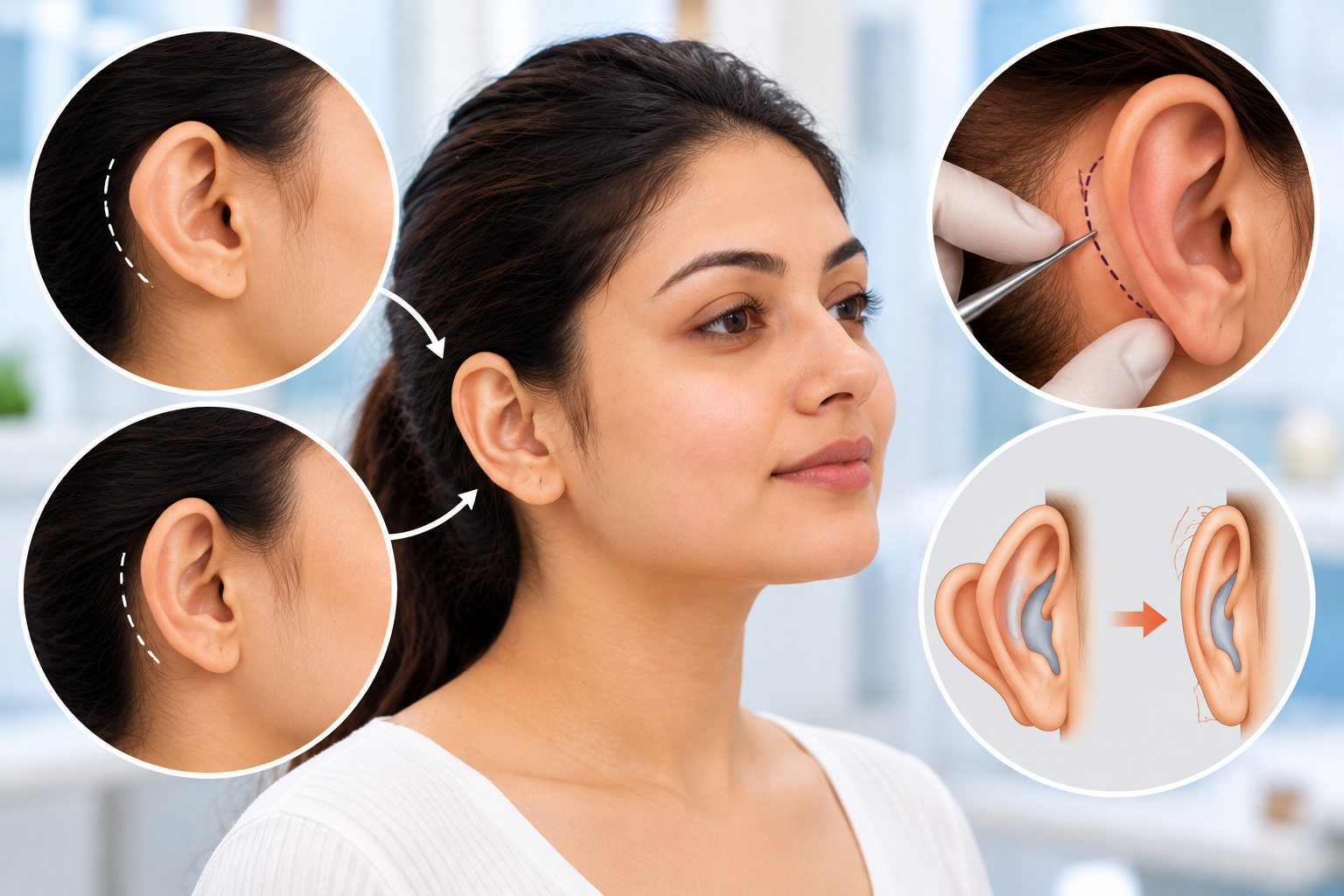

Otoplasty Recovery: How Long The Headband Stays On, When You Can Sleep On Your Side, And When Ears Settle
After otoplasty (ear pinning) the bulky dressing usually stays for 3 to 7 days, then a soft headband is worn day and night for about 2 weeks and at night for a further 4 to 6 weeks. Most people return to desk work within a week, but helmets and side-sleeping on the ear wait around 6 weeks.
However, otoplasty recovery time varies according to the surgical technique, patient age, healing response and postoperative instructions.
The most important part of recovery is protecting the newly positioned ears from pressure, accidental folding and injury while the tissues heal.
This guide explains what to expect during each stage of recovery, when common activities may resume and which symptoms require medical attention.
What Happens in the First Week After Otoplasty?
The first seven days are important because the ears are still healing and need protection from pressure or accidental injury.
First 24–48 Hours
Immediately after surgery, the ears are usually covered with a protective dressing or bandage.
The dressing helps protect the surgical area and may reduce unwanted movement of the ears.
During this period, patients may experience:
-
Mild to moderate discomfort
-
Swelling around the ears
-
Bruising
-
Tightness beneath the dressing
-
Temporary changes in ear sensation
These symptoms may be expected after surgery, but pain should remain manageable with the prescribed treatment.
Sudden severe pain, rapidly increasing swelling or marked one-sided discomfort during the first 48 hours requires urgent assessment, as these symptoms may indicate a haematoma or another complication.
Days 3–7
Depending on the surgeon's technique, the bulky dressing may be removed during this period.
The surgeon examines the ears, checks wound healing and decides whether a soft protective headband should replace the original dressing.
Some patients may return to desk-based work or school within approximately one week, provided discomfort is controlled and the surgeon considers recovery satisfactory.
However, activities that could bend, pull or strike the ears should still be avoided.
Patients considering otoplasty surgery should discuss the expected dressing and recovery schedule before their procedure.
How Long Should the Headband Be Worn Day and Night?
One of the most common questions about otoplasty recovery time is how long a protective headband must be worn.
The headband helps prevent the ears from being accidentally folded forward, particularly during sleep.
A commonly used recovery plan includes:
First Two Weeks
A soft headband may be recommended throughout the day and night after the initial surgical dressing is removed.
It should support the ears without creating excessive pressure.
Do not tighten the headband more than instructed, because unnecessary compression may cause discomfort or interfere with healing.
Weeks 3–6
Some surgeons allow patients to stop wearing the headband during daytime activities while continuing night-time protection.
Night-time use is particularly important because patients may unknowingly roll onto their ears or fold them against a pillow.
Weeks 6–8
Depending on healing, the surgeon may advise discontinuing the headband.
However, patients with additional swelling, tenderness or specific surgical considerations may require a different schedule.
Important: Headband duration is not identical for every patient. Follow the operating surgeon's instructions rather than stopping protection solely because the ears look normal.
Otoplasty Recovery Time: Week-by-Week Timeline
| Recovery stage | Dressing or headband | Work or school | Sleeping position | Helmet and sports | Expected symptoms | When to call |
|---|---|---|---|---|---|---|
| Day 1–3 | Protective surgical dressing | Rest recommended | Sleep on back with head elevated | Avoid | Swelling, tenderness, bruising | Sudden severe pain, rapidly increasing swelling or bleeding |
| Days 4–7 | Dressing review; headband if advised | Some patients return to desk work | Back sleeping | Avoid | Mild swelling and tightness | Fever, discharge or increasing redness |
| Weeks 2–3 | Headband according to surgeon's plan | Most routine desk activities possible | Avoid direct ear pressure | Avoid contact sports | Swelling gradually improves | Increasing pain or wound separation |
| Weeks 4–6 | Often night-time headband | Routine work usually possible | Side sleeping only if cleared | Helmet use generally still restricted until clearance | Residual swelling or numbness | New deformity, swelling or significant tenderness |
| Weeks 6–8 | May discontinue if cleared | Normal routine for many patients | Gradual return to normal sleeping | Selected activities may resume after review | Ears continue settling | Persistent or worsening symptoms |
| After 8 weeks | Usually no headband if healing is satisfactory | Most normal activities | Usually unrestricted if cleared | Return according to surgeon's advice | Scar maturation and subtle changes continue | New pain, swelling or change in ear position |
These are approximate planning intervals, not a guaranteed recovery schedule. Individual surgical techniques may require shorter or longer protection.
When Can You Sleep on Your Side and Wear a Helmet?
Sleeping position and helmet use are important because both can place pressure on the operated ears.
Sleeping After Ear Pinning Surgery
During early recovery, sleeping on the back is usually recommended.
Keeping the head slightly elevated may also help with swelling.
Side sleeping can press the ear against the pillow and may accidentally fold the healing cartilage.
For this recovery plan, avoid direct pressure on the operated ear until the surgeon approves it, often around six weeks.
Some patients may be allowed to change sleeping positions earlier, while others need longer protection.
When Can You Wear a Helmet After Otoplasty?
Helmets can compress the ears while being put on, removed or worn.
This pressure may be uncomfortable and potentially harmful during early healing.
Patients should generally plan to avoid helmet use for approximately six weeks, or longer if the surgeon advises.
Before resuming motorcycle riding, cycling or other helmet-dependent activities, confirm that the helmet can be worn and removed without disturbing the ears.
Do not ride without legally required protective equipment simply because the ears are still healing.
When Can You Exercise?
Gentle walking is often possible during early recovery.
Strenuous exercise, swimming and contact sports require greater caution.
Activities that increase the risk of ear injury should be postponed until the surgeon confirms that healing is adequate.
When Do Stitches Come Out and Swelling Settle?
Not every otoplasty procedure uses the same type of stitches.
Some surgeons use absorbable sutures, while others use stitches that require removal.
If external non-absorbable stitches are used, removal may occur approximately 7–10 days after surgery, depending on wound healing and the surgeon's technique.
Internal cartilage-shaping sutures may remain in place permanently.
How Long Does Otoplasty Swelling Last?
Swelling is usually most noticeable during the first several days.
Much of the visible swelling and bruising may improve over the first two to three weeks.
However, mild residual swelling, firmness or numbness can persist for several weeks or months.
The ears may appear slightly different during healing because swelling does not always resolve symmetrically.
When Will the Final Ear Shape Be Visible?
The new ear position is usually apparent once the bulky dressing is removed.
However, the final appearance takes longer to develop.
Residual swelling settles gradually, and scars continue maturing over several months.
Patients should avoid judging the final symmetry during the earliest recovery period.
For more details about the procedure, read the otoplasty FAQs.
Which Signs After Otoplasty Need an Urgent Review?
Most patients recover without major complications, but certain symptoms should not be ignored.
Contact your surgeon urgently if you experience:
-
Sudden severe pain in one ear
-
Rapidly increasing swelling
-
Significant bleeding
-
Increasing redness or warmth
-
Pus or foul-smelling discharge
-
Fever or feeling unusually unwell
-
Wound separation
-
A sudden change in ear shape
-
Severe pressure beneath the dressing
-
Skin becoming unusually pale, dark or discoloured
Why Is Sudden One-Sided Pain Important?
Severe pain and rapidly increasing swelling during the first 24–48 hours can indicate a collection of blood beneath the skin, known as a haematoma.
This requires prompt assessment because untreated pressure may damage tissues and affect the result.
Do not remove surgical dressings or attempt to drain swelling yourself unless the treating surgeon specifically instructs you.
If you cannot reach the surgical team and symptoms are severe, seek urgent medical care.
Planning Bat Ear Surgery Near Piplod: Recovery Questions to Ask
Patients considering bat ear surgery near piplod should discuss the postoperative routine before choosing a surgery date.
Important questions include:
-
How many days will the bulky dressing remain?
-
When will the first postoperative review take place?
-
Will I need a headband during the day and night?
-
When can I return to work?
-
When can I sleep on my side?
-
When can I safely wear a helmet?
-
When can I return to the gym?
-
What symptoms require urgent review?
At Elegance Clinic, Dr. Ashutosh Shah can assess prominent ears, discuss suitable surgical correction and explain the recovery precautions appropriate to the planned technique.
Patients should also arrange time for dressing changes, wound reviews and any required stitch removal.
The goal is not simply to complete the operation but to protect the ears while healing progresses.
For a visual explanation of ear-related procedures, you can also view the ear surgery video.
How Can You Protect Your Ears During Recovery?
Protecting the ears from accidental injury is an important part of postoperative care.
Follow the Dressing Instructions
Do not remove or adjust the surgical dressing unless your surgeon has instructed you to do so.
If the dressing becomes excessively tight, wet or displaced, contact the clinic for advice.
Avoid Pressure and Friction
Avoid tight clothing that must be pulled forcefully over the head.
Choose clothing that can be removed without catching the ears.
Be careful while brushing hair, changing pillowcases or using towels.
Keep the Wound Clean
Follow the wound-care instructions provided after surgery.
Do not apply unprescribed antiseptics, oils or creams directly to the incision.
Attend Follow-Up Appointments
Even when the ears look satisfactory, follow-up visits allow the surgeon to check healing, cartilage position and possible complications.
Protect the Ears During Sleep
Use the recommended headband for the prescribed duration.
Do not assume that stopping the headband early is safe simply because discomfort has improved.
Avoid Ear Piercing During Early Recovery
After otoplasty, avoid new ear piercings until your surgeon confirms that the ears have healed sufficiently. Piercing too early may cause irritation, swelling or unnecessary pressure on healing tissues.
Parents planning ear piercing for their children can also read our guide to ear piercing and earlobe care to understand safe piercing practices, suitable jewellery and aftercare precautions.
Can Otoplasty Results Change After Surgery?
Otoplasty is intended to create a long-lasting improvement in ear position.
However, some degree of recurrence or asymmetry can occur.
Possible contributing factors include cartilage characteristics, healing response, suture-related issues and postoperative trauma.
A protective headband helps reduce accidental folding or pressure during recovery, but it cannot guarantee that recurrence will never occur.
Patients should also understand that perfect symmetry is not always achievable because natural ears are rarely identical.
The best approach is to discuss realistic expectations before surgery and follow postoperative precautions carefully.
Key Takeaways
-
Otoplasty recovery time depends on the surgical technique and individual healing.
-
Bulky dressings may remain for approximately 3–7 days.
-
A protective headband may be recommended continuously for around two weeks and at night for another four to six weeks.
-
Many patients can return to desk work within approximately one week.
-
Side sleeping and helmet use should wait until surgeon clearance, often around six weeks.
-
Most early swelling improves over the first few weeks, but final settling takes longer.
-
Sudden severe one-sided pain or rapidly increasing swelling requires urgent assessment.
-
The treating surgeon's postoperative instructions always take priority over general timelines.
Conclusion: How Long Does Full Otoplasty Recovery Take?
For most patients, the early recovery period after ear pinning surgery lasts approximately one to two weeks, but protecting the ears remains important for several additional weeks.
The initial dressing, protective headband, sleeping restrictions and activity limitations all help reduce unnecessary pressure during healing.
While many people return to routine work relatively quickly, side sleeping, helmets and contact sports should only resume when the surgeon considers the ears sufficiently healed.
Understanding otoplasty recovery time before surgery makes it easier to plan work, school, travel and follow-up appointments without rushing the healing process.
A successful recovery involves more than waiting for swelling to disappear. It also requires protecting the corrected ears and attending the recommended postoperative reviews.