Bridal Chemical Peel: Which Peel, How Many Sessions, And The Last Safe Date Before Your Wedding
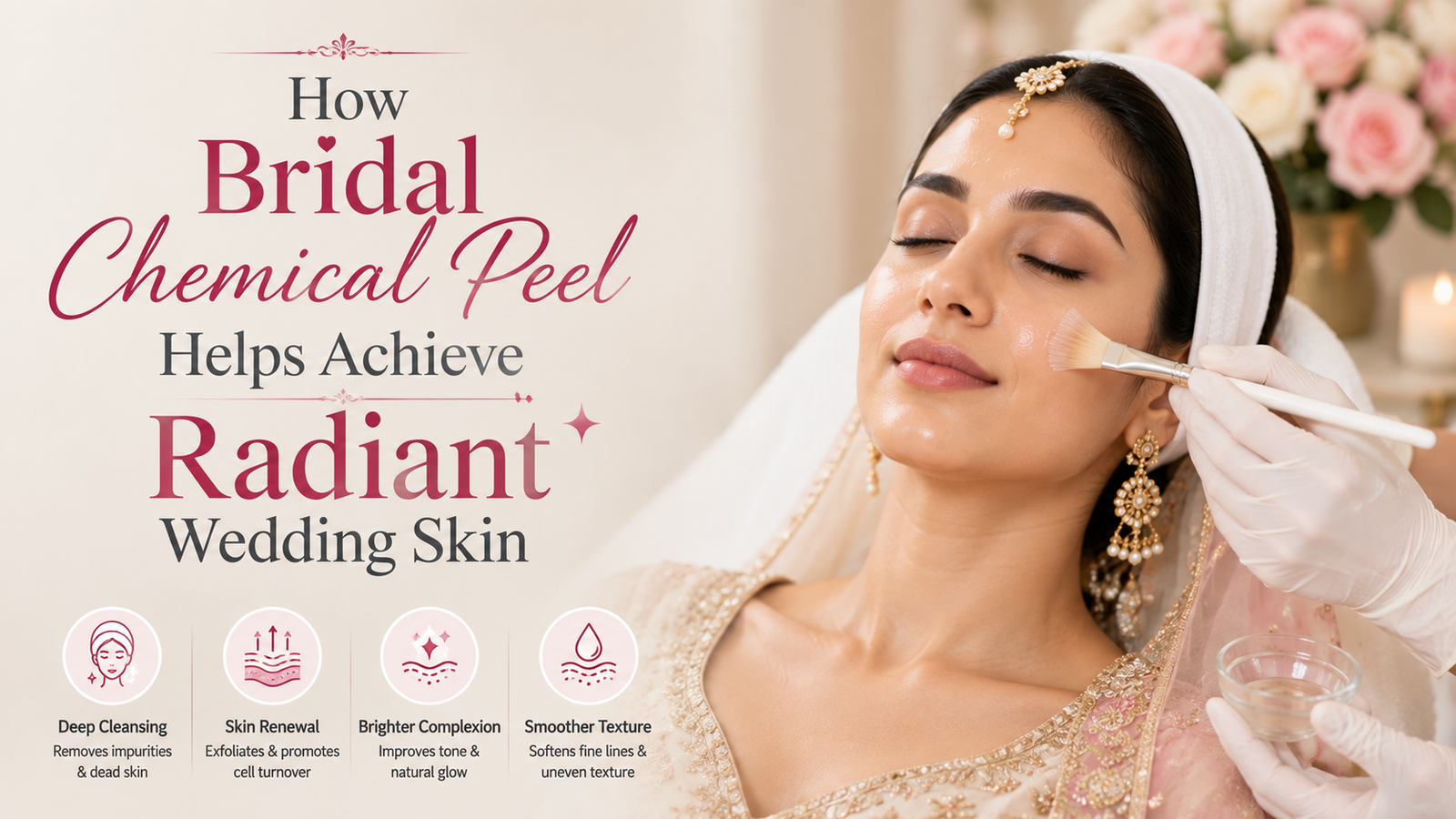
A bridal chemical peel is usually a series of 3 to 4 superficial peels, such as glycolic, lactic, mandelic or salicylic, spaced 2 to 3 weeks apart, with the last one finished 10 to 14 days before the first function. Medium-depth peels need 4 weeks of margin and are not tried for the first time before a wedding.
If you are considering a chemical peel before wedding celebrations, choosing the right treatment is just as important as choosing the date. A peel that works well for oily, acne-prone skin may not be suitable for someone with dry, sensitive or pigmentation-prone skin.
Brides should also understand that not every peel causes visible skin shedding. Some superficial peels produce mild dryness, while deeper treatments may cause several days of redness, peeling and sensitivity.
The goal is to improve skin condition gradually without creating unnecessary irritation immediately before an important event.
Which Peel Suits Dry, Oily, Acne-Prone or Pigmented Bridal Skin?
Chemical peels use controlled exfoliating agents to remove damaged surface skin cells and encourage skin renewal.
However, different acids have different properties, and the results depend on their concentration, formulation, application time and treatment depth.
Glycolic Acid Peel
Glycolic acid is an alpha-hydroxy acid commonly used for superficial exfoliation.
It may help improve:
-
Uneven skin texture
-
Dull-looking skin
-
Mild superficial pigmentation
-
Some forms of acne-related discoloration
A glycolic peel may suit certain patients with uneven texture or mild pigmentation, but stronger formulations can cause irritation, particularly in sensitive skin.
Lactic Acid Peel
Lactic acid is another alpha-hydroxy acid used in superficial peels.
It may be considered for patients with mild dullness, uneven texture or dry-looking skin.
However, even a relatively gentle peel can cause irritation when the skin barrier is compromised.
A clinician should assess the skin before recommending treatment.
Mandelic Acid Peel
Mandelic acid has a larger molecular structure than glycolic acid and is often used in superficial treatments.
It may be considered for selected patients with acne, uneven skin tone or sensitivity concerns.
Nevertheless, suitability depends on the formulation and the individual's skin response.
Salicylic Acid Peel
Salicylic acid is a beta-hydroxy acid with oil-soluble properties.
It is frequently considered for oily or acne-prone skin because it can help address clogged pores and surface congestion.
However, inflamed acne, active irritation and certain medication histories may require a modified approach.
For a detailed explanation of the available procedures, see chemical peel options.
Bridal Chemical Peel Comparison: Skin Type, Recovery and Timing
| Peel type | Commonly considered for | Typical visible flaking or redness | Course planning | Final session before wedding | Avoid or postpone if |
|---|---|---|---|---|---|
| Superficial glycolic | Dullness, mild pigmentation, uneven texture | Mild redness or flaking for 1–5 days; sometimes none | Often 3–4 sessions if indicated | 10–14 days or longer | Active irritation, compromised skin barrier |
| Superficial lactic | Dry-looking, dull or mildly uneven skin | Mild dryness or redness for 1–5 days; sometimes none | Often 3–4 sessions if indicated | 10–14 days or longer | Active eczema or significant sensitivity |
| Superficial mandelic | Selected acne and pigmentation concerns | Mild redness or flaking for 1–5 days; sometimes none | Individualised course | 10–14 days or longer | Active inflammation or previous adverse reactions |
| Superficial salicylic | Oily skin, clogged pores, selected acne concerns | Dryness or flaking for 1–5 days | Individualised course | 10–14 days or longer | Relevant allergy or unsuitable skin condition |
| Medium-depth peel | Selected deeper pigmentation or texture concerns | Often 7–14 days of more substantial healing | Usually planned individually | At least 4 weeks; longer if needed | First-time treatment close to the wedding, active infection or inadequate recovery time |
Important: These are conservative planning examples, not guaranteed recovery times. Peel depth, concentration, application technique, skin condition and previous treatment response can substantially change the healing period.
The American Academy of Dermatology explains that superficial peels generally have shorter healing periods than medium-depth peels. Its chemical peel recovery guidance is a useful reference when planning treatment downtime.
How Many Peel Sessions Should a Bride Plan?
A single superficial peel may provide temporary improvement in surface texture, but concerns such as acne-related marks, uneven tone or persistent dullness may require a series of treatments.
A common planning approach is approximately 3 to 4 superficial sessions, spaced around 2 to 3 weeks apart, when clinically appropriate.
However, the number of sessions should not be fixed before the clinician examines the skin.
Some brides may need fewer sessions, while others may benefit more from treating acne, improving their skincare routine or postponing peels altogether.
Example: A Three-Month Bridal Peel Plan
10–12 weeks before the wedding
Schedule a skin assessment. Discuss acne, pigmentation, current skincare products, medications and any history of reactions.
If suitable, begin the first superficial peel.
7–9 weeks before the wedding
Review the skin's response and consider the next session if the previous treatment was tolerated.
4–6 weeks before the wedding
Continue the planned course only if the skin is recovering normally.
Avoid automatically increasing peel strength to achieve faster results.
10–14 days before the first function
Complete the final familiar superficial peel, provided the clinician considers the timing appropriate.
Do not introduce a new acid or stronger peel simply because the wedding is approaching.
For broader treatment planning, follow the full pre-wedding face timeline.
How Many Days Does Each Peel Type Flake or Stay Red?
The word peel can be misleading because visible skin shedding is not required for every treatment to work.
Superficial Chemical Peels
Superficial peels may produce mild redness, dryness, tightness or fine flaking.
Some patients experience little visible peeling.
Depending on the treatment, the skin may take approximately 1–7 days to settle, although individual reactions vary.
Medium-Depth Chemical Peels
Medium-depth peels penetrate further and generally involve more noticeable healing.
Redness, swelling, crusting and peeling may occur, with initial healing commonly taking 7–14 days.
Residual redness or pigment changes may last longer.
This is why medium-depth peels should not be treated like a quick pre-event facial.
What If Peeling Lasts Longer Than Expected?
Contact the treating clinician if you develop increasing pain, significant swelling, blistering, discharge, unusual darkening or persistent irritation.
Do not forcibly remove peeling skin.
Picking or scrubbing can increase inflammation and the risk of post-inflammatory pigmentation.
What Is the Last Safe Date Before the Wedding?
When scheduling a chemical peel before wedding events, calculate the interval from the first function, not only the wedding ceremony.
For example, if your mehndi or engagement function occurs several days before the wedding, your skin needs to be ready for that earlier date.
Superficial Peels: Allow 10–14 Days
For a previously tolerated superficial peel, the selected bridal plan recommends completing the last session approximately 10–14 days before the first function.
Patients with sensitive skin, a history of prolonged pigmentation or previous reactions may require a longer interval.
Medium-Depth Peels: Allow at Least Four Weeks
A medium-depth peel requires a larger recovery buffer.
Allow at least four weeks, and preferably more when healing, redness or pigmentation concerns make additional time necessary.
First-Time Medium Peel: Avoid Within Six Weeks
A first-time medium-depth peel should not be scheduled within six weeks of an important wedding event under this plan.
Even six weeks may be insufficient for some patients, especially those prone to prolonged redness or post-inflammatory hyperpigmentation.
The safest approach is to plan deeper treatments well in advance rather than attempting them during the final wedding preparations.
Who Should Avoid a Chemical Peel Before the Wedding?
Chemical peels are not suitable for everyone at every stage of skin treatment.
A peel may need to be postponed or modified if you have:
-
Active eczema or significant dermatitis
-
Open wounds or an active skin infection
-
Sunburn or recently irritated skin
-
A history of severe reactions to chemical peels
-
A tendency toward post-inflammatory hyperpigmentation
-
An active herpes infection in the treatment area
-
Certain medication-related risks
-
Inadequate time for healing before the wedding
What About Retinol or Tretinoin?
Retinoids may increase irritation around certain peel treatments.
The selected treatment plan proposes discussing a 5–7-day pause before a peel, but this is not a universal rule.
Whether retinol, tretinoin or another prescription product should be stopped depends on the specific peel, medication strength, skin condition and treating clinician's protocol.
Do not independently stop prescribed medication without discussing it with the prescriber.
What About Isotretinoin?
Recent or current isotretinoin use requires individual assessment.
Older blanket restrictions on all cosmetic procedures after isotretinoin have been reconsidered, but evidence and risk differ by procedure depth and technique.
A clinician should review your medication history before deciding whether a particular superficial or medium-depth peel is appropriate.
Planning a Chemical Peel Near Parle Point Surat
When considering a chemical peel near parle point surat, tell the clinician the date of your first wedding function, your previous experience with peels and whether you are using active skincare products.
At Elegance Clinic, Dr. Ashutosh Shah can assess skin concerns, treatment history and suitability before recommending a bridal chemical peel plan.
The consultation should identify whether pigmentation, acne, dryness or uneven texture is the main concern and whether a superficial peel is likely to help within the available time.
A sensible bridal plan should include the treatment type, expected recovery, session intervals and final treatment date.
For procedure-specific information, review the bridal chemical peel treatment page.
What Should You Avoid After a Bridal Chemical Peel?
The skin can become temporarily more sensitive after exfoliation.
Follow your clinician's aftercare instructions rather than introducing several new products.
Common precautions include:
-
Use gentle skincare as advised.
-
Apply appropriate broad-spectrum sunscreen.
-
Avoid picking or forcibly peeling skin.
-
Do not use harsh scrubs.
-
Avoid unapproved home peels or exfoliating acids.
-
Delay waxing, threading or other irritating procedures until cleared.
-
Avoid unnecessary heat or friction if the skin is irritated.
-
Contact the clinic if redness, pain or pigmentation becomes concerning.
If your skin has not recovered as expected, do not proceed automatically with the next peel session.
You can also read the bridal peel FAQs for additional treatment information.
Key Takeaways
-
A chemical peel before wedding celebrations should be planned several weeks or months ahead.
-
Superficial glycolic, lactic, mandelic and salicylic peels suit different skin concerns.
-
A course of approximately 3–4 sessions may be considered, but treatment must be individualised.
-
Allow at least 10–14 days between the final familiar superficial peel and the first function.
-
Medium-depth peels generally need at least four weeks of recovery margin.
-
Avoid trying a first-time medium-depth peel within six weeks of the wedding.
-
Retinoid use, active skin conditions and pigmentation risk must be reviewed before treatment.
Final Advice: Choose a Peel That Fits Your Wedding Calendar
The best bridal chemical peel is not necessarily the strongest treatment or the one that causes the most visible peeling.
It is the treatment that suits your skin condition, has a reasonable chance of improving your concern and allows enough recovery time before your wedding functions.
Start early, use a conservative treatment schedule and avoid introducing stronger procedures during the final days.
A properly planned chemical peel before wedding events should prioritise healthy, settled skin over last-minute exfoliation.