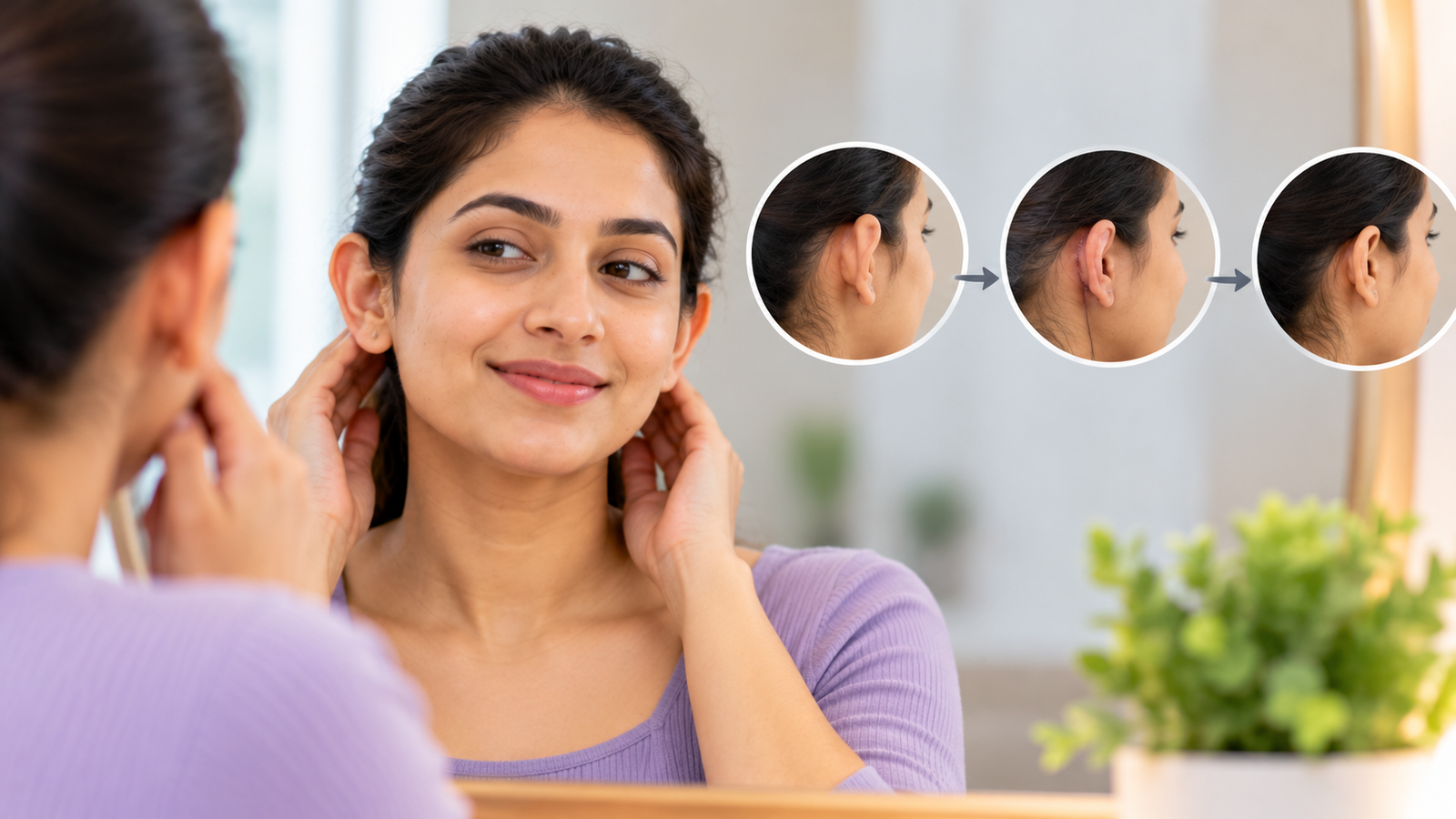

What Is the Right Age for Otoplasty?
The best age for otoplasty is generally around 5 to 6 years for children, when the external ears have reached most of their adult size. However, teenagers and adults can also undergo ear correction surgery. The right time depends on ear development, physical health, emotional readiness and personal expectations.
Otoplasty, also known as ear reshaping surgery or ear pinning surgery, is performed to improve the shape, position or symmetry of the external ears.
Some children are born with prominent ears that project noticeably away from the head. Others may have differences in ear folds, cartilage shape or symmetry.
Although these conditions usually do not affect hearing, they can sometimes cause appearance-related concerns.
At Elegance Clinic, Dr. Ashutosh Shah, Plastic, Reconstructive and Cosmetic Surgeon, evaluates individual ear anatomy and discusses whether surgery is appropriate for children, teenagers or adults.
Why Does Age Matter for Otoplasty?
Age is important because the external ears continue developing during childhood.
By approximately 5 to 6 years of age, the ears have reached most of their adult size. This makes it possible for a plastic surgeon to assess the ear structure and plan surgical correction.
However, physical development is not the only factor.
Before recommending surgery, a surgeon considers:
-
Whether the ears have developed sufficiently.
-
Whether the child is concerned about their appearance.
-
Whether the child can cooperate with postoperative care.
-
Whether the patient is medically suitable for surgery.
-
Whether the expected results are realistic.
The goal is not to perform surgery as early as possible. It is to identify the appropriate time for each patient.
Best Age for Otoplasty in Children: Is 5 to 6 Years Ideal?
For many children with prominent ears, the best age for otoplasty is approximately 5 to 6 years.
At this age, ear development is generally sufficient for conventional ear pinning surgery.
1. Ear development is nearly complete
The external ears have achieved most of their adult dimensions, allowing the surgeon to evaluate their position and proportions.
2. Cartilage is relatively flexible
Children's ear cartilage is generally more flexible than adult cartilage, which may help with certain reshaping techniques.
3. Surgery may be considered before school-related teasing
Some parents seek treatment before their child starts school or when teasing has become a concern.
However, surgery should never be considered mandatory simply because a child has prominent ears.
4. Results can be long-lasting
Otoplasty can provide lasting improvement in ear position and shape, although minor asymmetry, changes over time or recurrence are possible.
Does every child need surgery at age 5?
No. Prominent ears are not automatically a medical problem.
If a child is comfortable with their appearance, there may be no need for surgery.
At Elegance Clinic, Dr. Ashutosh Shah can help parents understand whether ear reshaping surgery is appropriate or whether waiting is preferable.
Can Otoplasty Be Performed Before Age 5?
Conventional otoplasty is usually postponed until the ears have developed sufficiently.
However, some congenital ear-shape abnormalities may be treated earlier using nonsurgical techniques.
Ear molding for newborns
Ear molding is a nonsurgical treatment that may help correct certain external ear deformities during the first few weeks after birth.
During this period, ear cartilage is particularly flexible.
This treatment differs from surgical otoplasty and is not suitable for every ear condition.
Children with complex congenital ear differences may require evaluation by a specialist experienced in pediatric ear reconstruction.
Is Otoplasty Suitable for Teenagers?
Yes. Teenagers can be suitable candidates for ear reshaping surgery.
During adolescence, individuals may become more aware of their facial features and appearance.
Teenagers sometimes consider otoplasty because of:
-
Prominent or protruding ears.
-
Uneven ear positioning.
-
Differences in ear shape.
-
Underdeveloped ear folds.
-
Personal dissatisfaction with ear appearance.
The best age for otoplasty during adolescence depends on the teenager's health, personal motivation and expectations.
A consultation should explain the surgical procedure, possible scars, recovery requirements and potential complications.
Teenagers should have an active role in deciding whether they want cosmetic ear surgery.
Can Adults Have Otoplasty After Age 18?
Yes. There is no fixed upper age limit for otoplasty.
Adults in their 20s, 30s, 40s and later years may undergo ear correction surgery if they are medically suitable.
Although adult ear cartilage is generally firmer than children's cartilage, surgical techniques can be adapted to the patient's anatomy.
Why do adults consider otoplasty?
Adults may choose surgery because of:
-
Prominent ears since childhood.
-
Noticeable differences between the ears.
-
Previous ear injuries.
-
Congenital ear-shape differences.
-
A personal desire to improve ear appearance.
The best age for otoplasty is therefore not limited to childhood.
Adults may also achieve satisfactory correction when surgery is carefully planned and realistic expectations are established.
For more information about the procedure, explore Otoplasty and Earlobe Repair.
Otoplasty Age Comparison: Children, Teenagers and Adults
| Age group | Otoplasty suitability | Main consideration |
|---|---|---|
| Newborns | Selected deformities may benefit from ear molding | Early nonsurgical correction |
| Under 5 years | Conventional surgery generally postponed | Ear development |
| 5–6 years | Common age for childhood otoplasty | Ear growth and emotional readiness |
| 7–12 years | Often suitable | Child's preferences and cooperation |
| 13–17 years | Often suitable | Personal motivation and expectations |
| 18 years and above | Suitable at many adult ages | Overall health and ear anatomy |
Age alone does not determine whether someone should undergo surgery.
A qualified plastic surgeon must assess the patient's individual condition.
How Is Otoplasty Surgery Performed?
Otoplasty is performed using techniques selected according to the ear's structure and the correction required.
Step 1: Ear examination and surgical planning
The surgeon evaluates the ears' projection, cartilage folds, size, shape and symmetry.
The patient's medical history and treatment expectations are also reviewed.
Step 2: Anaesthesia
Younger children commonly undergo otoplasty under general anaesthesia.
Older teenagers and adults may be suitable for local anaesthesia with or without sedation, depending on the procedure.
Step 3: Cartilage reshaping
For prominent ear correction, an incision is commonly made behind the ear.
The surgeon may reshape cartilage, place permanent internal sutures or use a combination of techniques to create the planned ear position.
Step 4: Dressing and protection
A protective dressing is applied after surgery.
A supportive headband may be recommended during healing.
At Elegance Clinic, Dr. Ashutosh Shah discusses the available surgical approach according to the patient's ear anatomy, age and treatment goals.
How Long Does Recovery Take After Otoplasty?
Recovery varies between patients.
Most experience temporary swelling, bruising and discomfort after surgery.
First week
A protective dressing may be required.
Patients should avoid rubbing, pulling or placing unnecessary pressure on their ears.
After 1–2 weeks
Many patients can return to school or non-strenuous work once the surgeon confirms that healing is satisfactory.
Following weeks
A protective headband may be recommended during sleep.
Contact sports and activities that could injure the ears should be avoided until the surgeon provides clearance.
Long-term healing
Most visible swelling gradually improves, but subtle changes may continue over several months.
Follow-up appointments allow the surgeon to assess healing and ear position.
What Are the Risks of Otoplasty at Different Ages?
Otoplasty is an established surgical procedure, but it is not risk-free.
Possible complications include:
-
Infection.
-
Bleeding or hematoma.
-
Temporary or persistent numbness.
-
Visible or thickened scars.
-
Uneven ear positioning.
-
Overcorrection or undercorrection.
-
Recurrence of ear prominence.
-
Need for revision surgery.
Children may need additional support to protect their ears during recovery.
Adults with certain medical conditions may require additional evaluation before surgery.
Choosing the best age for otoplasty involves considering these risks alongside the patient's anatomy, health and personal goals.
When Should Parents Wait Before Choosing Ear Surgery?
Even when a child has reached the typical age for otoplasty, waiting may be the better decision.
Parents should consider postponing surgery when:
-
The child does not want the procedure.
-
The child is comfortable with their ear appearance.
-
The child cannot cooperate with postoperative instructions.
-
An active infection or medical condition requires treatment.
-
The family needs more time to understand the risks and benefits.
Prominent ears generally do not cause hearing problems.
The decision should prioritize the child's wellbeing rather than external pressure about appearance.
How Dr. Ashutosh Shah at Elegance Clinic Helps Patients Choose the Right Age
Determining the appropriate time for ear correction requires an individual assessment rather than relying only on age.
Dr. Ashutosh Shah, Plastic, Reconstructive and Cosmetic Surgeon at Elegance Clinic, provides consultations for patients considering otoplasty and other facial cosmetic procedures.
During a consultation, the following factors may be evaluated:
Ear development: Whether the external ear has developed sufficiently for the proposed correction.
Ear shape and symmetry: The position, projection and cartilage structure of both ears.
Patient expectations: Whether the desired changes are achievable through surgery.
Medical suitability: Whether the patient's health supports safe surgical treatment.
Recovery planning: The time and precautions required after the procedure.
Parents can discuss whether their child should undergo surgery now or wait until a later stage of development.
Adults can explore whether prominent ear correction may address their appearance-related concerns.
Conclusion
The best age for otoplasty is commonly around 5 to 6 years for children, but the procedure can also be performed during adolescence or adulthood.
The ideal timing depends on physical development, personal preference, medical suitability and readiness for recovery.
Parents should consider their child's wishes and emotional wellbeing before choosing cosmetic ear surgery.
For individualized guidance, Dr. Ashutosh Shah at Elegance Clinic can assess ear shape, discuss treatment possibilities and explain the benefits, limitations and risks of otoplasty.
Visit Elegance Face Makeover to learn more about facial cosmetic surgery and consultation options.