
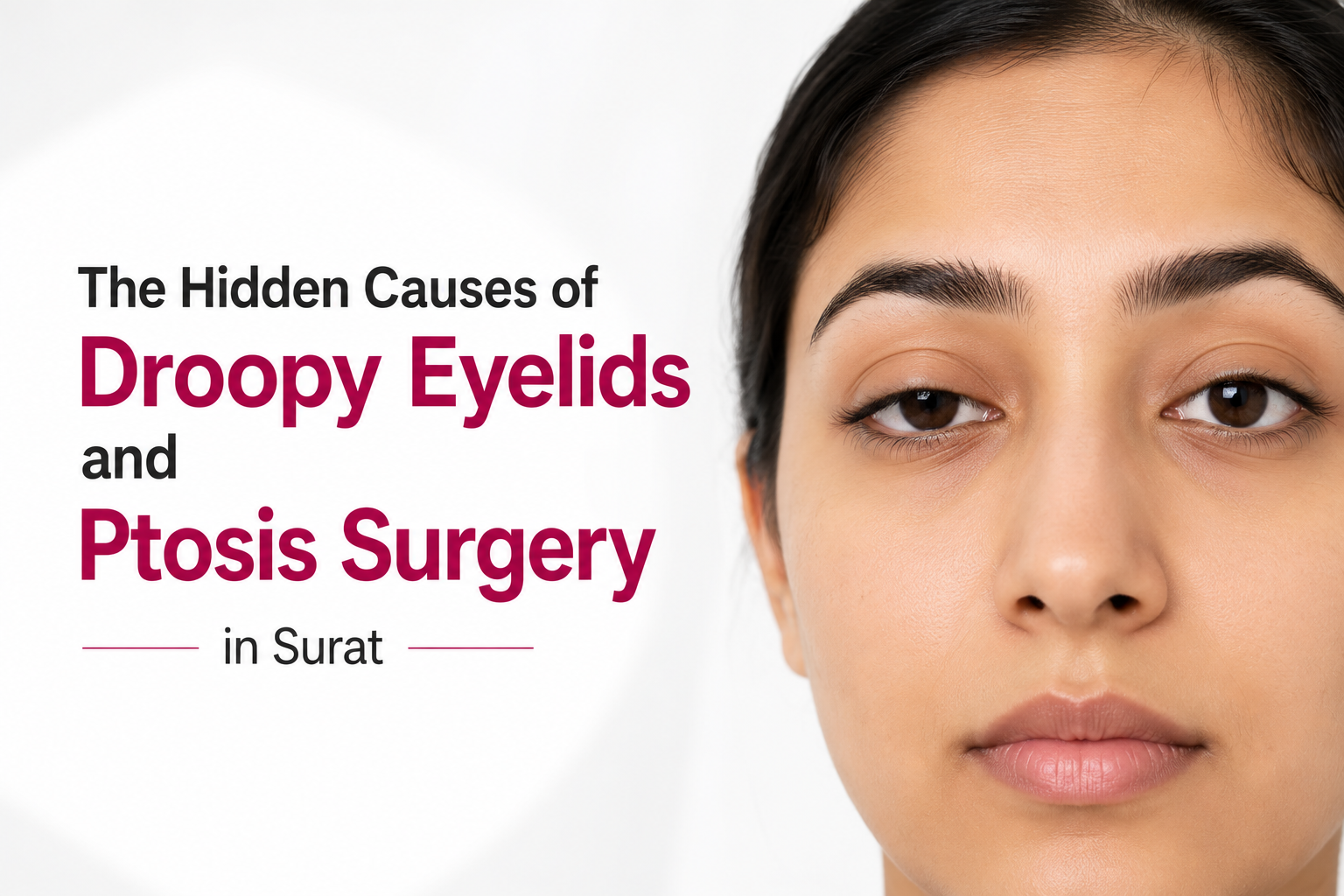
The Hidden Causes of Droopy Eyelids and Ptosis Surgery in Surat
A droopy upper eyelid can make the eyes look tired, uneven, or smaller than usual. But many people do not realize that droopy eyelids are not always simply an age-related cosmetic concern. The condition, medically known as ptosis or blepharoptosis, can develop because of changes involving the eyelid-lifting muscle, its supporting tissues, nerves, trauma, previous surgery, or conditions present from birth.
For people searching for Eyelid Ptosis Surgery in Surat, understanding the reason behind the drooping is an important first step. Treatment is not the same for everyone because the appropriate correction depends on the cause, severity, eyelid anatomy, muscle function, and whether vision is affected.
At Elegance Clinic, an individualized assessment can help determine whether the concern is true eyelid ptosis or another eyelid or brow-related condition that may create a similar appearance.
Key Takeaways
| What to Know | Why It Matters |
|---|---|
| Droopy eyelids are commonly called ptosis | Ptosis can have several different causes |
| Ptosis may affect one or both eyes | One-sided drooping can create noticeable asymmetry |
| Aging is only one possible cause | Congenital, muscular, nerve-related and tendon-related causes can occur |
| Diagnosis comes before surgery | The treatment approach depends on the underlying anatomy |
| Surgery may improve eyelid position | The technique depends on muscle function and severity |
| Ptosis can affect vision | A low eyelid may obstruct part of the upper visual field |
| Results are individualized | Eyelid height, symmetry and function all need consideration |
What Is Eyelid Ptosis?
Eyelid ptosis is a condition in which the upper eyelid sits lower than expected. It can affect one eye or both eyes and may range from mild drooping to significant eyelid coverage over the pupil.
Some people notice ptosis because their eyes appear uneven or constantly tired. Others experience practical problems such as difficulty keeping the eyes open, reduced upper-field vision, forehead strain, or the need to raise their eyebrows to compensate.
Ptosis may be present from childhood or develop later in life. Because acquired ptosis has multiple possible causes, assuming that every droopy eyelid is simply due to aging can lead to an incomplete assessment.
The Hidden Causes of Droopy Eyelids
1. Age-Related Changes
Aging is a common cause of acquired ptosis. Over time, the tissues supporting the upper eyelid can stretch or weaken.
The levator aponeurosis, a tendon-like structure associated with the muscle that lifts the upper eyelid, can become stretched, displaced, or weakened. As a result, the upper eyelid may gradually sit lower than it did previously.
This type of ptosis is often described as aponeurotic or involutional ptosis.
2. Reduced Eyelid Muscle Function
The levator muscle is responsible for helping elevate the upper eyelid. If its function is reduced, the eyelid may not open normally.
Muscle-related ptosis can have different causes, and the treatment approach may differ from age-related tendon changes. This is why assessing levator function is an important part of planning eyelid ptosis surgery.
3. Ptosis Present From Birth
Some people have droopy eyelids from childhood. This is known as congenital ptosis.
Congenital ptosis can occur because the eyelid-lifting muscle has developed abnormally or has reduced function. In children, significant ptosis requires appropriate evaluation because severe drooping may interfere with normal visual development.
4. Nerve-Related Causes
The nerves responsible for controlling eyelid movement play an important role in maintaining normal eyelid position. Problems affecting these nerve pathways can sometimes cause ptosis.
This is particularly important when drooping develops suddenly or is accompanied by other eye or neurological symptoms. In such cases, medical evaluation should come before considering cosmetic correction.
5. Muscle Disorders
Certain neuromuscular conditions can cause eyelid drooping.
In some conditions, the degree of drooping may change throughout the day or become more noticeable with fatigue. If an underlying medical condition is suspected, the appropriate medical evaluation and treatment should be considered rather than proceeding directly to cosmetic surgery.
6. Previous Surgery or Trauma
A droopy eyelid can sometimes develop after previous eye, eyelid or facial surgery. Trauma involving the eyelid can also alter the structures responsible for maintaining normal eyelid position.
When evaluating a patient for Eyelid Ptosis Surgery in Surat, a history of previous procedures or injuries can therefore be important.
7. Changes in Eyelid Supporting Tissues
The eyelid depends on several muscles, tendons and supporting tissues to maintain its position.
Changes in these structures can contribute to eyelid drooping or asymmetry. This is another reason why droopy eyelid correction is not a one-size-fits-all treatment.
How Can You Tell If You Have Ptosis?
Common signs of eyelid ptosis may include:
- One upper eyelid sitting lower than the other
- Both upper eyelids appearing unusually low
- An eye appearing smaller or less open
- Difficulty keeping the eyelid fully elevated
- Reduced upper-field vision
- Frequently raising the eyebrows
- Forehead strain from trying to keep the eyes open
- Tilting the head backward to see more clearly
- A tired or uneven appearance
- Increasing eyelid asymmetry
However, not every low-looking eyelid is true ptosis.
Excess upper-eyelid skin, brow position and other changes around the eyes can produce a similar appearance. A proper examination can help distinguish between these conditions.
Why Diagnosis Matters Before Ptosis Surgery
One of the most important things patients should understand is that ptosis surgery should not be selected based only on appearance.
During an evaluation, the surgeon may assess:
- Eyelid position
- Degree of drooping
- Levator muscle function
- Eyelid symmetry
- Brow position
- Excess eyelid skin
- Eye movements
- Ability to close the eyes
- Previous eye or eyelid surgery
- Relevant medical history
- Whether the visual field is affected
The function of the eyelid-lifting muscle is particularly important when determining the appropriate surgical technique.
At Elegance Clinic, the treatment plan should be based on the patient's individual eyelid anatomy, functional concerns and aesthetic goals rather than applying the same procedure to every case.
What Is Eyelid Ptosis Surgery?
Eyelid ptosis surgery is a procedure designed to improve the position of a drooping upper eyelid.
The specific surgical technique depends on the cause and severity of ptosis, eyelid anatomy and the function of the eyelid-lifting muscle.
For some patients with adequate levator function, a procedure involving levator advancement or repair may be considered. Other patients may require a different approach depending on muscle strength and the degree of drooping.
In cases where the eyelid-lifting muscle has significantly reduced function, other procedures may be considered by the treating specialist.
The objective is not simply to make the eyes look larger. Appropriate correction aims to improve eyelid position while considering symmetry, function and eye protection.
Is Ptosis Surgery Only for Cosmetic Reasons?
No.
Eyelid ptosis surgery can have both functional and aesthetic objectives.
If the upper eyelid interferes with the visual field, correcting its position may help improve the amount of visible upper-field vision. In other patients, the main concern may be eyelid asymmetry or an appearance of constantly tired eyes.
Therefore, the reason for treatment can differ from patient to patient.
What Happens During an Eyelid Ptosis Evaluation?
A consultation for Eyelid Ptosis Surgery in Surat should begin with an assessment of the eyelids rather than immediately choosing a procedure.
The specialist may compare both eyes and evaluate eyelid movement, position and symmetry. Levator function may also be assessed because it can influence the choice of surgical technique.
The patient's medical history, previous eye procedures, injuries and symptoms may also be discussed.
At Elegance Clinic, an individualized consultation can help identify the nature of the eyelid concern and determine whether ptosis correction may be appropriate.
What Is Recovery Like After Ptosis Surgery?
Recovery varies according to the surgical technique and individual healing.
Swelling and bruising around the eyelids can occur during the early recovery period. Patients should follow their surgeon's postoperative instructions carefully.
Follow-up appointments are important because eyelid position can change during the healing process. The specialist may monitor eyelid height, symmetry, healing and the ability to close the eyes properly.
Patients should avoid comparing their recovery with someone else's because healing timelines can differ considerably.
Are There Risks With Eyelid Ptosis Surgery?
As with any surgical procedure, ptosis correction has potential risks.
Possible complications can include:
- Swelling and bruising
- Infection
- Bleeding
- Temporary or persistent eyelid asymmetry
- Undercorrection
- Overcorrection
- Eye irritation
- Foreign-body sensation
- Difficulty fully closing the eye
- Exposure-related eye problems
- Recurrence of ptosis
The risk profile varies between patients and depends on the underlying cause, anatomy and surgical technique.
Discussing potential risks and expected outcomes during consultation is an important part of informed decision-making.
Is Eyelid Ptosis Surgery Permanent?
Eyelid ptosis surgery can provide long-lasting improvement, but recurrence is possible.
The durability of the result depends on factors such as the original cause of ptosis, tissue quality, muscle function, age, healing and the technique used.
Patients should therefore view ptosis surgery as a carefully planned correction rather than a guarantee that the eyelid can never droop again.
Eyelid Ptosis Surgery vs. Cosmetic Blepharoplasty
These procedures are related but they are not the same treatment.
Ptosis surgery primarily addresses a low-positioned upper eyelid and the mechanism responsible for lifting it.
Blepharoplasty generally focuses on excess eyelid skin and other age-related changes around the eyelids.
Some patients may have both ptosis and excess upper-eyelid skin. In such cases, the treatment plan needs to address the actual anatomical causes rather than assuming that removing excess skin alone will correct the drooping.
Who May Be a Candidate for Eyelid Ptosis Surgery in Surat?
A person may be considered for ptosis surgery when:
- The upper eyelid is visibly drooping
- Ptosis affects one or both eyes
- Drooping affects vision or daily activities
- Eyelid asymmetry is a significant concern
- The underlying cause has been evaluated
- The patient's health is appropriate for surgery
- Expectations are realistic
However, only an individual clinical evaluation can determine whether eyelid ptosis surgery is suitable.
Why Choosing the Right Treatment Matters
Two people can have very similar-looking droopy eyelids but completely different underlying causes.
One person may have age-related stretching of the levator tendon. Another may have reduced muscle function. Someone else may have congenital ptosis or an underlying medical condition.
The treatment approach may therefore be completely different.
This is one of the most important points patients should understand when searching for droopy eyelid correction in Surat:
The goal is not simply to lift the eyelid. The goal is to understand why it is drooping and select an appropriate treatment based on the patient's anatomy and needs.
When Should You Seek Medical Evaluation?
A longstanding and stable droopy eyelid can generally be evaluated through a planned consultation.
However, new, sudden, rapidly worsening or unexplained eyelid drooping should be medically assessed, especially if it occurs with changes in vision, eye movement or other neurological symptoms.
Identifying the underlying cause is an important part of safe treatment planning.
Conclusion
Eyelid Ptosis Surgery in Surat is about more than making the eyes look bigger or more awake. The most important step is understanding why the eyelid is drooping.
Age-related tissue changes, congenital ptosis, reduced muscle function, nerve-related conditions, trauma and previous surgery can all contribute to droopy eyelids. Because different causes may require different treatment approaches, individualized assessment is essential before deciding on surgery.
At Elegance Clinic, Dr. Ashutosh Shah can evaluate your eyelid concerns and help you understand suitable options for droopy eyelid correction based on your individual anatomy, eyelid function and aesthetic goals.
Considering Eyelid Ptosis Surgery in Surat? Contact Elegance Clinic to schedule a consultation and take the first step toward understanding your droopy eyelid correction options.