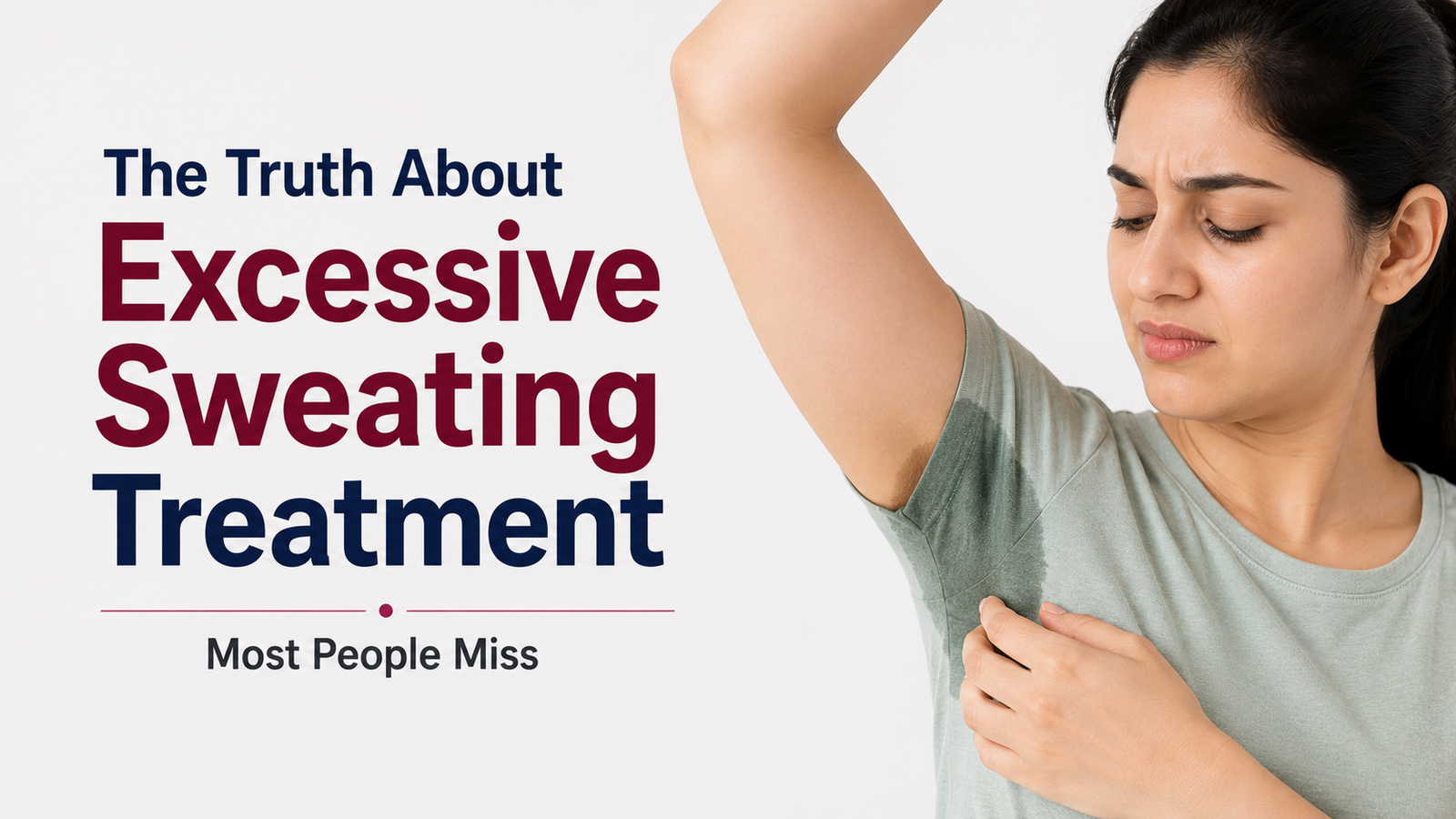
The Truth About Excessive Sweating Treatment Most People Miss
Sweating is a normal way for the body to regulate temperature. But what happens when you sweat heavily even when the weather is comfortable, you are sitting quietly, or you are not exercising?
This may be more than ordinary sweating.
Hyperhidrosis is a condition that causes excessive sweating beyond what the body needs for cooling. It commonly affects the underarms, palms, soles, face and scalp and can interfere with clothing choices, work, social interactions and everyday activities.
For people looking for Hyperhidrosis Treatment in Surat, understanding the reason behind excessive sweating is an important first step. Treatment is not necessarily the same for everyone. The appropriate approach depends on where you sweat, how severe the sweating is, how long it has been happening and whether another medical condition or medication could be contributing.
What Is Hyperhidrosis?
Hyperhidrosis refers to excessive sweating that occurs beyond the body's normal cooling requirements.
Unlike normal sweating after exercise or exposure to heat, hyperhidrosis may occur while you are resting or in a comfortable environment. It can affect one specific area or multiple parts of the body.
Common areas include:
- Underarms
- Palms
- Feet
- Face
- Scalp
- Other localized areas
For some people, the problem is primarily cosmetic. For others, it can become a daily practical issue for example, constantly wet clothing, slippery hands or difficulty using electronic devices.
The First Thing Most People Miss: Not All Excessive Sweating Is the Same
One of the most important considerations before choosing an excessive sweating treatment is identifying the type of sweating involved.
Primary Hyperhidrosis
Primary or focal hyperhidrosis generally affects specific areas such as the underarms, palms, feet, or face. It can occur without an obvious underlying illness.
Secondary Hyperhidrosis
Secondary hyperhidrosis can be associated with another medical condition or medication and may cause sweating over larger areas of the body. Identifying the underlying cause is important because treatment may need to address that cause as well.
This is why simply trying to suppress sweating without understanding the reason may not always be the best approach.
How Do You Know If Your Sweating Is Excessive?
You may want to discuss hyperhidrosis with a medical professional if sweating:
- Happens even when you are not hot
- Regularly soaks through clothing
- Makes your hands unusually wet
- Causes difficulty holding objects
- Interferes with work or daily activities
- Makes you frequently change clothes
- Causes significant social embarrassment
- Occurs repeatedly without an obvious trigger
Excessive sweating can affect more than appearance. It may interfere with everyday tasks and contribute to social discomfort or self-consciousness.
What Causes Excessive Sweating?
Sweating is controlled by the body's nervous system and sweat glands. In hyperhidrosis, sweating may occur more than necessary.
Possible factors can include:
- Primary hyperhidrosis
- Certain medical conditions
- Certain medications
- Stress or anxiety-related sweating
- Hormonal or metabolic factors
- Other underlying causes
A proper evaluation can help determine whether the sweating appears to be primary hyperhidrosis or whether an underlying factor needs attention.
What Are the Treatment Options for Hyperhidrosis?
There is no single best hyperhidrosis treatment for every person. Dermatology guidance emphasizes choosing treatment according to the affected body area, severity, symptoms and individual needs.
Depending on the situation, treatment may include:
1. Prescription Antiperspirants
Antiperspirants can temporarily reduce sweating by blocking sweat glands. Mild cases may respond to non-prescription products, while some people require prescription-strength options.
These treatments are often considered among the first approaches for localized sweating.
2. Botulinum Toxin Treatment
Botulinum toxin injections can temporarily reduce sweating in treated areas by interfering with the nerve signals that stimulate sweat production.
They may be used for areas such as the underarms, palms, feet and face in appropriate patients. The American Academy of Dermatology notes that many patients begin noticing reduced sweating within approximately 7–10 days, although the duration of results varies by treatment area and individual.
Because injections require accurate placement and appropriate dosing, they should be performed by a qualified medical professional.
3. Iontophoresis
Iontophoresis is a treatment option particularly used for excessive sweating of the hands and feet.
It uses a mild electrical current through water to reduce sweat production in the treated area. Treatment generally requires repeated sessions followed by maintenance treatments.
4. Oral Medications
In selected cases, doctors may consider medications that work throughout the body to reduce sweating.
These are not suitable for everyone and can have side effects such as dry mouth, constipation, drowsiness, blurred vision and difficulty urinating. They should therefore be used only under appropriate medical supervision.
5. Treatment of an Underlying Cause
If excessive sweating is secondary to a medication or another medical condition, addressing that underlying factor may be an important part of treatment.
Is Hyperhidrosis Treatment Permanent?
This is another point many people misunderstand.
Hyperhidrosis treatment can control excessive sweating, but it is not necessarily a permanent cure. The duration of improvement depends on the treatment used, the body area treated and individual response.
For example, botulinum toxin treatment provides temporary reduction in sweating, so repeat treatment may be required when the effect wears off.
The goal is generally to achieve meaningful control of sweating rather than promising a permanent result for every patient.
Can Excessive Underarm Sweating Be Treated?
Yes. Excessive underarm sweating, also known as axillary hyperhidrosis, has several treatment options.
Depending on the severity and individual circumstances, a medical professional may consider:
- Prescription antiperspirants
- Botulinum toxin injections
- Certain topical treatments
- Sweat-control procedures
- Oral medication in selected cases
The right choice depends on the individual's symptoms, medical history and treatment goals.
What About Sweaty Hands and Feet?
Palmar and plantar hyperhidrosis can be particularly frustrating because excessive moisture can affect everyday activities.
Sweaty palms may make it difficult to:
- Shake hands comfortably
- Hold a phone
- Use a keyboard or mouse
- Write
- Handle certain objects
Excessive sweating of the feet can also contribute to persistent dampness and skin problems.
Depending on the diagnosis, treatment may include topical options, iontophoresis, botulinum toxin or other medically appropriate approaches.
Does Deodorant Treat Hyperhidrosis?
Usually, deodorant and antiperspirant should not be considered the same thing.
Deodorants primarily help control body odor, while antiperspirants are designed to reduce sweating.
For people with significant hyperhidrosis, ordinary deodorant may not adequately control the amount of sweat. Dermatologists may recommend stronger antiperspirant treatment depending on the diagnosis.
When Should You Seek Treatment?
Consider getting evaluated if excessive sweating is persistent, unexplained or interfering with your everyday life.
You should especially discuss sudden or widespread excessive sweating with a healthcare professional because secondary hyperhidrosis can sometimes be associated with an underlying medical condition or medication.
A proper evaluation helps distinguish ordinary sweating from hyperhidrosis and determines whether additional medical assessment is necessary.
Choosing Hyperhidrosis Treatment in Surat
When searching for Hyperhidrosis Treatment in Surat, avoid choosing a treatment solely because it is advertised as the fastest or most permanent solution.
A better approach is to look for:
- Proper assessment of excessive sweating
- Identification of the affected areas
- Review of medical history and medications
- Discussion of available treatment options
- Realistic expectations about results
- Appropriate follow-up and maintenance
At Elegance Clinic in Surat, patients can discuss excessive sweating concerns and explore an individualized treatment approach with Dr. Ashutosh Shah.
The aim should be to understand the pattern of sweating first and then select an appropriate treatment based on the individual's needs.
Why Individualized Treatment Matters
Two people may both say, "I sweat too much," but their situations can be completely different.
One person may have isolated underarm sweating. Another may have sweaty palms. Someone else may experience widespread sweating related to medication or another condition.
Therefore, the best hyperhidrosis treatment is not determined by the name of the treatment alone. It is determined by the diagnosis, affected area, severity, medical history and treatment goals.
This individualized approach can make the treatment plan more appropriate and realistic.
The Truth About Excessive Sweating Treatment
The biggest misconception is that excessive sweating is something you simply have to tolerate.
Hyperhidrosis is a treatable condition, and several treatment approaches can help reduce excessive sweating. However, there is no universal treatment that works identically for everyone, and hyperhidrosis does not currently have a guaranteed permanent cure.
The right first step is therefore not to search for the strongest treatment.
It is to understand why you are sweating excessively, where the sweating occurs and how much it affects your life.
Conclusion: Find the Right Hyperhidrosis Treatment in Surat
Excessive sweating can affect confidence, clothing choices, work, social interactions and everyday activities. But living with constantly wet underarms, palms or feet does not necessarily mean you have to accept it as normal.
If you are experiencing persistent or disruptive sweating, a professional evaluation can help determine whether you have hyperhidrosis and which treatment options may be appropriate.
If you are looking for Hyperhidrosis Treatment in Surat, consult Elegance Clinic to discuss your excessive sweating concerns with Dr. Ashutosh Shah and understand a treatment plan suited to your condition.
Take the first step toward better control of excessive sweating. Schedule a consultation to discuss your symptoms, treatment options and realistic expectations.