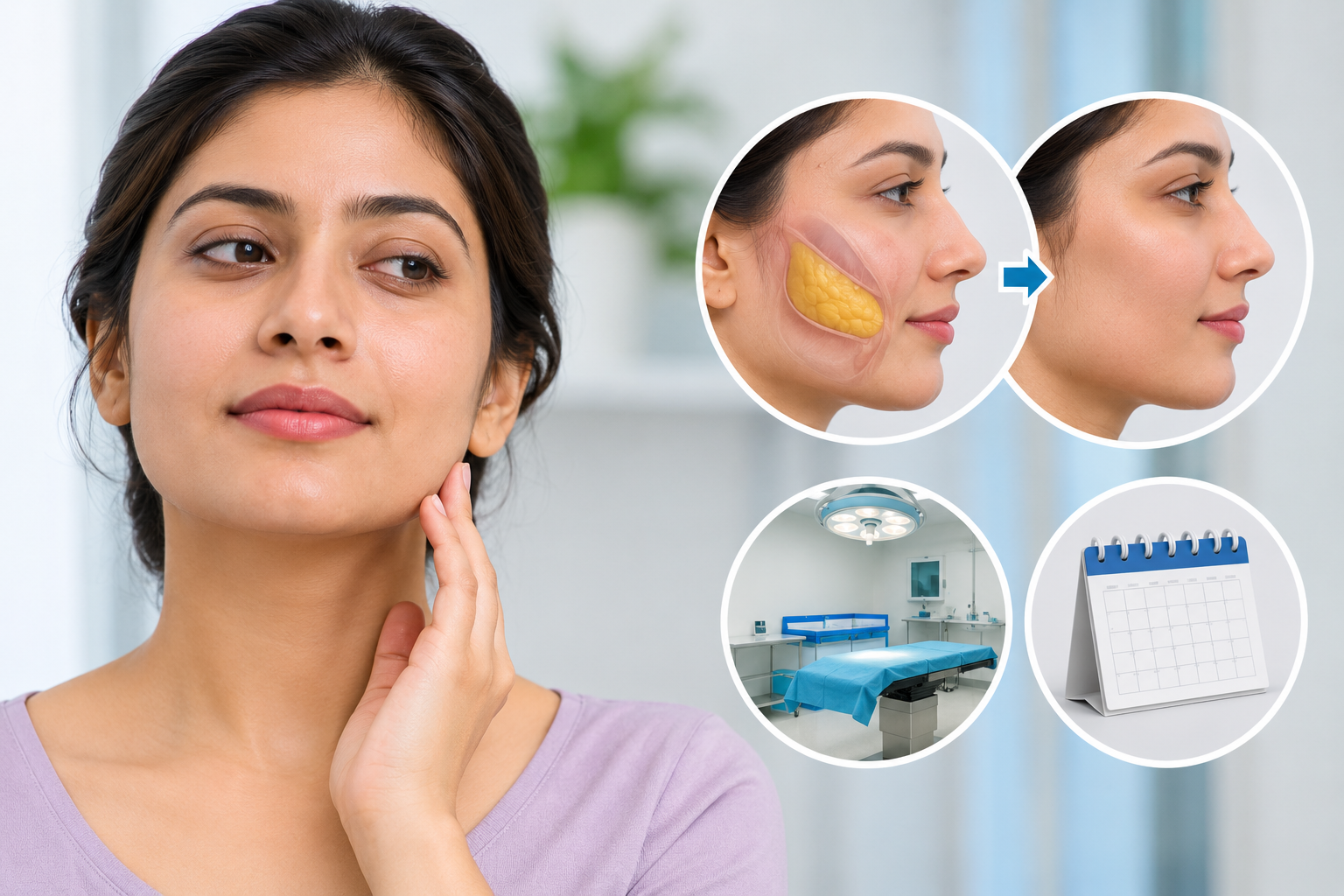

Who Is a Good Candidate for Jawline Contouring? A Self-Check
A good candidate for jawline contouring is in stable general health, has realistic expectations and a clear concern that the procedure is designed to treat. Conditions like uncontrolled diabetes, high blood pressure, smoking or recent weight change may need attention first. A consultation confirms suitability.
Jawline contouring can improve selected concerns involving chin projection, lower-face definition, fat distribution or skin laxity. However, not everyone needs the same treatment.
Some patients may benefit from non-surgical options, while others require a surgical assessment. Understanding who can get jawline contouring helps patients make informed decisions before committing to treatment.
At Elegance Clinic, Dr. Ashutosh Shah evaluates facial anatomy, medical history and treatment expectations to determine whether jawline contouring may be appropriate.
Who Usually Benefits Most?
Jawline contouring may benefit adults who have a specific lower-face concern that can realistically be improved with an appropriate treatment.
The most suitable candidates are generally those who understand the procedure, its limitations and possible complications.
People With Reduced Jawline Definition
Some individuals naturally have less prominent jawline contours because of facial structure.
Others experience changes due to ageing, skin laxity or fat distribution.
Treatment selection depends on identifying the cause.
People With a Recessed Chin
A relatively small or recessed chin can affect the appearance of the lower face.
Selected patients may be considered for chin augmentation or another suitable procedure after assessment.
People With Localised Fat Beneath the Chin
Some patients have fullness beneath the chin despite maintaining a relatively stable weight.
Fat-reduction procedures may be considered when the underlying anatomy and skin elasticity are suitable.
People With Loose Lower-Face Skin
Age-related changes can cause sagging around the jawline.
Selected patients may benefit from a lifting procedure rather than fat removal alone.
For additional information, explore lower face contouring treatment for face shape.
People With Realistic Expectations
A suitable candidate understands that treatment may improve facial proportions but cannot guarantee perfect symmetry or a specific appearance.
Who Should Wait or Avoid It for Now?
Not every patient is ready for jawline contouring immediately.
Some medical conditions, lifestyle factors or expectations may make postponement appropriate.
Uncontrolled Diabetes
Poorly controlled diabetes may increase infection and wound-healing risks, particularly with surgery.
Patients should discuss their diabetes management and any relevant investigations with their treating doctor.
Uncontrolled High Blood Pressure
Uncontrolled hypertension may increase procedural and anaesthesia-related risks.
Blood pressure should be assessed and managed before elective treatment.
Smoking or Nicotine Use
Smoking and nicotine exposure can impair blood circulation and healing.
Patients should disclose cigarette use, vaping and other nicotine products.
Recent Major Weight Changes
Significant weight changes can affect facial fat distribution and skin appearance.
Patients expecting further substantial weight loss may benefit from reassessing their goals after their weight stabilises.
Unrealistic Expectations
Patients expecting guaranteed symmetry, permanent perfection or a result identical to a photograph should discuss these expectations carefully.
Surgery may not be appropriate when the expected outcome cannot realistically be achieved.
Pregnancy or Certain Medical Conditions
Elective cosmetic treatment is generally postponed during pregnancy.
Other medical conditions or medicines may require additional assessment.
Important: Having a medical condition does not automatically mean treatment is impossible. Suitability depends on the condition, its control and the planned procedure.
How Do Age, Weight and Health Conditions Matter?
Understanding jawline contouring eligibility requires more than checking a person's age.
The surgeon must consider facial anatomy, general health and treatment goals.
Is There a Jawline Contouring Age Limit?
There is no single age that determines suitability for every jawline procedure.
Elective cosmetic treatment generally requires appropriate physical maturity, informed consent and individual assessment.
Older adults may also be candidates when their health and anatomy make treatment appropriate.
Does Body Weight Matter?
Weight can influence facial fat distribution and skin elasticity.
However, jawline contouring is not a substitute for overall weight management.
A relatively stable weight may help patients assess their long-term treatment goals.
Can Patients With Diabetes Have Treatment?
Patients with diabetes may be considered after evaluating blood glucose control, complications and procedural risks.
The treating surgeon may coordinate with the patient's physician.
What About High Blood Pressure?
Controlled hypertension does not necessarily exclude treatment.
However, uncontrolled blood pressure may require medical optimisation before elective procedures.
Does Smoking Affect Eligibility?
Yes. Nicotine exposure can increase healing-related risks.
The recommended period of nicotine cessation depends on the procedure and individual medical circumstances.
Required nicotine-free period: [Surgeon to confirm].
What Tests Are Done Before Treatment?
Not every jawline contouring procedure requires the same investigations.
The assessment depends on whether the patient is considering fillers, liposuction, chin surgery or another technique.
Medical History
The surgeon may review:
-
Existing medical conditions
-
Current medicines and supplements
-
Previous facial procedures
-
Allergies
-
Smoking and nicotine use
-
Previous anaesthesia problems
-
History of abnormal bleeding or clotting
Facial Examination
The examination may assess chin projection, facial symmetry, skin elasticity, fat distribution and jawline proportions.
Clinical photographs may be taken with consent.
Blood Tests
For selected surgical procedures, blood tests may be requested according to the patient's medical history and planned operation.
Imaging
Imaging may be necessary when underlying skeletal anatomy requires assessment.
It is not routinely necessary for every non-surgical treatment.
Anaesthesia Assessment
Patients undergoing procedures with sedation or general anaesthesia may require an anaesthesia evaluation.
Why Is a Consultation Important?
A consultation helps identify whether the concern involves skin, fat, muscle or bone.
For example, gum contouring surgery addresses gum appearance rather than jawline structure. It therefore requires a different clinical assessment.
Likewise, hip dip correction filler for balanced body contouring concerns body proportions rather than the lower face.
Each treatment has separate indications, limitations and risks.
Jawline Contouring in Vesu Surat: Are You a Suitable Candidate?
Patients considering jawline contouring in vesu surat should first identify their specific concern and discuss whether a surgical or non-surgical approach is appropriate.
The following checklist can help prepare for a consultation.
Jawline Contouring Candidate Self-Check
| Self-check question | Yes / No | Discuss with doctor |
|---|---|---|
| Are you in stable general health? | ☐ Yes ☐ No | Medical suitability |
| Do you have a specific jawline concern? | ☐ Yes ☐ No | Treatment goals |
| Is your weight relatively stable? | ☐ Yes ☐ No | Timing of treatment |
| Do you smoke or use nicotine? | ☐ Yes ☐ No | Healing risks |
| Do you have diabetes? | ☐ Yes ☐ No | Blood glucose control |
| Do you have high blood pressure? | ☐ Yes ☐ No | Blood pressure management |
| Have you undergone facial surgery before? | ☐ Yes ☐ No | Previous procedures |
| Do you understand possible complications? | ☐ Yes ☐ No | Informed consent |
| Are your expectations realistic? | ☐ Yes ☐ No | Expected outcome |
| Can you attend follow-up visits? | ☐ Yes ☐ No | Recovery planning |
This checklist is not a medical eligibility test. A qualified clinician must assess suitability before treatment.
Consultation With Dr. Ashutosh Shah
At Elegance Clinic, Dr. Ashutosh Shah, MS, MCh, DNB, Plastic and Reconstructive Surgeon, discusses individual concerns and evaluates suitable facial contouring approaches.
Patients can ask about the recommended procedure, possible alternatives, recovery requirements and expected results.
Procedure-specific eligibility criteria: [Surgeon to confirm].
What Are Realistic Expectations?
Patients should understand what jawline contouring can and cannot achieve.
Improvement Rather Than Perfection
Treatment may improve selected facial proportions, but perfect symmetry cannot be guaranteed.
Natural anatomical differences remain important.
Results Depend on the Procedure
Fillers may produce temporary changes, while surgical procedures can create longer-lasting structural or soft-tissue changes.
However, ageing, weight changes and other factors may continue affecting facial appearance.
Recovery Is Different for Everyone
Swelling, bruising and temporary discomfort may occur after treatment.
The recovery period depends on the technique selected.
Expected recovery duration: [Surgeon to confirm].
Risks Must Be Discussed
Possible complications depend on the procedure and may include infection, bleeding, asymmetry, scarring, altered sensation or dissatisfaction with the result.
Injectable fillers also carry uncommon but serious vascular risks.
Patients should understand these risks before giving consent.
Treatment Should Match the Actual Concern
A patient with excess submental fat may require a different treatment from someone with a recessed chin or loose skin.
The goal should be a medically appropriate improvement rather than an unnecessarily extensive procedure.
Key Takeaways
-
Suitable candidates generally have stable health and realistic expectations.
-
Jawline contouring is not one standard treatment.
-
Facial anatomy determines which technique may be appropriate.
-
Uncontrolled diabetes or high blood pressure may require treatment optimisation.
-
Smoking and nicotine exposure can increase healing risks.
-
Stable weight can help with treatment planning.
-
A consultation is necessary to confirm eligibility.
-
Results and recovery depend on the procedure selected.
-
The self-check table helps prepare questions but cannot replace medical assessment.
Conclusion
Understanding who can get jawline contouring starts with identifying the patient's facial concern, health status and expectations.
Some patients may benefit from non-surgical treatment, while others require a surgical assessment. Not everyone needs an operation.
For personalised guidance, contact us to enquire about a consultation with Dr. Ashutosh Shah at Elegance Clinic.