
Jawline Contouring in Adajan, Surat: Procedure, Recovery and Cost Factors
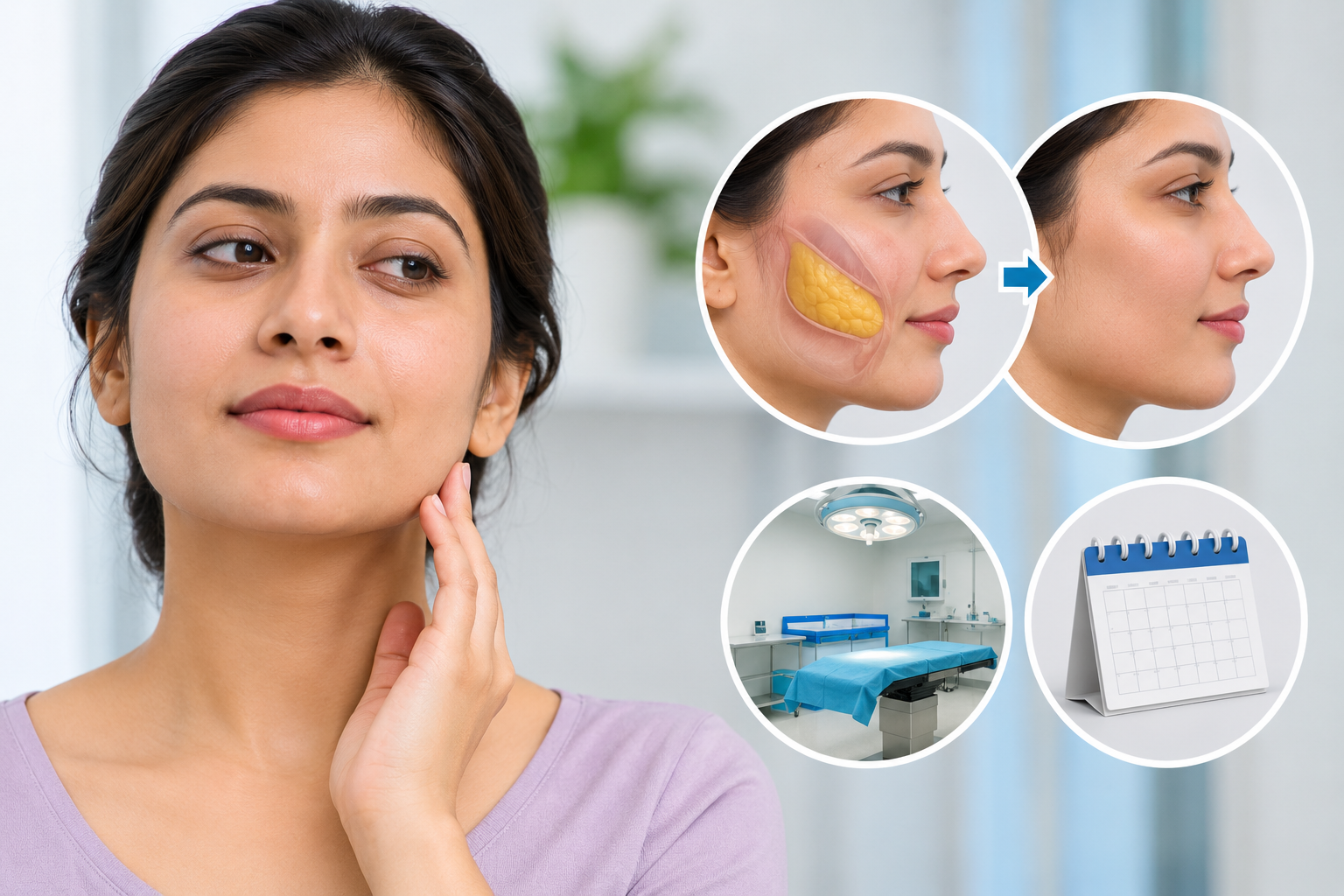
Jawline contouring in adajan surat helps patients explore treatment options for improving lower-face definition, chin projection and facial balance. Depending on individual anatomy, treatment may involve fillers, fat reduction or surgery. A consultation with Dr. Ashutosh Shah at Elegance Clinic helps determine suitability, expected recovery and cost factors.
A well-defined jawline contributes to the overall balance between the chin, cheeks and neck. However, every person has a different facial structure, and the same treatment may not be suitable for everyone.
Some patients are concerned about fullness beneath the chin, while others notice loose skin, reduced chin projection or changes in lower-face definition.
Understanding the underlying cause is essential before choosing treatment.
At Elegance Clinic, Dr. Ashutosh Shah evaluates facial concerns and discusses suitable options based on individual anatomy, medical history and realistic expectations.
What Is Jawline Contouring and Who Is It For?
Jawline contouring refers to treatments intended to improve the shape, proportion or definition of the lower face.
It is not one standard operation. Depending on the concern, treatment may involve surgical or non-surgical techniques.
Which Concerns Can Jawline Contouring Address?
Patients may seek assessment for:
-
Reduced definition between the jaw and neck
-
Fullness beneath the chin
-
A recessed or relatively small chin
-
Loose skin around the lower face
-
Age-related changes in facial contours
-
Differences in lower-face proportions
-
Selected facial asymmetries
A consultation helps determine whether the concern involves fat, skin, muscle, bone or a combination of structures.
What Treatment Options May Be Considered?
Non-surgical fillers: In suitable patients, injectable fillers may temporarily improve selected areas of chin or jawline definition. These treatments carry risks and require qualified medical assessment.
Submental liposuction: May reduce localised fat beneath the chin when skin elasticity and other factors make the patient suitable.
Chin augmentation: May improve chin projection through an appropriately selected surgical approach.
Lower-face or neck lifting: May address selected problems involving loose skin and deeper soft tissues.
Skeletal contouring: In carefully selected cases, procedures involving the underlying bone may be considered.
These procedures are not interchangeable. The correct option depends on the anatomical concern being treated.
Patients can explore lower face contouring treatment for face shape for additional information about lower-face treatment planning.
Who May Be a Suitable Candidate?
Suitable candidates generally have stable health, realistic expectations and a clearly identified concern.
Patients should understand that jawline contouring cannot guarantee perfect facial symmetry or a particular appearance.
How the Procedure Is Done, Step by Step
The exact procedure depends on whether treatment involves fillers, fat reduction, soft-tissue lifting or structural changes.
A typical treatment pathway includes the following stages.
Step 1: Initial Consultation
The surgeon discusses the patient's concerns, expectations and medical history.
The assessment may include facial proportions, chin projection, jawline definition, skin elasticity, fat distribution, previous procedures and current medicines.
Clinical photographs may be taken with consent.
Step 2: Identifying the Cause
Not every poorly defined jawline is caused by excess fat.
A recessed chin may affect the appearance of the jawline even when there is little excess fat. Similarly, loose skin may require a different approach from localised fullness.
Treatment should address the underlying concern rather than simply follow a cosmetic trend.
Step 3: Selecting the Treatment
The surgeon explains which procedure may be suitable and whether non-surgical alternatives exist.
Patients should discuss expected benefits, limitations, risks and recovery requirements.
Step 4: Preoperative Assessment
For surgical procedures, investigations may be required depending on the patient's health and planned operation.
These may include blood tests, anaesthesia assessment or imaging when clinically indicated.
Step 5: Performing the Procedure
The technique varies considerably.
Fillers are administered through injections, while liposuction involves removing selected fat deposits. Lifting procedures reposition tissues, and structural operations may alter the chin or jaw framework.
Step 6: Immediate Post-Treatment Care
The medical team provides instructions about medicines, swelling, activity restrictions and follow-up appointments.
Some treatments may be outpatient procedures, while others require hospital observation.
Step 7: Follow-Up Assessment
Follow-up visits allow the treating clinician to assess healing, monitor complications and review results.
Patients should not assume that every treatment requires the same number of appointments.
Quick Facts: Jawline Contouring
| Factor | What Patients Should Know |
|---|---|
| Treatment duration | [Surgeon to confirm for the selected technique] |
| Anaesthesia | May involve local anaesthesia, sedation or general anaesthesia |
| Hospital stay | [Surgeon to confirm] |
| Return to desk work | [Surgeon to confirm] |
| Follow-up visits | [Surgeon to confirm number and timing] |
| Recovery period | Depends on treatment complexity and individual healing |
| Final results | Vary by procedure; surgical swelling may take months to settle |
Recovery: What the First Weeks Look Like
Recovery after jawline contouring depends on the treatment performed.
A patient receiving fillers will generally have different recovery needs from someone undergoing liposuction, chin surgery or a neck lift.
First 24 Hours
Swelling, tenderness and discomfort may occur.
Patients should follow instructions about medicines, wound care and activity.
After sedation or general anaesthesia, arrange transport and avoid driving until medically permitted.
Days 2–3
Swelling and bruising may become more noticeable.
Depending on the procedure, the surgeon may recommend a particular sleeping position, dressings or a compression garment.
Do not use compression unless prescribed.
Days 4–7
Early swelling may gradually improve.
A follow-up appointment may be required to examine healing and address concerns.
Patients should avoid strenuous exercise and unnecessary pressure on the treated area.
Week 2
Some patients may feel comfortable returning to desk work, depending on the operation.
However, swelling, bruising or temporary changes in sensation may persist.
Weeks 3–4
Discomfort and swelling may continue to decrease.
Exercise and physical work should resume only after appropriate medical clearance.
Weeks 5–6
Many patients notice further improvement, although healing may not be complete.
Procedures involving bone or extensive tissue repositioning may require longer restrictions.
When Will the Final Jawline Shape Become Visible?
The answer depends on the treatment.
Fillers may produce an early visible change, although swelling can temporarily affect appearance. Surgical results may continue evolving as swelling resolves and tissues settle.
Which Symptoms Require Medical Attention?
Contact the treating team urgently for:
-
Sudden or rapidly increasing swelling
-
Severe or worsening pain
-
Persistent bleeding
-
Fever with concerning wound changes
-
New or worsening facial weakness
-
Significant difficulty swallowing or breathing
-
Unusual skin colour changes after injectable treatment
Breathing difficulty, sudden visual symptoms or other severe symptoms require emergency medical care.
Which Factors Change the Cost?
Patients researching jawline contouring in adajan surat should understand that treatment costs vary according to the selected technique, complexity and postoperative requirements.
A reliable quotation should follow a medical examination rather than be based solely on photographs or a telephone conversation.
Type of Treatment
Non-surgical fillers, liposuction, lifting procedures and skeletal surgery have different cost structures.
Treatment Complexity
A straightforward procedure may require less operating time and fewer resources than a complex operation.
Previous surgery or anatomical differences may also affect planning.
Anaesthesia Requirements
The cost may vary depending on whether local anaesthesia, sedation or general anaesthesia is required.
Facility and Hospital Stay
Operating-room charges, equipment, recovery monitoring and hospital observation can affect the estimate.
Preoperative Investigations
Tests or imaging may be required according to the planned procedure.
Medicines and Follow-Ups
Patients should confirm whether postoperative medicines, dressings and follow-up visits are included.
Combining Procedures
Some patients ask about combining jawline treatment with other cosmetic procedures.
However, combining treatments should be considered only when clinically appropriate.
For example, gum contouring surgery concerns the gum line rather than the jawline and requires a different professional assessment.
Similarly, hip dip correction filler for balanced body contouring addresses body contours rather than facial anatomy. These examples illustrate why different cosmetic treatments should not be treated as interchangeable.
Cost estimate: Consult Dr. Ashutosh Shah at Elegance Clinic for an individual assessment and written quotation.
Reaching the Clinic for Jawline Contouring in Adajan Surat
Patients planning a consultation should first confirm the clinic location, appointment availability and whether an in-person assessment is necessary.
Before Your Appointment
Bring relevant medical reports, details of previous cosmetic procedures and a list of current medicines.
Patients should also mention allergies, smoking habits and existing health conditions.
Can the First Consultation Be Online?
An initial online discussion may be possible if the clinic offers this service.
However, a physical examination may be necessary to assess facial anatomy and confirm treatment suitability.
Planning Treatment and Travel
Patients considering surgery should ask:
-
Is the treatment performed as day care?
-
Will hospital observation be required?
-
Should someone accompany me?
-
When can I drive?
-
How many follow-up visits are needed?
-
What should I do if complications develop?
Recommended postoperative travel restrictions: [Surgeon to confirm].
Consultation With Dr. Ashutosh Shah
At Elegance Clinic, Dr. Ashutosh Shah, MS, MCh, DNB, Plastic and Reconstructive Surgeon, discusses facial contouring concerns and available treatment approaches.
A personalised consultation helps determine whether the concern involves fat, skin laxity, chin projection or another anatomical factor.
The surgeon can then explain the appropriate procedure, risks, recovery requirements and estimated costs.
Questions to Ask Before You Decide
Before choosing jawline contouring, patients should ask:
-
What is causing my jawline concern?
-
Is surgery necessary?
-
Are non-surgical options suitable?
-
Which procedure is recommended and why?
-
What changes can realistically be achieved?
-
What are the main risks?
-
Could I develop asymmetry or altered sensation?
-
Which type of anaesthesia will be used?
-
How much recovery time should I plan?
-
When can I return to work and exercise?
-
How many follow-up visits will I need?
-
What is included in the written cost estimate?
Patients should also ask whether the proposed result can be achieved safely within their individual anatomical limitations.
Key Takeaways
-
Jawline contouring is not a single standard procedure.
-
Treatment may involve fillers, liposuction, lifting or structural changes.
-
The correct approach depends on facial anatomy and the patient's concern.
-
A consultation is essential before selecting treatment.
-
Recovery varies between surgical and non-surgical techniques.
-
Cost depends on complexity, anaesthesia, facility charges and follow-up care.
-
A written quotation should explain the included services.
-
Final results may take time to become apparent.
-
Patients should understand possible complications and realistic outcomes.
Conclusion
Jawline contouring in adajan surat may help suitable patients address concerns involving lower-face definition, chin projection, fat distribution and skin laxity.
However, the most appropriate treatment depends on individual anatomy and medical suitability.
Understanding the procedure, expected recovery, possible complications and cost factors helps patients make informed decisions.
For an individual assessment, contact us to enquire about a consultation with Dr. Ashutosh Shah at Elegance Clinic.