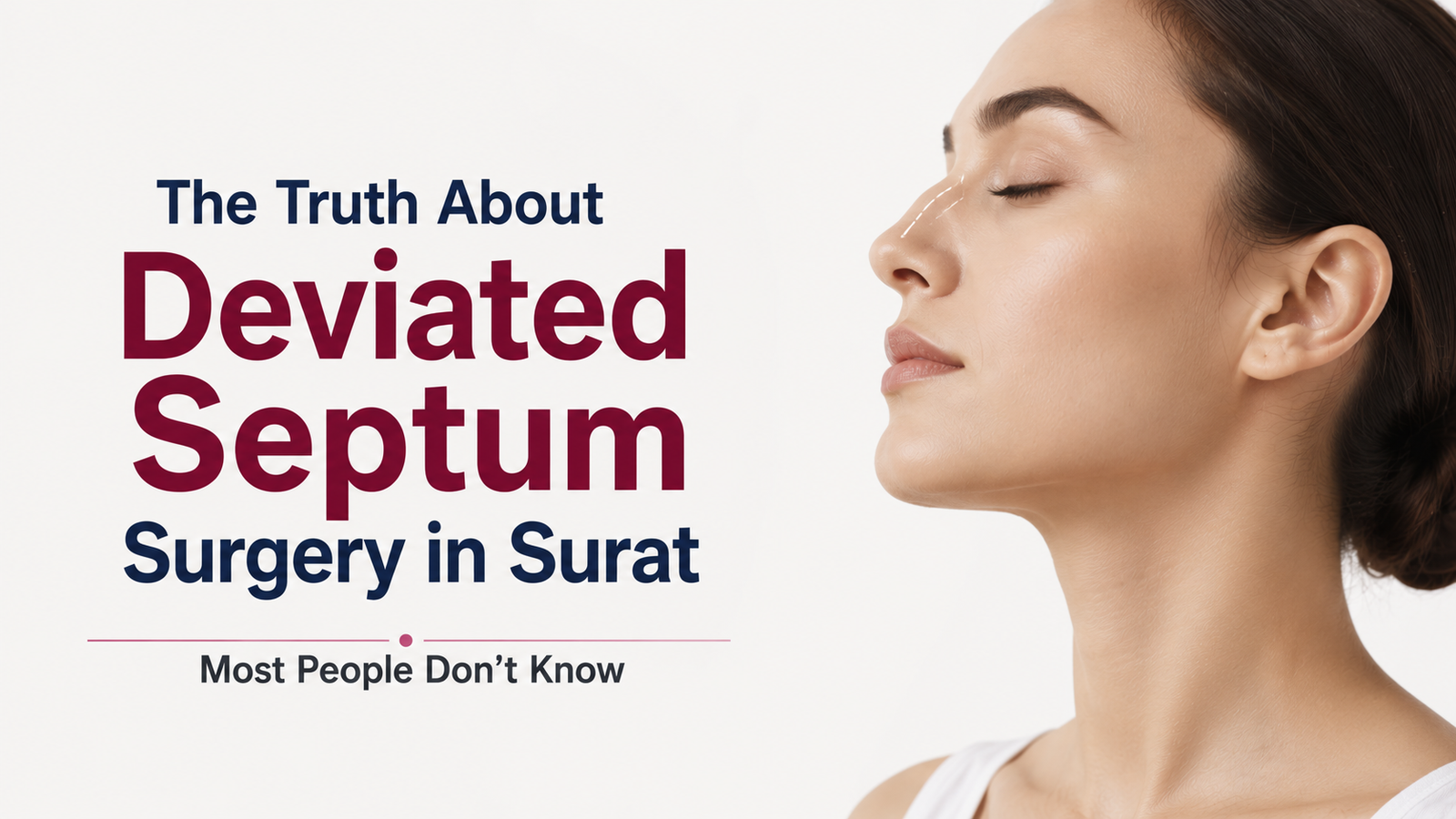
The Truth About Deviated Septum Surgery in Surat Most People Don’t Know
Breathing difficulty through the nose is often blamed on allergies, sinus problems, or frequent colds. But in some people, the underlying issue is a deviated nasal septum a condition in which the wall separating the two nasal passages is shifted away from the center.
The important point many people miss is that having a deviated septum does not automatically mean you need surgery. Treatment depends on whether the deviation is causing meaningful symptoms such as persistent nasal blockage, difficulty breathing, recurrent nosebleeds, or sleep-related breathing problems.
For people whose symptoms continue despite appropriate medical management, septoplasty may be considered to straighten the septum and improve nasal airflow.
If you are researching Deviated Septum Surgery in Surat, here are the facts worth knowing before making a decision.
What Is a Deviated Septum?
The nasal septum is the internal structure made of bone and cartilage that separates the left and right nasal passages.
Ideally, it sits relatively centrally. When it bends or shifts to one side, it is called a deviated septum. This can make one nasal passage narrower and may interfere with normal airflow.
A deviated septum can develop because of:
- Natural development or being born with septal deviation
- Previous nasal injury or trauma
- Changes in nasal structures with age
- Structural factors that become more noticeable over time
Interestingly, a slightly deviated septum is common, and many people have no symptoms at all. Therefore, the presence of a deviation on examination does not necessarily mean surgery is required.
The First Thing Most People Get Wrong
Not every deviated septum needs surgery.
If a person has a deviated septum but breathes comfortably and has no significant symptoms, treatment may not be necessary.
The decision becomes different when the structural deviation contributes to persistent nasal obstruction or other troublesome symptoms that affect daily life.
This is why an appropriate evaluation is more important than simply looking at whether the nose appears crooked.
What Symptoms Can a Deviated Septum Cause?
A significant deviation may contribute to:
- Difficulty breathing through one or both nostrils
- Persistent nasal blockage
- Nasal congestion
- Recurrent nosebleeds
- Noisy breathing during sleep
- Difficulty breathing comfortably during exercise
- Mouth breathing caused by nasal obstruction
- Sleep disturbance related to difficulty breathing through the nose
Symptoms can become more noticeable during a cold or allergy flare because swelling inside the nose can further narrow an already restricted passage.
However, these symptoms can have several possible causes. A proper examination is therefore important before attributing everything to a deviated septum.
When Is Deviated Septum Surgery Considered?
Deviated septum surgery is generally considered when structural blockage causes significant symptoms and conservative treatment does not provide adequate relief.
Doctors may first assess whether medications or treatment for associated conditions such as allergies are appropriate. These treatments can reduce swelling but they cannot physically straighten a deviated septum. Septoplasty is the surgical procedure used to correct the structural deviation.
A consultation may be particularly worthwhile if:
- One side of your nose is consistently difficult to breathe through.
- Nasal obstruction is affecting sleep or exercise.
- You frequently experience nosebleeds.
- Nasal congestion persists despite appropriate treatment.
- You regularly breathe through your mouth because your nose feels blocked.
- You have previously injured your nose.
- Your symptoms are affecting your quality of life.
What Is Septoplasty?
Septoplasty is the primary surgical procedure used to correct a deviated septum.
During septoplasty, the surgeon works on the internal septum, reshaping, repositioning, or selectively removing portions of cartilage or bone so the nasal passage can function more effectively.
The objective is primarily functional improvement better nasal airflow not simply changing the external appearance of the nose.
Depending on the patient's anatomy and goals, septoplasty may sometimes be combined with other nasal procedures.
Deviated Septum Surgery vs Rhinoplasty: They Are Not the Same
This is another important distinction many patients don't know.
Septoplasty primarily addresses the internal nasal septum and breathing function. Rhinoplasty primarily reshapes the external nose.
In selected cases, both procedures may be performed together when a patient has functional problems as well as concerns about the external nasal structure.
So, if your main concern is difficulty breathing, it is important to determine whether the problem comes from the septum, the nasal bones, swollen tissues, allergies, or another structural issue.
What Happens During a Septoplasty?
The exact surgical approach depends on the patient's anatomy and the degree and location of the deviation.
In a typical septoplasty:
- The surgeon accesses the septum, usually through the nose.
- The tissue covering the septum is carefully lifted.
- Deviated cartilage or bone is reshaped, repositioned, or selectively removed.
- The septum is placed in a more functional position.
- The internal tissues are repaired and allowed to heal.
Many septoplasty procedures are performed as outpatient surgery, although the exact setting depends on the surgical plan and individual circumstances.
Will Deviated Septum Surgery Change the Shape of Your Nose?
Not necessarily.
A standard septoplasty is primarily intended to improve the internal nasal airway and generally does not aim to significantly change the external shape of the nose.
However, certain structural problems may require additional nasal surgery. If external reshaping is also desired or medically necessary, septoplasty can sometimes be combined with rhinoplasty.
This distinction should be discussed clearly during consultation so that functional and aesthetic expectations are not confused.
What Is Recovery Like After Septoplasty?
Recovery varies from person to person and depends on the extent of surgery.
You may experience temporary:
- Nasal congestion
- Swelling
- Mild discomfort
- Blood-tinged nasal discharge
- A feeling of pressure or blockage
Initial recovery is often around one to two weeks, while deeper internal healing can continue for several months.
Your surgeon will provide individualized instructions regarding medications, nasal care, physical activity, sleeping position, and follow-up appointments.
It is important not to judge the final breathing result too early because swelling can temporarily make the nose feel blocked during the healing period.
Is Deviated Septum Surgery Permanent?
Septoplasty corrects the structural deviation, but the final outcome varies between individuals.
Healing, cartilage behavior, the original severity of the deviation, and other nasal conditions can influence the result. Some patients may continue to experience symptoms after surgery, particularly if other causes of nasal obstruction are present.
This is why a good preoperative assessment matters.
What Are the Risks of Septoplasty?
Like any surgery, septoplasty has potential risks.
These can include:
- Bleeding
- Infection
- Persistent nasal obstruction
- Changes in the shape of the nose
- Reduced sense of smell
- Septal perforation
- Collection of blood within the nasal septum
- Need for additional treatment in selected cases
The individual risks depend on the person's anatomy, medical history, surgical technique, and other factors. A surgeon should explain the expected benefits and potential risks before treatment.
How Is a Deviated Septum Diagnosed?
Diagnosis generally begins with a detailed assessment of your symptoms and examination of the inside of your nose.
A healthcare professional may use a light and nasal examination instruments, and in some cases a nasal scope may be used to evaluate deeper structures. Additional investigations may be recommended when clinically appropriate.
The key question is not simply:
“Is my septum crooked?”
It is:
“Is the septal deviation actually contributing to my breathing problem?”
That distinction helps determine whether surgery is appropriate.
How Much Does Deviated Septum Surgery Cost in Surat?
The cost of Deviated Septum Surgery in Surat varies from patient to patient.
Factors that can influence the overall cost include:
- Severity and location of the deviation
- Surgical complexity
- Type of anesthesia
- Hospital or surgical facility charges
- Investigations and consultations
- Whether additional nasal procedures are required
- Postoperative care and follow-up
Because every surgical plan is individualized, a consultation is the best way to receive an accurate treatment recommendation and cost estimate.
Why Choosing the Right Surgeon Matters
Deviated septum surgery is not simply about making the septum look straighter. The goal is to create an appropriate balance between nasal structure, airflow, function, healing, and patient expectations.
When considering Deviated Septum Surgery in Surat, patients should ask about:
- The cause of their nasal obstruction
- Whether the septum is the primary problem
- Whether medical treatment should be tried first
- What surgical technique is recommended
- Whether rhinoplasty or another procedure is actually necessary
- Expected recovery time
- Possible risks and limitations
- Follow-up care
This approach helps patients make an informed decision rather than choosing surgery based only on the appearance of a crooked nose.
Conclusion: Is Deviated Septum Surgery Right for You?
If persistent nasal blockage, difficulty breathing, recurrent nosebleeds, or sleep-related breathing problems are affecting your everyday life, a professional evaluation can help determine whether a deviated septum is contributing to your symptoms.
At Elegance Clinic, patients considering Deviated Septum Surgery in Surat can discuss their symptoms, nasal structure, treatment options, expected recovery, and individual surgical goals with Dr. Ashutosh Shah.
If you are struggling to breathe comfortably through your nose, schedule a consultation to understand whether septoplasty or another treatment is appropriate for your condition.