Patch Testing And Pigment Safety Before Permanent Makeup
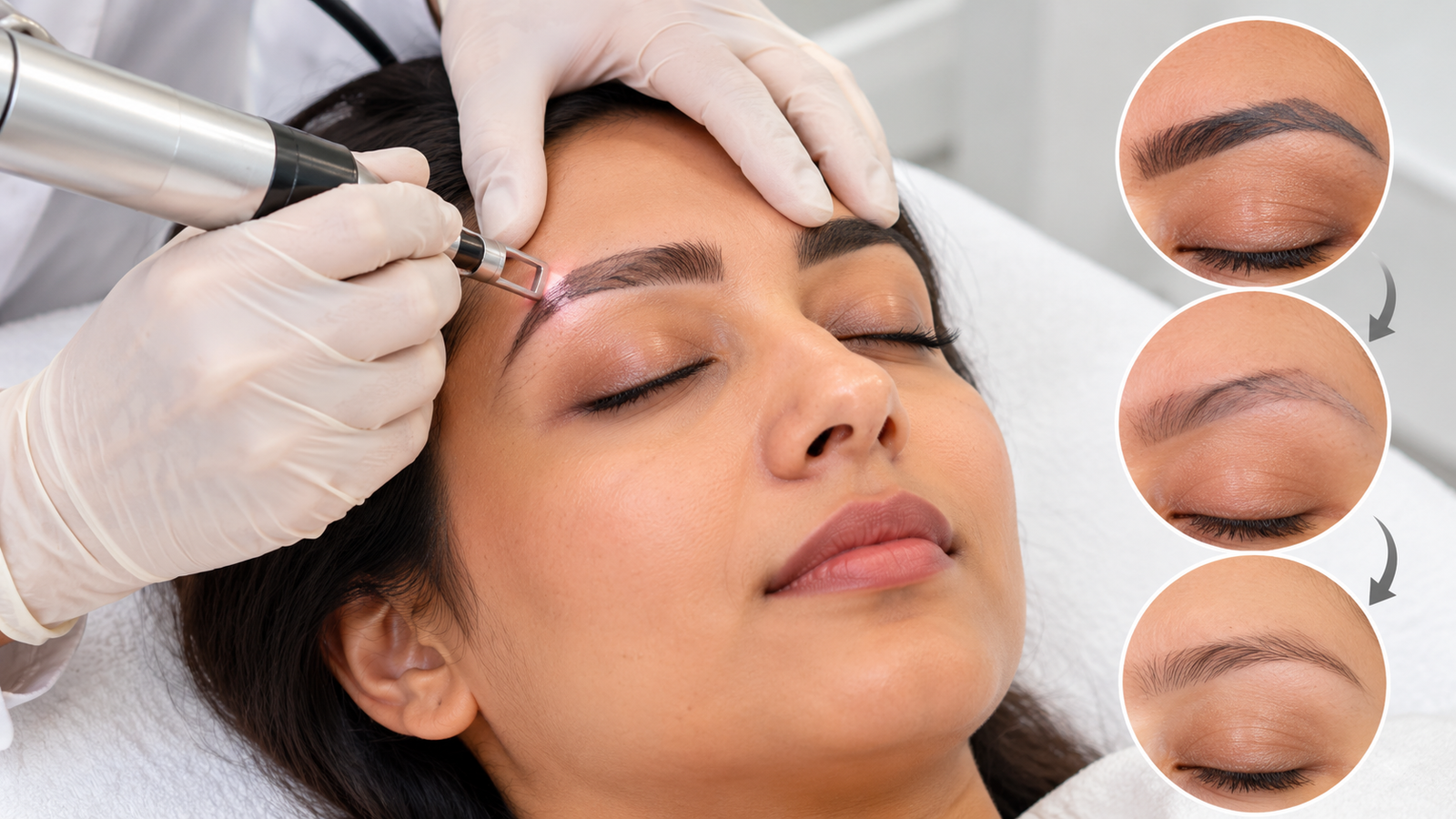
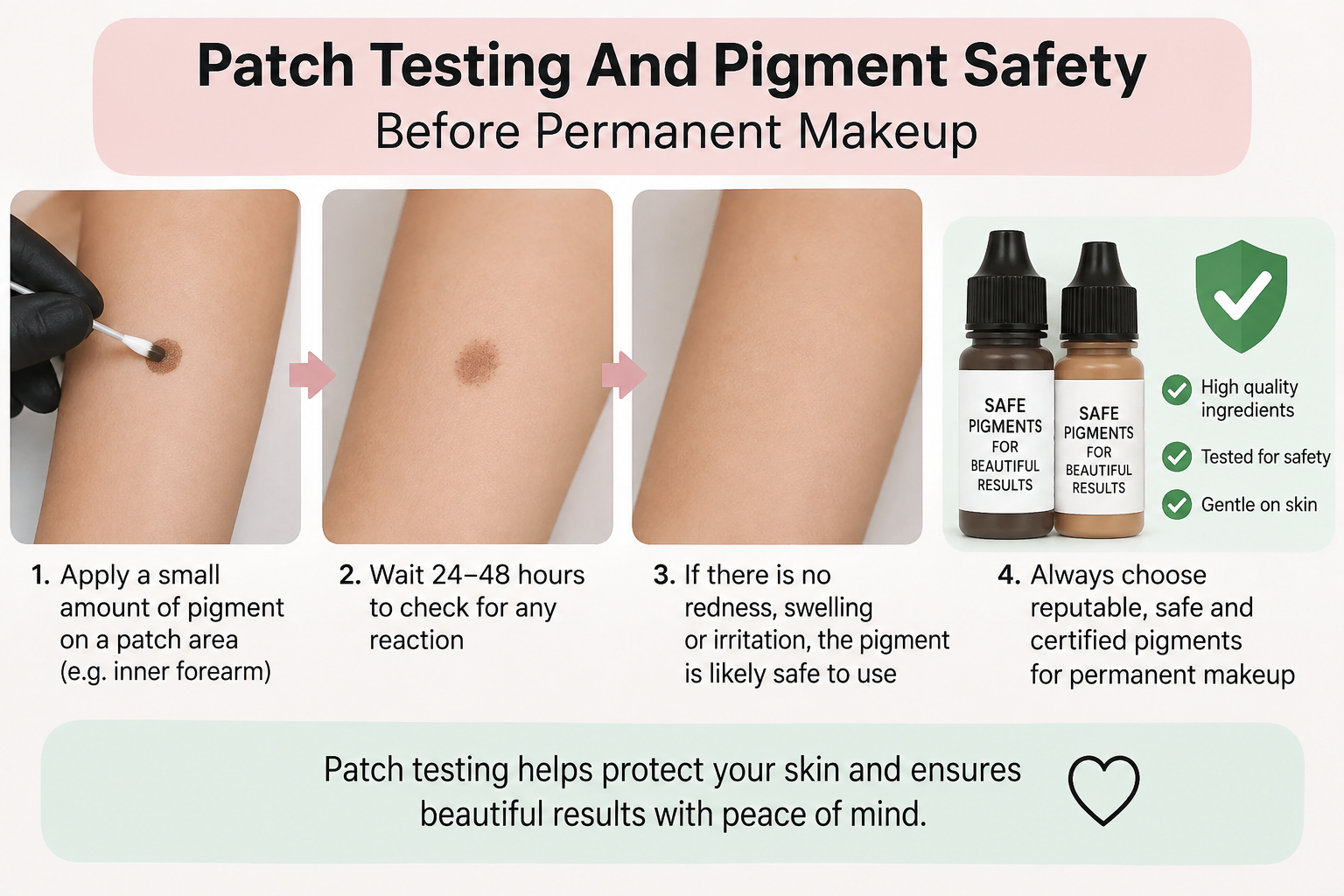
A permanent makeup patch test is placed behind the ear or on the inner arm at least 48 hours before treatment, and ideally a week ahead. It screens for pigment reaction. Active eczema, cold sores, recent isotretinoin, uncontrolled diabetes and keloid tendency all delay or rule out treatment.
Permanent makeup places pigment into the skin, so safety starts before the actual procedure. A proper consultation should review your skin condition, medical history, allergies, medicines, previous reactions and healing history before deciding whether treatment is suitable.
You should also know which pigment is being used, whether its brand and batch can be identified, and what hygiene and single-use standards the studio follows. These checks are particularly important for anyone concerned about PMU pigment allergy or asking is permanent makeup safe for sensitive skin.
For an overview of available procedures, read about permanent makeup for face in Surat.
Why Is a Patch Test Recommended and How Far in Advance?
A permanent makeup patch test is a small test performed before the full procedure. Its purpose is to check how the skin responds to the pigment or other products that may be used during treatment.
According to the planned safety protocol, the test is placed behind the ear or on the inner arm at least 48 hours before the appointment, and ideally around a week beforehand.
This gives time to observe the test area for an unwanted reaction before pigment is used across the brows, lips or eyeliner area.
The practitioner should explain:
- Which product is being tested
- Where the patch test will be placed
- When it should be performed
- How long the area should be observed
- Which changes are expected
- Which symptoms should be reported
Possible signs of a reaction can include persistent redness, itching, swelling, rash or blistering.
A patch test is particularly relevant if you have sensitive skin, known allergies or a history of reacting to cosmetic products.
However, a normal patch test should not be treated as a guarantee that a reaction can never occur. It is one part of the overall pre-treatment safety assessment.
The consultation should still cover your medical history, skin condition, medications, previous reactions and healing history.
For more information about micropigmentation procedures, see semi permanent makeup in Surat.
Which Skin and Medical Conditions Rule Treatment Out or Delay It?
Not everyone should proceed with permanent makeup immediately.
A proper assessment should identify PMU contraindications and conditions that may require the procedure to be postponed.
These can include:
- Active eczema in the treatment area
- Active psoriasis or dermatitis
- Active skin infection
- Broken or irritated skin
- Active cold sores before lip treatment
- Recent isotretinoin use
- Uncontrolled diabetes
- A tendency to develop keloid scars
- Poor or delayed wound healing
- Significant inflammation in the treatment area
The important distinction is between a condition that permanently prevents treatment and one that simply means treatment should wait.
For example, an active skin flare may settle. A cold sore can heal. A medical condition may become better controlled. Suitability can then be reassessed.
Sensitive skin alone does not automatically mean permanent makeup is unsuitable. The cause and severity of the sensitivity, the condition of the treatment area and the patient's history all matter.
If you are asking is permanent makeup safe for sensitive skin, the answer therefore depends on an individual assessment rather than the label “sensitive skin” alone.
People with eczema or psoriasis should tell the practitioner even if the condition is currently quiet. Treatment should not be performed directly over an active flare.
A history of keloids is also important. Permanent makeup involves controlled skin injury, so someone who has developed abnormal raised scars after previous injuries, surgery or piercings needs careful assessment before treatment.
For lip micropigmentation, a history of cold sores should be discussed before the appointment. Active cold sores delay treatment.
Diabetes also needs to be disclosed. Poorly controlled diabetes can affect healing, so an elective procedure may need to wait until the condition is appropriately managed.
Medication history matters as well.
Tell the practitioner about:
- Prescription medicines
- Blood-thinning medication
- Diabetes medicines
- Recent isotretinoin
- Relevant topical skin treatments
- Supplements if requested during screening
Do not independently stop a prescribed medicine simply to have permanent makeup. If a medication change is being considered, it should be discussed with the appropriate prescribing clinician.
What Hygiene and Single-Use Standards Should the Studio Be Able to Show You?
Good hygiene standards in micropigmentation are essential because permanent makeup involves breaking the skin barrier.
The studio should be able to explain how it prevents contamination between clients and how equipment is prepared for each procedure.
Basic safety standards should include appropriate hand hygiene, clean treatment surfaces, suitable gloves and correct handling of single-use equipment.
Items designed for one client should not be reused.
Depending on the equipment and procedure, single-use items may include:
- Needle cartridges
- Disposable applicators
- Gauze
- Cotton products
- Protective barriers
- Other contaminated disposable materials
A new needle or appropriate cartridge should be used for each client.
You can ask the practitioner directly:
- Is this needle or cartridge single-use?
- Will a new one be used for my procedure?
- How are treatment surfaces cleaned?
- How is pigment dispensed?
- How do you prevent cross-contamination?
- How are used sharps discarded?
- What happens to unused pigment?
- What aftercare instructions will I receive?
The practitioner should be comfortable answering basic safety questions.
Gloves alone do not make a procedure hygienic. The practitioner also needs to avoid transferring contamination between the client, equipment, bottles, phones, drawers or other surfaces.
The overall setup should separate clean supplies from used or potentially contaminated materials.
You can learn more about the treatment setting through About Elegance Clinic.
Pre-Treatment Safety Checklist
| Safety check | What to ask | What a safe answer should cover |
|---|---|---|
| Patch test | When should my patch test be done? | At least 48 hours before treatment, ideally earlier according to the planned protocol |
| Medical history | Which conditions must I disclose? | Relevant skin disease, allergies, healing problems and medical conditions |
| Sensitive skin | Can I have PMU with sensitive skin? | Suitability is assessed according to the cause and current skin condition |
| Medication | Should I stop any medicine? | Prescribed medication should not be stopped without appropriate medical advice |
| Eczema/psoriasis | Can treatment be done during a flare? | Active inflammation in the treatment area delays treatment |
| Cold sores | Can lip PMU be done with an active cold sore? | Active cold sores delay lip treatment |
| Keloid history | Does previous keloid scarring matter? | Previous abnormal scarring must be discussed during screening |
| Needle/cartridge | Is it single-use? | A new appropriate single-use needle or cartridge is used |
| Hygiene | How is contamination prevented? | Hand hygiene, gloves and clean working practices should be explained |
| Pigment | Can I see the pigment product? | The practitioner should identify the product being used |
| Batch | Can the pigment be traced? | Brand and relevant batch or lot information should be identifiable |
| Reaction plan | What happens if I react afterwards? | You should receive instructions about warning signs and whom to contact |
How Do You Verify the Pigment Brand and Batch?
A patient should know what pigment is being placed into the skin.
Before the procedure, ask the practitioner to identify the pigment brand and shade being used.
Useful questions include:
- What pigment brand do you use?
- Which shade will be used for me?
- Can I see the pigment bottle?
- Does it have a batch or lot number?
- Is the product within its usable date?
- How is the pigment stored?
- How is pigment dispensed for each client?
- Is unused dispensed pigment discarded?
Batch identification provides traceability.
If a product concern or suspected PMU pigment allergy develops later, knowing the exact product and batch can help identify what was used.
Pigment should be dispensed hygienically for the individual treatment. Material that has already been dispensed for a procedure should not simply be returned to the original bottle.
Seeing a professional-looking bottle is not enough to establish safety. Product traceability should be considered alongside practitioner training, storage, hygiene, single-use equipment and correct technique.
It is reasonable to ask to see the pigment bottle before the session. A practitioner should be able to explain what is being used rather than treating basic product information as confidential.
What Should You Do if a Reaction Appears After the Session?
Some temporary redness, tenderness or swelling can occur after permanent makeup because the skin has been treated.
The practitioner should explain what is expected during normal healing and which symptoms are warning signs.
A possible pigment or skin reaction may include:
- Persistent redness
- Increasing itching
- Worsening swelling
- Rash
- Blistering
- Significant tenderness
- Unusual inflammation
Signs suggesting infection or another complication can include worsening pain, spreading redness, discharge or feeling unwell.
Contact the practitioner if symptoms are unexpected, persistent or worsening.
Seek appropriate medical attention for significant reactions, particularly severe swelling, spreading symptoms or signs of infection. Breathing difficulty or other signs of a serious allergic reaction require urgent medical attention.
Do not try to correct a reaction by applying random acids, bleaching products, home remedies or unprescribed medicines to freshly treated skin.
If medical assessment is required, provide details of the procedure and, where available, the pigment brand, shade and batch information.
Clear aftercare instructions should tell you:
- How to keep the treated area clean
- What products can be applied
- What should be avoided
- What normal healing may look like
- Which symptoms should be reported
- Who to contact if a problem develops
At Elegance Clinic, pre-treatment assessment can be used to discuss your skin history, previous reactions and suitability before proceeding. You can book a patch test appointment for an individual assessment.
Careful screening does not end with the patch test. Pigment traceability, clean technique, single-use equipment, appropriate patient selection and clear aftercare are all important parts of permanent makeup safety.