Forehead Lines: How They Are Assessed As Part Of Your Whole Face Plan
Forehead lines are rarely a forehead problem alone. A low or heavy brow, repeated facial movement, changes in upper-face balance and sun-damaged skin can all contribute. Proper assessment therefore looks at brow position, muscle movement, skin quality and the rest of the face before deciding how to treat forehead wrinkles with injectables, resurfacing, surgery or a combination.
Some forehead lines appear only when you raise your eyebrows. Others remain visible even when your face is completely relaxed. This difference matters because the same treatment will not produce the same result for every type of line.
A natural-looking forehead rejuvenation plan should therefore start with why the lines have developed, rather than simply trying to erase every visible crease.
What Actually Causes Horizontal Forehead Lines?
Horizontal forehead lines are strongly influenced by the frontalis muscle, which helps raise the eyebrows. Every time you lift your brows, the skin of the forehead folds.
Over years of repeated movement, these temporary folds can become more noticeable.
However, facial movement is only one part of the explanation.
Dynamic Forehead Lines
Dynamic lines appear mainly during facial expression.
For example, they become visible when you:
- Raise your eyebrows
- Look surprised
- Open your eyes widely
- Habitually lift the brow
When the face relaxes, these lines may become faint or disappear.
For suitable patients, treatment aimed at reducing excessive muscle activity may soften these movement-related lines.
The goal should generally be controlled movement rather than a completely expressionless forehead.
For more specific information about injectable treatment, see Horizontal forehead line injections on our injectables site.
Static Forehead Creases
Static lines remain visible when the forehead is relaxed.
They can develop as repeated folding gradually affects the skin, but other factors may contribute, including:
- Age-related collagen changes
- Reduced skin elasticity
- Cumulative sun exposure
- Skin dehydration
- Smoking
- Genetics
- Previous facial movement patterns
Once a line has become deeply etched into the skin, controlling muscle movement alone may soften it without completely removing the crease.
That is why forehead lines assessment should distinguish between dynamic movement and established skin changes.
Skin Quality Matters Too
A forehead with significant sun damage, uneven texture or loss of elasticity may require a different approach from smooth skin that develops lines only during expression.
Depending on the individual assessment, skin-focused treatment may therefore form part of the plan.
Why Is Brow Position Assessed Before the Lines Themselves?
This is one of the most important considerations when deciding how to treat forehead wrinkles.
The forehead muscle does more than create horizontal lines it also helps elevate the eyebrows.
Some people unconsciously use this muscle to keep a naturally low or increasingly heavy brow elevated.
If you look at only the forehead lines without assessing the eyebrows, you can miss an important part of the patient's facial balance.
What Does a Heavy or Low Brow Have to Do With Forehead Lines?
Imagine someone whose brows sit relatively low.
They may constantly activate their forehead muscle to raise the brows and make the upper eye area feel more open.
This repeated movement creates horizontal forehead folds.
In this situation, the visible wrinkles may partly reflect the person's attempt to compensate for brow position.
This is why brow position and forehead lines need to be considered together.
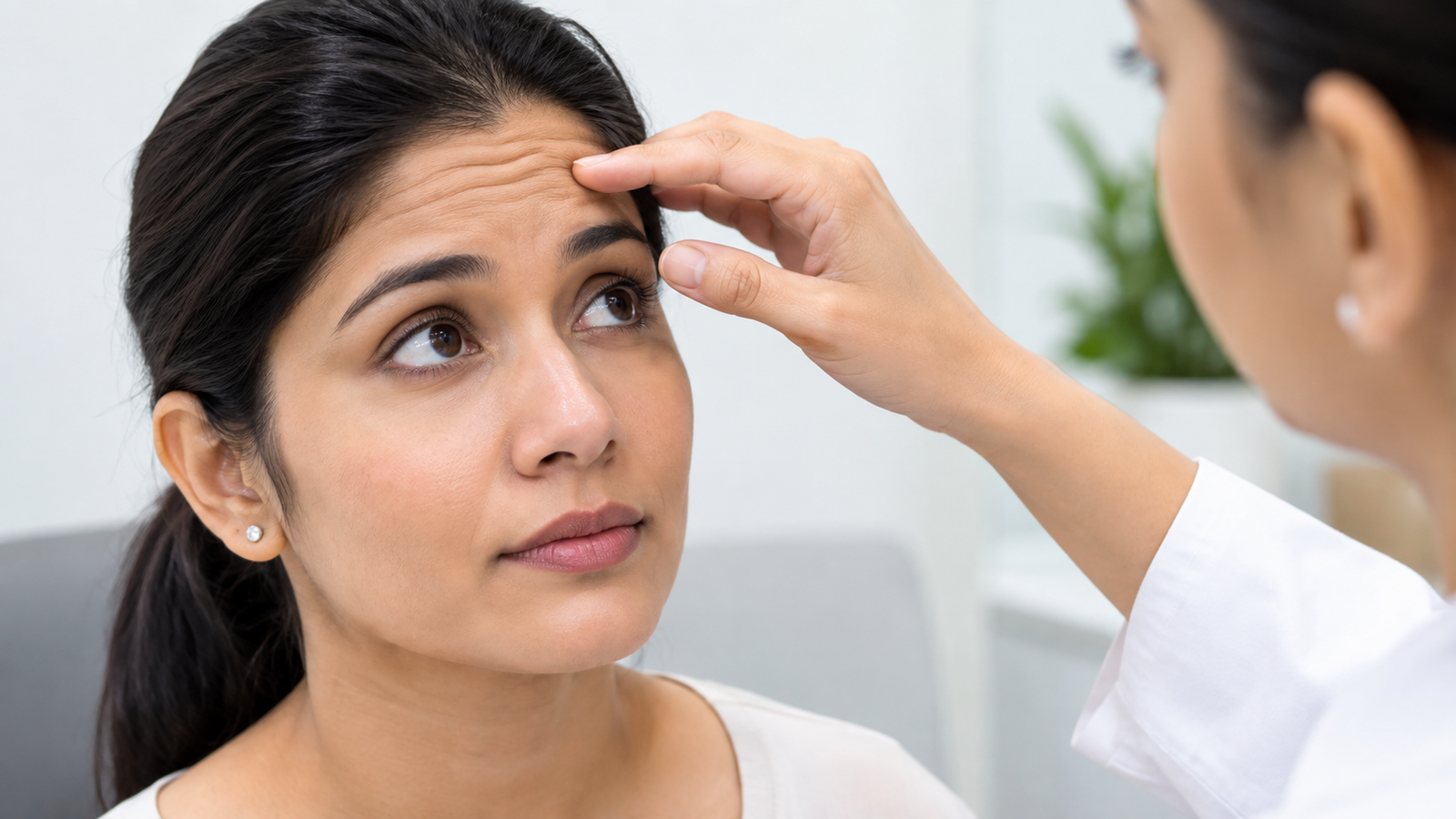
What Is Checked During Assessment?
A proper upper-face assessment may look at:
- Brow height
- Brow shape
- Natural asymmetry
- Eyelid skin
- Forehead muscle activity
- Lines at rest
- Lines during expression
- Skin thickness and texture
- Upper-face proportions
The clinician may observe the forehead both when relaxed and during facial expression.
What About Loose Upper Eyelid Skin?
Loose upper-eyelid skin can sometimes contribute to a feeling of heaviness around the eyes. A person may compensate by repeatedly lifting the brows.
In such situations, simply focusing on the forehead crease does not address the entire upper-face pattern.
You can read about Eyebrow tightening treatment to understand how brow position can influence overall facial appearance.
When Is the Answer Injectable, When Is It Resurfacing, and When Is It Surgical?
There is no single "best forehead wrinkle treatment."
The appropriate option depends on what is producing the lines.
A movement-related line, deeply established crease, sun-damaged forehead and genuinely low brow are different findings and should not automatically receive the same treatment.
Injectable Treatment
An injectable approach may be considered when excessive muscle activity is a significant contributor to dynamic forehead lines.
The aim is usually to reduce excessive folding while maintaining an appropriate facial expression and brow position.
This is especially important in the forehead because treatment can influence the relationship between the forehead and eyebrows.
This article intentionally does not provide injection units or dosing instructions. Those decisions require individualized assessment and belong within procedure-specific injectable guidance rather than a general face-planning article.
Skin Resurfacing and Skin-Quality Treatments
When lines remain visible at rest because the skin itself has developed established creases or texture changes, improving skin quality may become part of the treatment plan.
Depending on skin type and clinical findings, treatment options may include appropriate forms of:
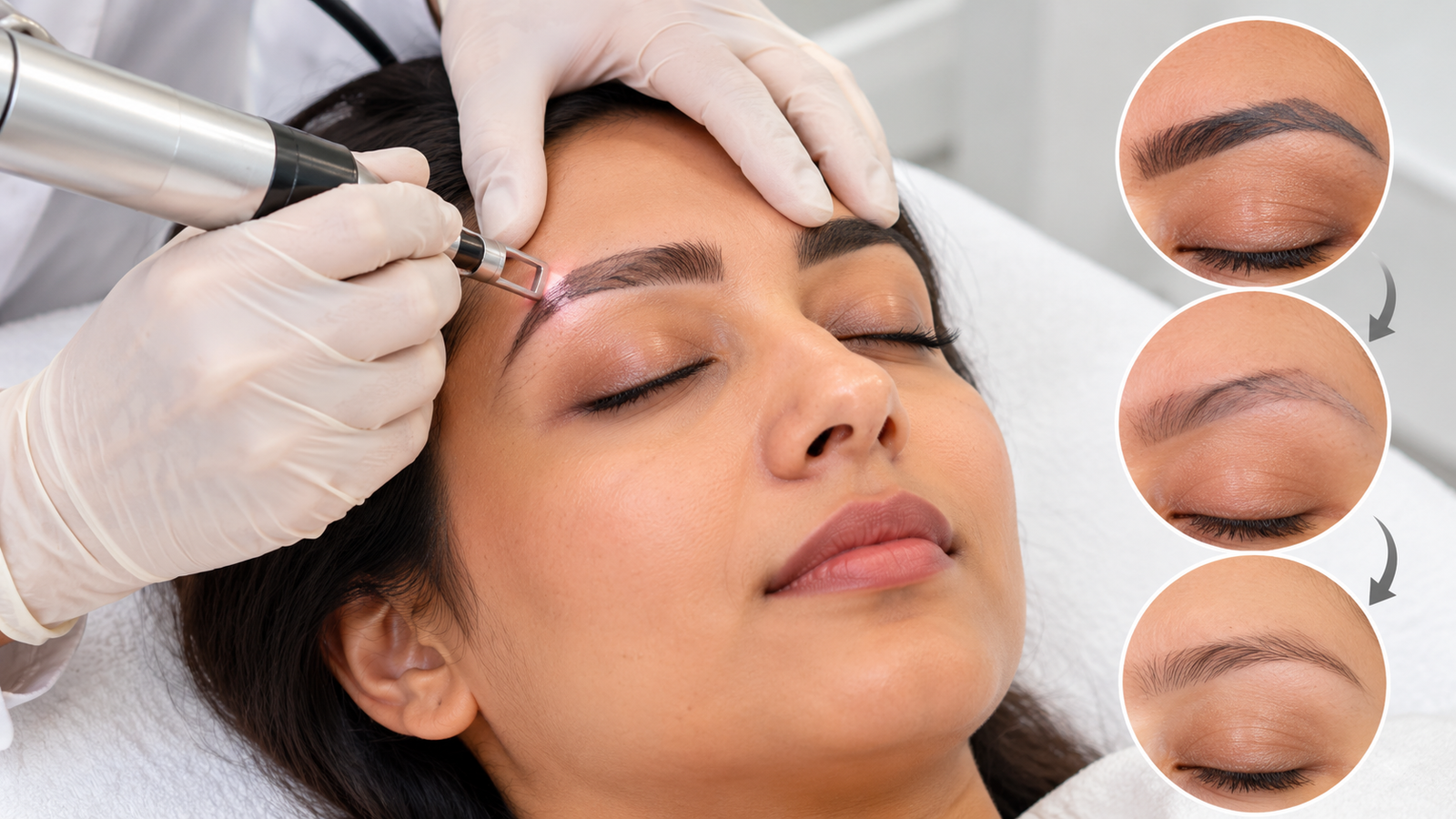
- Laser resurfacing
- Chemical resurfacing
- Microneedling
- Collagen-stimulating procedures
- Other physician-selected skin treatments
These approaches target the skin component of forehead ageing rather than simply reducing muscle movement.
They cannot, however, correct every cause of forehead lines.
For example, resurfacing does not reposition a genuinely low brow.
Surgical Treatment
Surgery is not the routine answer for ordinary forehead wrinkles.
However, it may become relevant when the main structural issue is significant brow descent, upper-face tissue laxity or another anatomical concern that cannot reasonably be corrected by skin or injectable treatments alone.
The objective is then not simply "wrinkle removal." It is correction of the underlying structural problem where clinically appropriate.
See Facial surgery at Elegance Clinic for information about surgical facial treatment options.
Assessment Matrix: What May Fit Each Finding?
| Finding | First-Line Direction | What It Will Not Necessarily Fix | Who Performs It |
|---|---|---|---|
| Movement lines only | Assessment for appropriate muscle-modulating injectable treatment | Deep established skin creases or significant brow descent | Appropriately qualified medical injector |
| Static forehead creases | Skin-quality assessment ± combined treatment | Significant structural brow descent | Qualified medical/aesthetic practitioner depending on procedure |
| Heavy or low brow | Brow and upper-face structural assessment | Skin texture and sun damage by itself | Plastic surgeon/appropriately qualified clinician |
| Sun-damaged texture | Appropriate skin resurfacing/rejuvenation plan | Brow position or major tissue laxity | Qualified skin/medical practitioner depending on treatment |
| Loose upper-eyelid skin | Eyelid and brow assessment | Forehead texture alone | Plastic surgeon/appropriately qualified specialist |
The table is a planning guide, not a diagnosis or treatment prescription. The final choice depends on examination.
Which Forehead Lines Will Not Improve With Any Single Treatment?
Many patients have more than one cause of forehead ageing.
For example, a patient could simultaneously have:
- Strong forehead movement
- Static creases
- Sun-damaged skin
- Reduced elasticity
- Low brow position
One procedure cannot necessarily correct all five.
Deep Lines Visible at Rest
When a crease has become established in the skin, reducing repeated folding may help prevent the same degree of movement, but the existing line may not disappear completely.
A skin-focused treatment may therefore be considered separately.
Lines Associated With Brow Compensation
If someone continually raises the forehead because their brows feel heavy, addressing movement alone may not solve the underlying reason they are activating the forehead.
This makes facial assessment particularly important.
Sun-Damaged Forehead Skin
Pigmentation, roughness, fine surface lines and loss of skin quality are different concerns from muscle-driven expression lines.
Skin rejuvenation may improve some of these features, but it cannot reposition a low brow.
Facial Ageing Outside the Forehead
Sometimes the forehead is not the main reason a person feels that their face looks older or tired.
Changes in the cheeks, temples, brows, eyelids, jawline or overall facial volume can alter how the forehead is perceived.
This is why treating every visible forehead line does not necessarily create the most balanced result.
Read Why your face can look older without more wrinkles for more about whole-face ageing patterns.
How Does a Forehead Plan Fit Into an Overall Face Plan?
A good forehead treatment plan should preserve the relationship between the forehead, eyebrows, eyelids and the rest of the face.
At Elegance Clinic, Dr. Ashutosh Shah assesses forehead lines as part of the wider facial structure, considering movement, brow position, skin quality and facial balance before deciding whether a non-surgical, skin-focused or surgical approach is appropriate.
Start With the Concern, Not the Procedure
Instead of arriving at consultation asking only for a particular treatment, it can be more useful to explain what bothers you.
For example:
- "My forehead looks lined even when relaxed."
- "I constantly raise my eyebrows."
- "My eyes look heavier than they used to."
- "I want softer lines but still want natural expression."
- "My forehead skin looks rough and sun damaged."
These concerns provide more useful information than simply requesting one specific procedure.
Natural Results Do Not Mean Removing Every Line
A completely smooth forehead is not necessarily the most natural or appropriate endpoint.
Normal faces move.
The aim of treatment may instead be to soften excessive lines, improve skin quality or address structural ageing while maintaining facial character and expression.
Combination Treatment Does Not Mean Everything at Once
A whole-face plan does not mean performing multiple procedures unnecessarily.
It means identifying which component each proposed treatment is intended to address.
One patient may need only one conservative intervention. Another may benefit from staged treatments addressing different problems over time.
That distinction is central to deciding how to treat forehead wrinkles naturally.
Conclusion
Understanding how to treat forehead wrinkles starts with identifying why they are present.
Lines caused mainly by facial movement are different from deep static creases. Sun-damaged skin requires a different strategy from a low or heavy brow, and some patients have several of these findings at the same time.
That is why forehead rejuvenation should not automatically mean one procedure.
A whole-face assessment considers forehead movement, brow position, eyelids, skin quality and facial proportions before choosing treatment. The objective should be a balanced, natural-looking improvement rather than simply trying to erase every forehead line.