
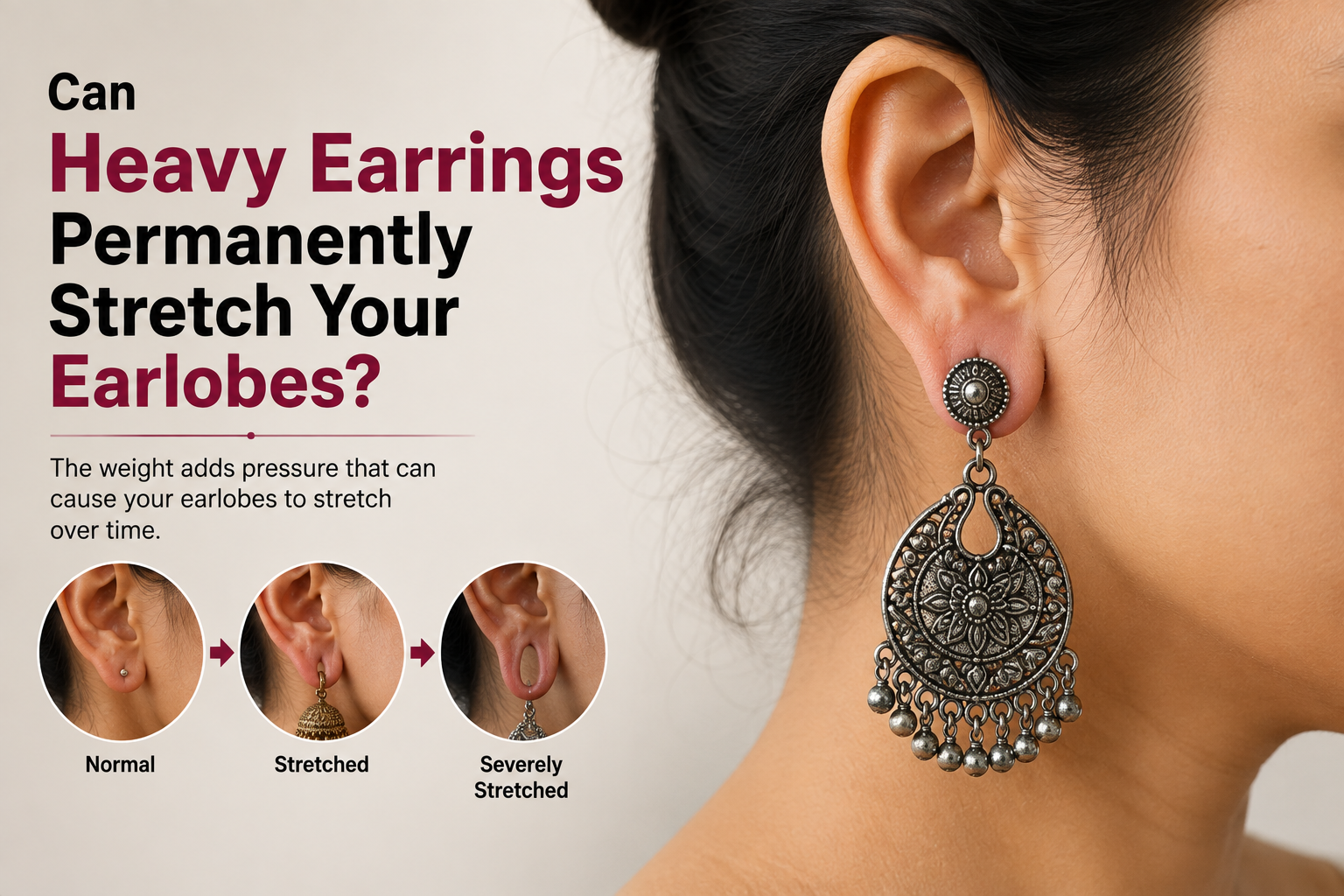
Stretched Or Split Earlobe From Heavy Earrings: Which Repair You Need And When You Can Wear Jhumkas Again
A stretched earlobe with an elongated but intact hole and a fully split earlobe need different repairs. Both are usually fixed under local anaesthesia in under an hour, but the ear should not be re-pierced for about 6 to 8 weeks, and heavy jhumkas should wait around 3 months, so wedding repairs need planning early.
If your earring hole has gradually become longer, or an earring has pulled completely through the lower edge of the ear, torn earlobe repair can restore the shape of the lobe. The exact technique depends on whether the hole is stretched, partly torn, completely split or has already been repaired and torn again.
Understanding that difference is especially important if you want to wear earrings again for Diwali, a wedding or another important function.
Is Your Earlobe Stretched, Partly Torn or Fully Split?
Heavy earrings do not always damage the earlobe in the same way.
Some people notice their piercing hole gradually becoming longer over several years. Others develop a thin bridge of skin below the piercing. In some cases, one sudden pull from an earring completes the tear and divides the lower earlobe into two sections.
Stretched Earlobe
A stretched earlobe usually still has an intact bridge of tissue below the piercing.
The hole may look long, oval or slit-like rather than round. Earrings may sit too low or point downward.
This can happen gradually with regular use of heavy earrings.
Partial Earlobe Tear
With a partial tear, the piercing has extended towards the lower border of the lobe but has not completely broken through it.
Only a thin strip of skin may remain.
Continuing to wear heavy earrings at this stage can place additional stress on that remaining tissue.
Complete Split Earlobe
A complete split occurs when the elongated piercing reaches the bottom edge and divides the lobe.
An earring can no longer remain securely inside the original hole.
This may develop gradually or happen suddenly after an earring is pulled.
Repeat Tear
Occasionally, an earlobe that has previously been repaired becomes stretched or torn again.
Repeat tears need careful assessment because scar tissue and the position of the newer piercing can influence the repair plan.
You can review the procedure in more detail on the earlobe repair surgery page.
Which Repair Technique Suits Each Type?
There is no single repair technique that is ideal for every damaged piercing.
For an elongated hole, the surgeon may remove the epithelialised inner surface of the stretched tract and reshape the surrounding tissue so that the lobe has a more natural contour.
For a complete split, the healed skin lining the two sides of the tear usually needs to be refreshed before the edges are carefully brought together.
More complex or recurrent tears may require a different local tissue arrangement to preserve the lower contour of the earlobe and reduce notching.
The appropriate technique therefore depends on:
-
Whether the hole is stretched or completely split
-
How much healthy tissue remains
-
The shape and thickness of the earlobe
-
Previous repair scars
-
Position of the original piercing
-
Whether the patient plans to wear earrings again
Torn earlobe repair is commonly performed under local anaesthesia. The procedure is generally a day-care treatment, and patients can usually return home after it is completed.
You can also see an earlobe repair video to better understand the procedure.
Stretched vs Split Earlobe: Repair and Earring Timeline
| Lobe type | Usual repair approach | Re-piercing wait | Heavy earring wait | Scar notes |
|---|---|---|---|---|
| Stretched hole | Remove stretched tract and reshape/close the defect | About 6–8 weeks if healing is satisfactory | Around 12 weeks or as advised | Fine scar generally remains |
| Partial tear | Refresh damaged edges and reconstruct the weakened lobe | About 6–8 weeks | Around 12 weeks | Scar follows repaired area |
| Complete split | Refresh both edges and carefully reconstruct the lobe | About 6–8 weeks | Around 12 weeks | A linear scar is expected |
| Repeat tear | Individualised revision based on scar and remaining tissue | May require a longer individualised interval | Only after surgeon clearance | Existing scar tissue may make the scar more noticeable |
These are planning timelines rather than guarantees. Healing varies, so the surgeon should examine the repaired lobe before approving re-piercing or heavy earrings.
How Long After Repair Can the Ear Be Re-Pierced?
One of the most important questions after torn earlobe repair is when earrings can be worn again.
A useful planning interval is approximately 6–8 weeks before re-piercing, provided the wound has healed properly and your surgeon is satisfied with the result.
However, the new piercing should generally not be placed directly through the repair scar.
Instead, it can be positioned beside the scar, where appropriate healthy tissue is available. Your surgeon should decide the exact location after examining the healed earlobe.
Trying to re-pierce too early can place stress on tissue that is still gaining strength.
The same applies to piercing the scar yourself at home. Wait for clinical clearance rather than judging healing only by how the skin looks externally.
For common questions about surgery and recovery, see the earlobe repair FAQs.
When Is It Safe to Wear Heavy Earrings Again?
Being able to wear a small stud does not mean the repaired earlobe is immediately ready for heavy jhumkas.
For this treatment plan, heavy earrings should generally wait until approximately 12 weeks after repair, provided healing is satisfactory and the treating surgeon has cleared the ear.
This extra time matters because heavy jewellery creates a downward pulling force on the lobe.
Even after healing, repeatedly wearing very heavy earrings can gradually stretch the new piercing and increase the risk of another tear.
For weddings or special occasions, consider:
-
Wearing heavy earrings for shorter periods
-
Using appropriate earring-support products
-
Removing heavy jewellery when it is no longer required
-
Avoiding earrings that repeatedly catch on clothing
-
Alternating heavy jewellery with lighter pieces
-
Watching for early elongation of the new piercing
If a new piercing starts becoming elongated, reducing the load early is better than waiting for another complete split.
How Should Repair Be Timed Before Diwali or a Wedding?
Do not schedule earlobe repair a few days before an event if your main goal is to wear earrings at that event.
Work backwards from the date on which you want to wear jewellery.
If re-piercing generally waits 6–8 weeks, and heavy earrings should wait around 12 weeks, an earlobe that needs repair before a wedding should ideally be assessed several months ahead.
For example, someone planning to wear heavy bridal jhumkas should allow time for:
Repair → wound healing → surgeon review → re-piercing → further healing → gradual return to earrings
Trying to compress these stages can place unnecessary stress on the repaired tissue.
If earlobe repair is only one part of your preparation, use a broader pre-wedding treatment timeline so cosmetic treatments are not all scheduled in the final few weeks.
The same principle applies before Diwali. If you want to wear traditional heavy earrings comfortably, plan the repair well before the festive week rather than immediately before the celebration.
Planning Split Earlobe Surgery Near Varachha
When considering split earlobe surgery near varachha, tell the surgeon whether your priority is simply repairing the lobe or whether you also have a specific date when you want to wear earrings again.
That information changes the practical timeline.
At Elegance Clinic, Dr. Ashutosh Shah can examine whether the earlobe is stretched, partially torn, completely split or previously repaired before recommending an appropriate reconstruction.
The consultation is also the right time to discuss scar position, re-piercing and your plans for future earrings.
If a wedding or major function is approaching, bring the date to the consultation. Planning backwards is more useful than having the repair first and only later asking whether heavy earrings will be possible in time.
Why Do Repaired Earlobes Sometimes Tear Again?
Repairing an earlobe closes the existing defect, but it does not make the tissue immune to future stretching.
A repaired lobe can be damaged again if the new piercing is positioned poorly, jewellery is introduced before sufficient healing or the ear is repeatedly loaded with heavy earrings.
Other contributors can include:
-
Re-piercing directly through weaker scar tissue
-
Wearing heavy earrings too early
-
Frequent use of oversized jewellery
-
Accidental pulling
-
Gradual stretching that is ignored
-
Thin or weakened earlobe tissue
That is why aftercare should continue beyond stitch removal.
The long-term goal is to protect the repaired lobe from the same forces that contributed to the first tear.
What About the Scar After Earlobe Repair?
Any surgical cut produces a scar.
Initially, an earlobe repair scar may appear more noticeable because of mild redness, firmness or swelling. Over time, scars commonly soften and fade, although they do not disappear completely.
The final appearance varies with skin type, individual scar behaviour, repair technique and aftercare.
People with a history of raised or problematic scars should tell their surgeon before treatment.
Do not apply unprescribed scar creams or repeatedly massage a fresh repair unless your surgeon has advised you to do so.
Can Ear-Support Patches Prevent Surgery?
Ear-support patches can redistribute some of the pull from an earring and may be useful when the piercing is still intact.
However, they do not reconnect a completely split earlobe.
If there is only early stretching, reducing earring weight and using support may help prevent additional pulling. Once the lobe has completely split, structural repair is usually needed if you want the lobe restored.
Support patches may still be useful after complete healing when wearing heavier jewellery, but they should not be considered a substitute for repairing an established split.
Plan the Repair Around When You Want to Wear Earrings Again
The difference between a stretched piercing and a completely split earlobe matters because each defect may require a different repair.
But for many patients, the bigger question comes after surgery: When can I wear earrings again?
A practical timeline is to allow approximately 6–8 weeks before re-piercing, place the new piercing beside rather than directly through the repair scar when appropriate, and wait around 12 weeks before returning to heavy earrings, subject to your surgeon's assessment.
If you want to wear heavy jhumkas for a wedding or festival, plan torn earlobe repair months rather than days beforehand.
That gives the repaired tissue time to heal, allows safe re-piercing and reduces the temptation to load a fresh piercing with heavy jewellery too soon.