What Nobody Tells You About Sensitive Teeth After Whitening
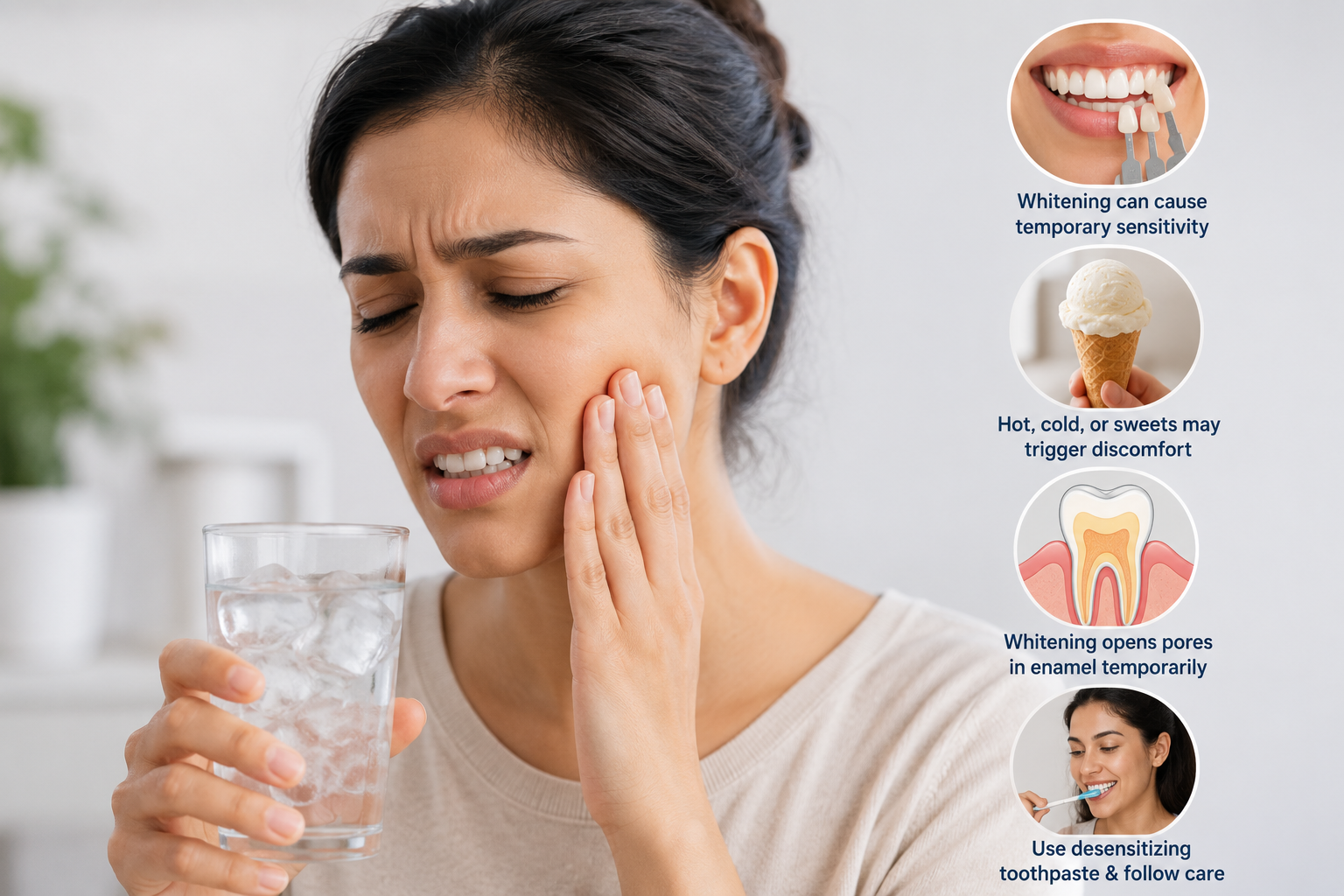
Teeth whitening is one of the most popular ways to achieve a brighter smile, but there is something many people do not expect: sensitive teeth after whitening. A temporary sharp or tingling sensation can occur after professional or at-home whitening, particularly when consuming cold, hot, sweet, or acidic foods and drinks.
At Elegance Clinic, understanding your dental condition before whitening is important for achieving a brighter smile while minimizing unnecessary discomfort. The right whitening approach depends on your enamel, existing sensitivity, gum health, and the type of staining present.
Why Do Teeth Become Sensitive After Whitening?
Most whitening treatments use peroxide-based ingredients, such as hydrogen peroxide or carbamide peroxide, to break down stains within the tooth structure.
During whitening, these ingredients can temporarily move through the enamel and dentin. This may irritate the nerve inside the tooth and create temporary sensitivity.
You may notice:
- A sudden sharp sensation when drinking cold water
- Discomfort while eating ice cream
- Sensitivity to hot beverages
- Tingling or discomfort when consuming sweets
- Increased sensitivity when breathing in cold air
This does not necessarily mean that whitening has damaged your teeth. Temporary sensitivity is a known possible side effect of teeth whitening, but persistent or severe pain should be assessed by a dentist.
Who Is More Likely to Experience Sensitivity?
Not everyone experiences the same level of sensitivity. Your risk may be higher if you already have:
- Naturally sensitive teeth
- Enamel erosion or wear
- Gum recession
- Exposed tooth roots
- Tooth decay or cavities
- Cracked or damaged teeth
- Existing dental problems
- A history of sensitivity during previous whitening treatments
Using whitening products too frequently or leaving them on longer than recommended may also increase discomfort.
How Long Do Sensitive Teeth Last After Whitening?
For most people, whitening-related sensitivity is temporary and improves after the treatment is stopped.
The duration can vary depending on the whitening method, concentration of the whitening agent, treatment duration, and your individual dental health.
If sensitivity is severe, continues for an extended period, affects your daily activities, or becomes worse rather than better, consult a dentist. Persistent sensitivity may not be caused by whitening alone and could indicate an underlying dental issue.
What Can You Do for Sensitive Teeth After Whitening?
If you experience sensitive teeth after whitening, these steps may help reduce discomfort:
1. Use Sensitivity Toothpaste
A toothpaste formulated for sensitive teeth may help reduce the response of exposed or sensitive dentin. Use it consistently according to the product instructions.
2. Avoid Very Hot and Cold Foods
For a short period after whitening, avoid extremely hot or cold foods and drinks if they trigger discomfort.
3. Reduce Acidic Foods and Drinks
Acidic foods and beverages can aggravate sensitivity. Consider limiting citrus fruits, carbonated drinks and other acidic products while your teeth are sensitive.
4. Brush Gently
Use a soft-bristled toothbrush and gentle brushing pressure. Aggressive brushing can contribute to enamel wear and gum irritation.
5. Follow Your Dentist's Whitening Instructions
More whitening does not necessarily mean better whitening. Applying whitening products more frequently or for longer than recommended can increase sensitivity without providing proportional benefits.
6. Discuss Sensitivity With Your Dentist
If you already have sensitive teeth, tell your dentist before beginning whitening. They may recommend a customized whitening plan or address an underlying dental problem first.
Can You Whiten Sensitive Teeth?
Yes, people with sensitive teeth may still be candidates for teeth whitening, but the cause and severity of the sensitivity should be evaluated first.
A dentist may recommend modifying the whitening strength, treatment duration, frequency, or overall approach. If cavities, gum recession, enamel wear, or another dental condition is contributing to sensitivity, that issue may need attention before cosmetic whitening.
This personalized approach can help make teeth whitening more comfortable and predictable.
Professional Whitening vs. At-Home Whitening
Both professional and at-home whitening methods can produce brighter teeth, but they differ in how treatment is controlled.
Professional teeth whitening allows a dentist to evaluate your oral health and select an appropriate treatment approach. This can be particularly useful if you have existing sensitivity or multiple types of tooth discoloration.
Over-the-counter whitening products can be convenient, but incorrect use, excessive frequency, or inappropriate application may increase sensitivity.
If your main concern is sensitive teeth after whitening, professional assessment can help determine whether whitening is suitable for you and how to approach it safely.
When Should You See a Dentist?
Mild sensitivity following whitening is often temporary. However, don't assume every type of tooth pain is simply a whitening side effect.
Speak with a dentist if you experience:
- Severe or persistent tooth pain
- Sensitivity that keeps getting worse
- Pain in one particular tooth
- Pain when biting or chewing
- Visible cracks or damage
- Tooth sensitivity before whitening that has become significantly worse
- Symptoms that do not improve after stopping whitening
These symptoms may indicate an underlying issue such as tooth decay, a cracked tooth, gum recession, or enamel damage.
How to Prevent Sensitivity Before Teeth Whitening
Prevention starts before the whitening treatment.
A dental examination can help identify problems that could increase sensitivity. Your dentist may assess your teeth, gums, existing restorations, enamel condition, and previous whitening experience before recommending treatment.
For people who are prone to sensitivity, a customized whitening plan may be more appropriate than simply increasing the strength or duration of a whitening product.
Teeth Whitening in Surat
If you are considering professional teeth whitening in Surat, choosing an experienced dental team can help you understand whether whitening is appropriate for your teeth and how to manage potential sensitivity.
At Elegance Clinic teeth whitening can be planned according to your individual dental condition, cosmetic goals, and sensitivity concerns rather than following a one-size-fits-all approach.
Key Takeaway
Sensitive teeth after whitening are usually temporary, but severe or persistent sensitivity should not be ignored. The best way to reduce unnecessary discomfort is to identify existing dental problems, follow appropriate whitening instructions, and choose a treatment approach suited to your teeth.
Conclusion
Sensitive teeth after whitening are a common concern, but they do not necessarily mean that whitening has harmed your teeth. Understanding your dental health before treatment and using an appropriate whitening method can help you achieve a brighter smile while minimizing discomfort.
If you are considering teeth whitening in Surat or are concerned about sensitivity after whitening, consult the dental team at Elegance Clinic for an individualized assessment and treatment plan.
Ready for a brighter, more comfortable smile? Contact Elegance Clinic in Surat to discuss your teeth whitening options and find an approach suited to your dental needs.