
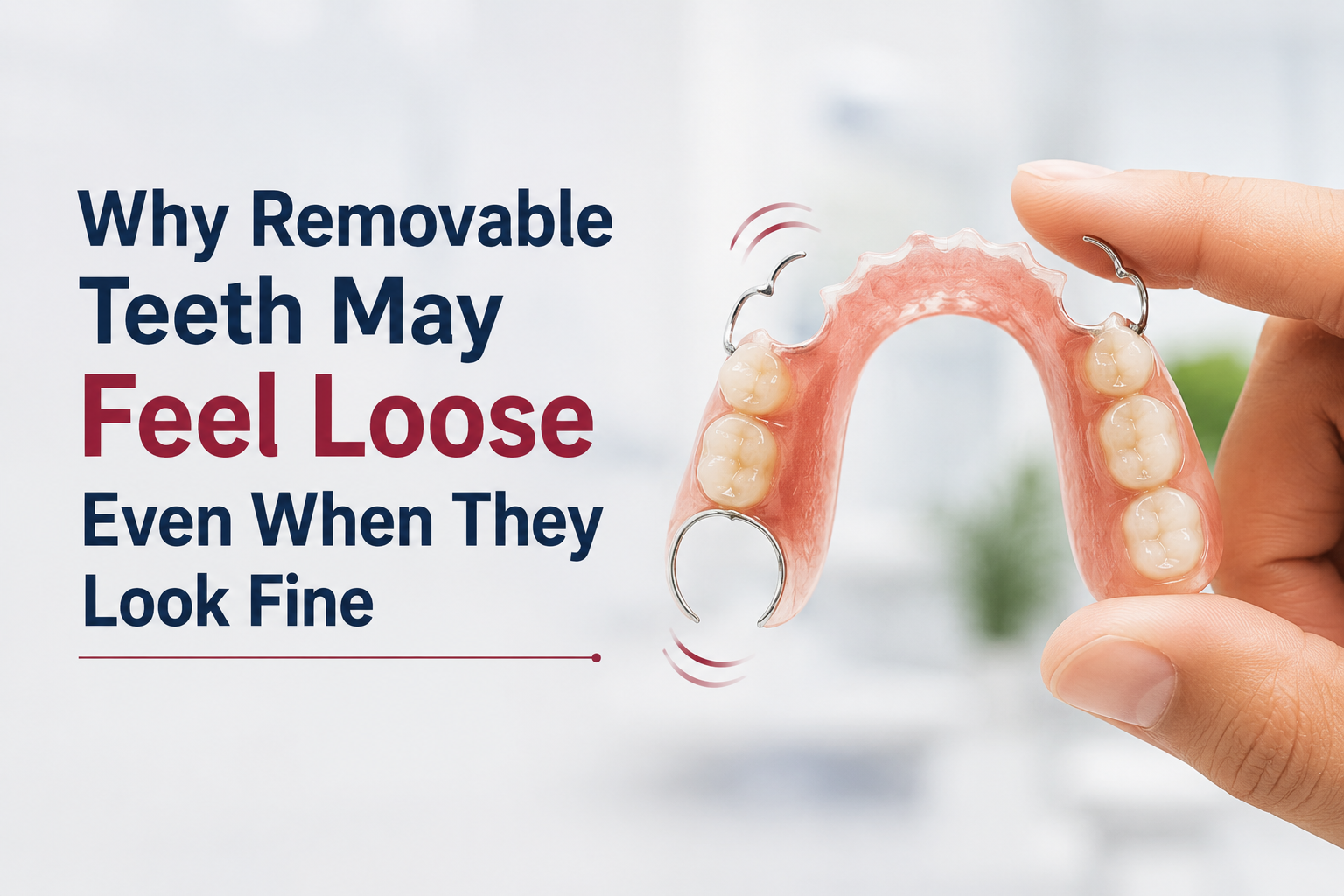
Why Removable Teeth May Feel Loose Even When They Look Fine
A removable denture can look perfectly normal but still feel unstable while eating, speaking, or laughing. This removable teeth loose problem is more common than many people realize, and it does not always mean that the denture itself is visibly damaged.
The important point is that denture fit depends on the changing shape of the gums and underlying jawbone, not just on the appearance of the artificial teeth. Over time, changes in the oral tissues can reduce the stability and retention of a once-comfortable denture.
For patients looking for removable teeth treatment in Surat, understanding why this happens can help them decide when a professional denture assessment may be appropriate.
What Does the Removable Teeth Loose Problem Mean?
The removable teeth loose problem usually refers to dentures that:
- Move when you chew food
- Slip while talking
- Lift when you open your mouth widely
- Feel less secure than they did previously
- Cause rubbing or sore spots on the gums
- Require increasing amounts of denture adhesive
- Make eating certain foods difficult
A denture can therefore appear intact while its fit has gradually changed.
Why Can Removable Teeth Become Loose?
1. Your Jawbone Can Change After Tooth Loss
One of the biggest reasons dentures become loose is the gradual change in the jawbone after natural teeth are lost.
Natural tooth roots provide stimulation to the surrounding bone. After tooth loss, the supporting ridge can gradually reduce in size. As the shape of the gum-covered ridge changes, an older denture may no longer sit as closely against the tissues as it once did.
This is why a denture that fitted well several years ago may eventually begin to move.
2. Your Gums and Oral Tissues Change
The mouth is not a completely static structure. Gum tissues can change with age, healing, weight changes, oral conditions, and other factors.
These changes can alter how the denture rests on the gums. NHS guidance also notes that dentures may become loose as the gums and jawbone change shape over time.
3. The Denture May Have Become Worn
A denture can gradually experience normal wear. The artificial teeth and denture base may become less effective at maintaining the original relationship between the upper and lower jaws.
If the denture has become significantly worn, damaged, or unstable, a dentist may need to consider adjustment, relining, repair, or replacement.
4. An Older Denture May No Longer Match Your Current Mouth
Even if there is no obvious crack or break, an older denture may no longer correspond accurately to the current shape of your mouth.
This is an important distinction:
A denture can be structurally intact but clinically ill-fitting.
That is why simply looking at the denture may not reveal the reason behind the loose feeling.
5. Dry Mouth Can Affect Denture Retention
Saliva also plays a role in the retention of removable oral prostheses. People experiencing dry mouth may have more difficulty keeping removable dentures securely in place.
If dryness has developed along with the removable teeth loose problem, it is worth mentioning this during a dental consultation.
Why Do Loose Removable Teeth Move More While Eating?
Chewing creates forces that can cause an unstable denture to shift.
This may be especially noticeable when eating:
- Hard foods
- Sticky foods
- Foods that require prolonged chewing
- Larger pieces of food
A denture that moves repeatedly may also create friction against the gums, potentially contributing to discomfort or sore areas.
For new denture wearers, some difficulty eating and speaking can occur while adapting. However, persistent slipping or a denture that no longer fits properly should be evaluated by a dentist.
Can a Loose Denture Be Fixed?
Sometimes, yes. The appropriate solution depends on why the denture has become loose.
A dental professional may assess whether the existing denture can be:
Adjusted
Minor changes may improve comfort and stability when the denture is otherwise suitable.
Relined
A reline can modify the fitting surface of a denture to better correspond with the current shape of the supporting tissues.
Rebased or Repaired
In selected cases, the denture may be modified rather than completely replaced.
Replaced
If the denture is significantly worn, damaged, poorly fitting, or no longer suitable for the patient's current oral anatomy, a new denture may be recommended. The ADA notes that poorly fitting dentures may require relining or replacement rather than relying on adhesive as a long-term solution.
Is Denture Adhesive the Answer to Loose Removable Teeth?
Denture adhesive can sometimes provide additional retention for a well-fitting denture. However, it should not be considered a substitute for correcting a poorly fitting denture.
If you suddenly need much more adhesive than before to keep your removable teeth in position, that can be a reason to have the denture evaluated. The American Dental Association specifically notes that adhesives are not a remedy for ill-fitting dentures.
In other words:
More adhesive does not necessarily mean better fit.
The underlying reason for the looseness should be identified first.
Signs You Should Get Your Denture Checked
Consider scheduling a dental evaluation if your removable teeth:
- Frequently slip while speaking
- Move while eating
- Click when you talk
- Cause recurring gum soreness
- No longer feel comfortable
- Have visible cracks or damage
- Require increasingly frequent adhesive use
- Prevent you from eating comfortably
NHS guidance recommends seeing a dentist when dentures slip, no longer fit properly, cause pain, or become worn or damaged.
How Can You Reduce Problems With Removable Teeth?
Good denture care can help maintain the condition of the prosthesis and your oral tissues.
Clean the Denture Regularly
Remove food debris and clean the denture according to professional recommendations. Dentures should be handled carefully to avoid accidental damage.
Avoid Hot Water
Very hot or boiling water can alter the shape of some dentures. Use the cleaning and soaking method recommended for your specific denture.
Give Your Gums Appropriate Rest
Unless your dentist gives different instructions for a specific situation, dentures are generally removed at night to allow the oral tissues to rest and to facilitate cleaning.
Attend Dental Reviews
A denture that was comfortable when initially fitted may eventually need professional adjustment because your mouth can change over time.
Removable Complete Dentures in Surat
For people searching for removable complete dentures in Surat, the fitting process is an important part of achieving comfort and stability.
Complete dentures are designed to replace all teeth in an upper or lower arch and are removable. Their fabrication involves assessing the mouth, recording its dimensions and bite relationship, creating the denture, fitting it, and making appropriate adjustments.
At Elegance Clinic, denture treatment can be approached around the patient's individual oral structure, functional requirements, comfort, and aesthetic expectations. Dr. Ashutosh Shah can assess whether a loose removable denture may benefit from adjustment, relining, or replacement based on the condition of the existing prosthesis.
What Should You Do About a Removable Teeth Loose Problem?
The most important step is not to ignore persistent looseness.
A loose denture may simply need a professional adjustment or reline, but sometimes the underlying denture has become too worn or the supporting tissues have changed significantly enough that replacement is more appropriate.
Instead of repeatedly adding adhesive or attempting to modify the denture yourself, a dental examination can help determine the actual cause and the most suitable solution.
Conclusion
The removable teeth loose problem is not always caused by a broken or visibly damaged denture. Changes in the jawbone, gums, oral tissues, denture fit, wear, and saliva can all influence how securely a removable denture stays in place.
If your removable teeth are slipping while eating or speaking, causing irritation, or no longer feel as stable as before, professional evaluation can help determine whether adjustment, relining, repair, or a new removable complete denture is appropriate.
Struggling with loose removable teeth or dentures that slip while eating or speaking? Get a professional denture-fit assessment at Elegance Clinic, Surat. Dr. Ashutosh Shah can evaluate the cause of the looseness and recommend the right option, whether it is adjustment, relining, repair, or a new removable complete denture.
Book your consultation today and take the first step toward a more comfortable, secure denture fit.