
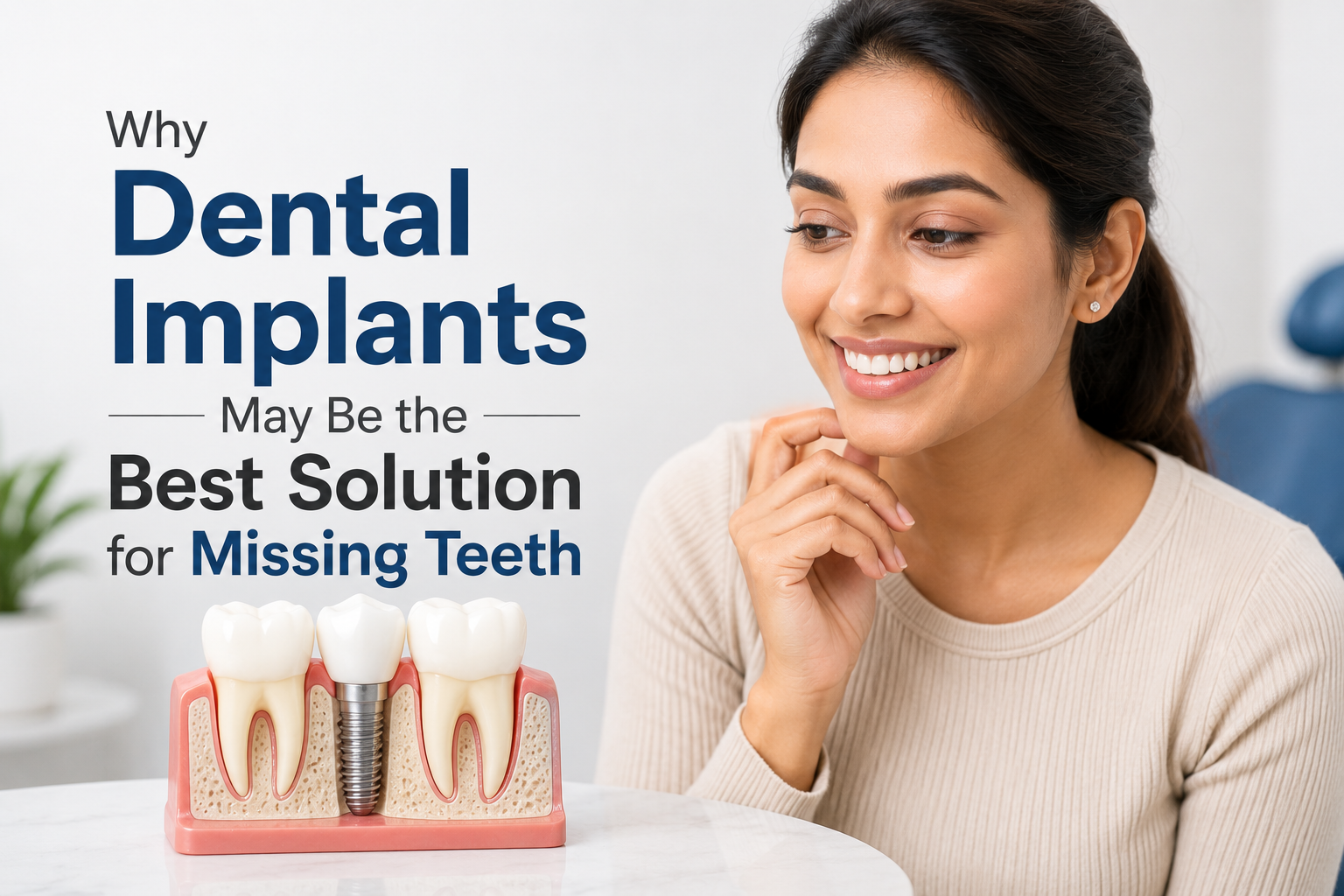
Why Dental Implants May Be the Best Solution for Missing Teeth
Losing a tooth is not only a cosmetic concern. A gap can affect chewing, speech, confidence and the way the surrounding teeth function. Over time, untreated tooth loss may also contribute to changes in the jawbone and shifting of nearby teeth. Replacing a missing tooth can therefore be important for both appearance and oral function.
For people searching for a Missing Teeth Permanent Solution, dental implants are often considered one of the most comprehensive tooth-replacement options. Unlike a conventional removable denture, an implant is designed to replace the missing tooth root and support a crown, bridge or denture. Once healed, it can function much like a natural tooth.
Key Takeaways
- Dental implants can provide a long-term solution for missing teeth.
- An implant replaces the missing tooth root and can support a dental crown.
- Implants can help restore chewing, speaking and smile aesthetics.
- They can help preserve the jawbone following tooth loss.
- Unlike a conventional bridge, an individual implant generally does not require reducing neighbouring healthy teeth.
- Implants can replace one tooth, several teeth or support a full-arch restoration.
- Good oral hygiene and regular dental visits are important for maintaining implant health.
- Not everyone is automatically a candidate; bone, gums, overall oral health and individual treatment needs must be evaluated first.
Why Do Missing Teeth Need to Be Replaced?
It can be tempting to ignore a missing tooth if it does not cause pain. However, the absence of a tooth can gradually affect more than your smile.
A missing tooth may make chewing less comfortable and can change how your remaining teeth come together. Depending on the location and extent of tooth loss, nearby teeth may shift toward the empty space. Bone in the area can also shrink after tooth loss because it no longer receives the same stimulation from a natural tooth root.
This is why replacing a missing tooth is not simply about filling a visible gap. It is about finding a restoration that suits your bite, oral health, appearance and long-term needs.
What Makes Dental Implants Different?
The key difference is what the implant replaces.
A traditional dental bridge replaces the visible tooth but relies on neighbouring teeth for support. Dentures sit over the gums and may be removable.
A dental implant, on the other hand, uses a small implant post placed into the jawbone to replace the missing root. After healing, an abutment and artificial tooth can be attached to restore the visible portion of the tooth.
This root-replacement approach is one reason dental implants are widely regarded as a long-term option for tooth loss.
Dental Implants and the Natural-Tooth Feel
One of the biggest concerns after tooth loss is whether a replacement will feel secure.
When an implant has successfully integrated with the jawbone and has been restored appropriately, it can provide a stable foundation for the replacement tooth. This can make everyday activities such as eating and speaking more comfortable compared with some removable tooth-replacement options.
The goal is not simply to place an artificial tooth in the gap. The aim is to create a restoration that works with your existing teeth and bite.
Can Dental Implants Help Preserve the Jawbone?
Yes, this is one of the important advantages of implant-based tooth replacement.
After a natural tooth is lost, the bone surrounding its root may gradually resorb. Because a dental implant is positioned within the jawbone, it can provide functional stimulation that conventional removable replacements do not provide in the same way.
This does not mean implants completely prevent every form of bone loss, but they can play an important role in maintaining the structure of the area.
Dental Implant vs Denture vs Bridge
There is no single replacement option that is ideal for every patient.
Dental Implants
Dental implants may be appropriate when a patient wants a fixed restoration and has suitable oral and jawbone conditions. They can be used for individual missing teeth as well as multiple-tooth or full-arch rehabilitation.
Dental Bridges
A bridge can replace one or more missing teeth by using neighbouring teeth as support. In conventional bridges, the supporting teeth may need to be prepared to accommodate the restoration.
Dentures
Dentures are removable appliances that can replace multiple or all missing teeth. They remain an important option, particularly when implants are unsuitable or when a patient prefers a removable solution.
Implant-Supported Dentures
For some patients with extensive tooth loss, implants can provide support for a denture. This may offer greater stability than a conventional denture that simply rests on the gums.
The right choice depends on factors such as the number of missing teeth, bone condition, gum health, bite, budget and personal preferences.
Who May Be Suitable for Dental Implants?
A dental implant consultation usually involves evaluating your teeth, gums and jawbone before deciding whether implants are appropriate.
Your dentist may consider:
- Number and location of missing teeth
- Available jawbone
- Gum health
- Existing dental infections or decay
- Bite and tooth alignment
- General health and healing capacity
- Oral hygiene habits
- Smoking or tobacco use
- Your expectations from treatment
If there is insufficient bone in the implant area, additional procedures such as bone augmentation may sometimes be considered.
Therefore, searching for a Missing Teeth Permanent Solution should begin with a professional assessment rather than choosing a treatment based solely on advertisements or price.
What Happens During Dental Implant Treatment?
Dental implant treatment is generally completed through several stages.
1. Dental Assessment
Your dentist examines your mouth and evaluates the missing-tooth area. Dental imaging may be used to assess bone and surrounding structures.
2. Treatment Planning
The implant position, restoration type and overall treatment sequence are planned according to your individual anatomy and requirements.
3. Implant Placement
The implant is surgically placed into the jawbone. A healing period is then required so that the implant can integrate with the surrounding bone.
4. Abutment and Crown
After appropriate healing, the implant is restored with an abutment and a custom-made crown. For patients missing several teeth, implants may instead support a bridge or denture.
The complete timeline varies significantly between patients. Some cases can be relatively straightforward, while others may require additional procedures and several months of healing.
Are Dental Implants Really Permanent?
This is an important question because the word “permanent” can be misleading.
Dental implants are designed to be a long-term tooth-replacement solution, and properly maintained implants can last many years; some may last a lifetime. However, no dental treatment should be presented as guaranteed to last forever.
The longevity of an implant can depend on factors including:
- Oral hygiene
- Gum health
- Bone condition
- Bite forces
- Smoking or tobacco use
- Regular professional maintenance
- Overall health
- Quality of treatment and restoration
The crown attached to the implant can also experience wear or damage and may eventually require repair or replacement even when the implant itself remains healthy.
What Happens If You Delay Replacing a Missing Tooth?
Not every missing tooth requires immediate implant placement, but postponing evaluation may allow changes to develop in the area.
Potential consequences can include:
- Difficulty chewing
- Changes in bite
- Movement of neighbouring teeth
- Progressive bone loss in the tooth-loss area
- Changes in facial or smile appearance
- Reduced confidence while speaking or smiling
For this reason, it is worth discussing tooth-replacement options with a dentist even if the missing tooth is not currently painful.
Is Dental Implant Treatment Right for Everyone?
Not necessarily.
Dental implants are highly useful, but they are not automatically the best choice for every patient. A dentist needs to evaluate the condition of the gums, available bone, remaining teeth and overall oral health before recommending treatment.
The American Dental Association also emphasizes that patients should receive a comprehensive dental examination and discuss available options including crowns, bridges, implants and dentures according to their diagnosis and individual needs.
This personalized approach is particularly important when you are looking for a Missing Teeth Permanent Solution because the most suitable treatment can differ from one patient to another.
Why Professional Planning Matters
Dental implants involve more than simply inserting a titanium post.
The implant position needs to work with your bite, neighbouring teeth, bone and final restoration. The appearance of the crown also needs to complement your smile.
At Elegance Clinic, treatment planning can be tailored to the patient's individual dental condition and tooth-replacement requirements. Dr. Ashutosh Shah can assess the missing-tooth area and discuss whether dental implants or another restoration would be appropriate for your needs.
Conclusion: Finding the Right Missing Teeth Permanent Solution
A missing tooth can affect much more than the appearance of your smile. It can influence chewing, speech, bite and the condition of the surrounding oral structures.
For suitable patients, dental implants can be an excellent Missing Teeth Permanent Solution because they replace the missing tooth root and provide a stable foundation for a natural-looking restoration. They can be used for a single missing tooth, multiple missing teeth or as part of a full-arch treatment plan.
However, the best treatment is ultimately the one that matches your oral health, bone condition, functional needs and expectations.
If you have missing teeth and are considering dental implants in Surat, consult Elegance Clinic for an individual dental assessment. A professional evaluation can help you understand whether dental implants or another tooth-replacement option is right for you.