Microblading, Powder Brows Or Combination Brows: Which Suits Your Skin
Choosing between microblading vs powder brows depends mainly on your skin type, natural eyebrow hair and the finish you want. Microblading creates fine, hair-like strokes, powder brows create soft shaded definition, and combination brows use both. Dry to normal skin may suit either technique, while powder-style brows are often preferred for oily or mature skin.
Understanding the differences in technique, healing, fading and maintenance can help you choose the most suitable option for your eyebrows.
How Does Each Technique Put Pigment Into the Skin?
Microblading, powder brows and combination brows all enhance eyebrow shape and fullness, but they create very different effects.
Microblading
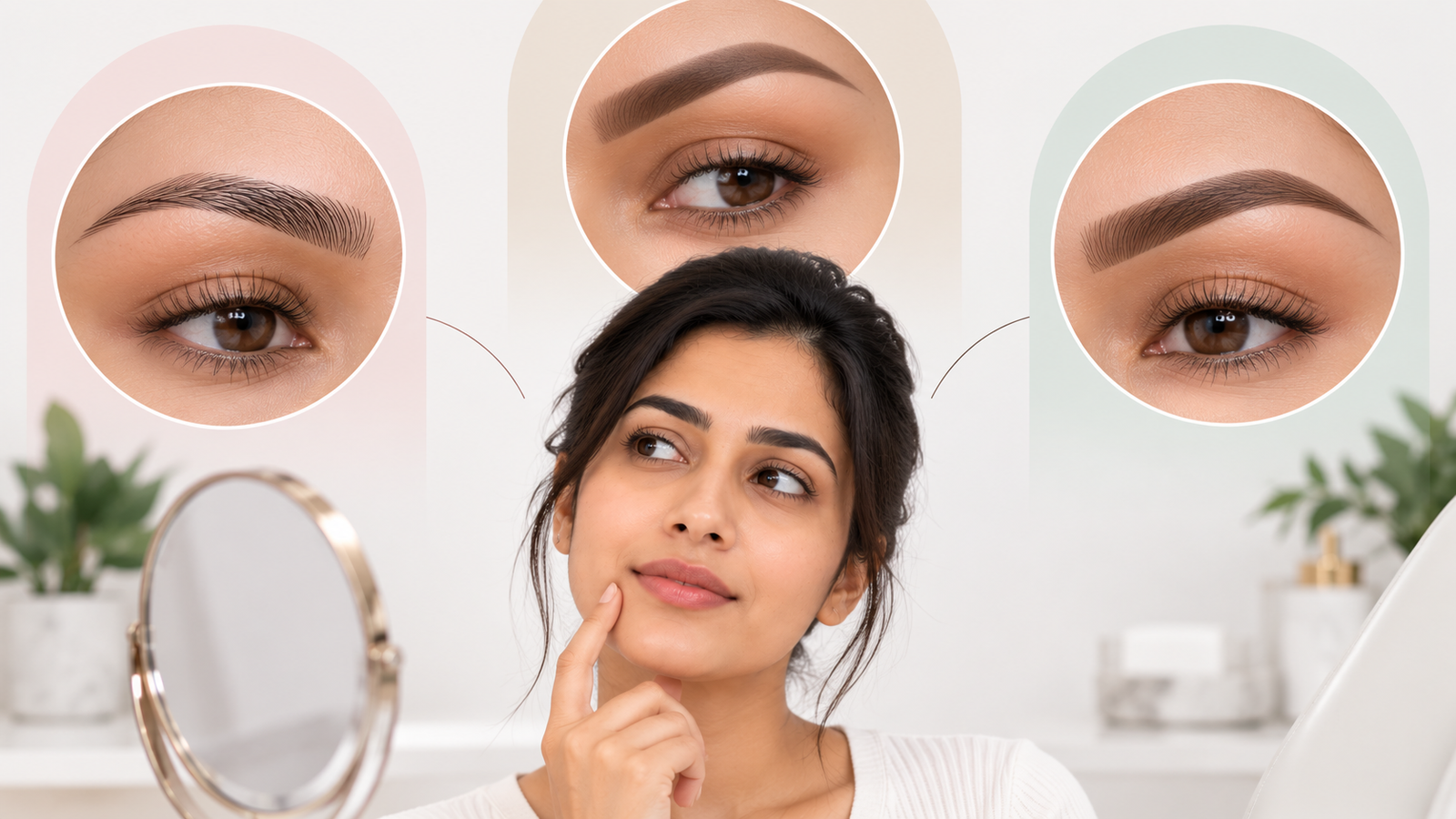
Microblading creates fine, hair-like strokes that imitate natural eyebrow hairs. It is commonly used to fill sparse areas, improve shape and create a natural-looking brow without a heavily filled appearance.
It may be suitable for people who have dry to normal skin and want individual strokes rather than an obvious makeup effect.
Powder or Ombre Brows
Powder brows use soft shading instead of individual hair strokes. Pigment is distributed throughout the brow to create an effect similar to eyebrow powder.
With ombre brows, the front of the brow is usually kept softer while the middle and tail are given more definition.
This technique is often considered by people who want a fuller, more polished brow appearance.
Combination Brows
Combination brows use both approaches. Hair-like strokes provide a natural effect, while powder shading adds density and definition.
They can be a good option for someone who likes the appearance of microblading but wants more fullness through the middle and tail of the eyebrows.
| Technique | Skin Type It May Suit | Healed Look | Typical Fade Pattern | Touch-Up |
|---|---|---|---|---|
| Microblading | Often dry to normal | Fine, natural hair strokes | Strokes gradually lighten and may lose definition | Based on individual retention |
| Powder / Ombre Brows | Normal, combination, oily and some mature skin | Soft shaded finish | Shading gradually becomes lighter | Based on retention and desired intensity |
| Combination Brows | Various skin types after assessment | Hair strokes with soft shading | Strokes and shading gradually soften | Based on individual retention |
Which Technique Suits Oily, Dry or Mature Skin?
Skin type is one of the most important factors when comparing microblading vs powder brows.
Oily Skin
Very fine microblading strokes may sometimes lose definition more quickly on oily skin. For this reason, ombre brows for oily skin or powder shading may often be considered because the finished result does not rely entirely on individual fine strokes.
Dry to Normal Skin
Dry to normal skin may provide more flexibility. Microblading can be considered when the main goal is a natural hair-stroke effect, while powder or combination brows can be selected when greater definition is desired.
Mature Skin
Mature skin should be assessed individually. Skin texture and elasticity can influence how very fine strokes heal.
In some cases, softer powder shading may provide a more even appearance. However, age alone should never determine the technique; the condition of the skin matters more.
How Different Does Each Look on Day 1, Day 30 and Month 12?
The appearance immediately after brow treatment is not the final result. Colour and definition change during healing and continue to fade over time.
Day 1
Freshly treated brows can look darker, sharper and more defined than expected.
Microblading strokes may look prominent, while powder and combination brows can initially appear more intense.
Day 30
After the initial healing period, the brows generally look softer.
Microblading shows individual hair-like strokes.
Powder brows develop a softer shaded appearance.
Combination brows show both hair strokes and background shading.
The exact result depends on individual healing and pigment retention.
Month 12
By around 12 months, the amount of pigment remaining can differ considerably from person to person.
Factors affecting fading include:
- Skin type and oiliness
- Sun exposure
- Skincare products
- Lifestyle
- Pigment retention
- Treatment technique
- Individual healing
Semi-permanent brow treatments naturally fade, so an exact appearance or lifespan cannot be guaranteed for everyone.
Which Fades More Evenly and Which Needs More Frequent Touch-Ups?
When people ask which brow technique lasts longer, there is no single answer that applies to every skin type.
Powder brows may sometimes fade more uniformly because the pigment is distributed as shading throughout the brow.
Microblading depends on individual fine strokes. As these strokes fade, they may become lighter or lose some definition.
Combination brows contain both strokes and shading, so their fading pattern can include characteristics of both techniques.
Touch-up frequency also varies. It can be affected by:
- Oily or dry skin
- Sun exposure
- Skincare routine
- Healing response
- Pigment retention
- Desired brow intensity
Instead of choosing a technique because it is advertised as lasting a specific number of months, consider how that technique is likely to behave on your skin.
How Is the Right Technique Chosen at Consultation?
The right eyebrow technique should be selected after assessing the skin, existing brow hair and desired result—not simply by choosing a photograph.
During consultation, the practitioner should consider:
Skin Type
Oily, dry, combination and mature skin can retain pigment differently.
Natural Brow Hair
Someone with sparse eyebrows may have different requirements from a person who already has full brows but wants better shape or definition.
Desired Appearance
If you want highly natural-looking hair strokes, microblading may be considered.
If you prefer soft, filled definition, powder brows may be more appropriate.
If you want both effects, combination brows may be considered.
Previous Brow Pigment
Existing microblading or permanent makeup should be assessed before another treatment is performed. Its colour, shape and remaining pigment can affect the available options.
Facial Features and Brow Shape
The proposed brow design should complement your facial proportions rather than simply reproduce a trending eyebrow shape.
Maintenance Expectations
The practitioner should explain how your chosen technique may heal, fade and require future maintenance.
You can learn more about semi permanent makeup in Surat and permanent makeup for face in Surat when comparing your options.
Which Brow Technique Should You Choose?
Choose microblading if: you primarily want natural-looking hair strokes and your skin is suitable.
Choose powder or ombre brows if: you prefer soft shading and more overall definition, particularly when very fine strokes may not be ideal for your skin.
Choose combination brows if: you want natural-looking strokes together with additional shading and fullness.
The final decision should be based on an individual assessment rather than trends alone.
You can also explore non-surgical treatments at Elegance Clinic or book a brow consultation for an individual assessment.
Conclusion
The choice between microblading vs powder brows depends on much more than which style looks attractive in a photograph. Skin type, natural brow density, existing pigment, desired appearance and maintenance expectations should all influence the decision.
Microblading provides a hair-stroke effect, powder or ombre brows create soft shading, and combination brows bring both approaches together. A professional consultation can help determine which technique is most appropriate for your individual eyebrows.