Lip Lift Surgery: Shortening The Space Between Nose And Lip
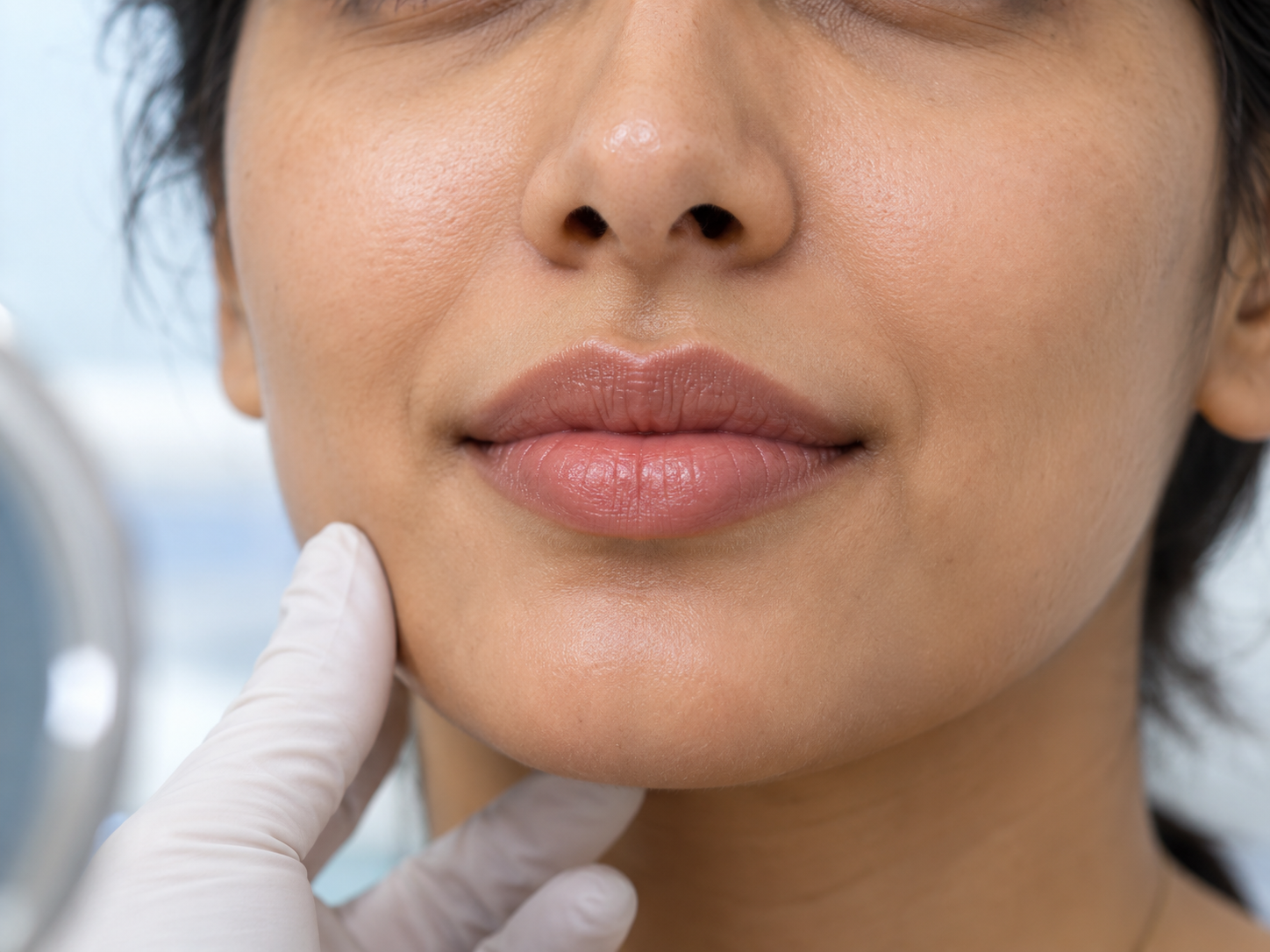
A lip lift surgery removes a small strip of skin beneath the nose to shorten a long upper lip and increase the visible pink lip and upper-tooth show at rest. The scar sits along the crease at the base of the nose. It suits selected patients with a long upper lip that filler cannot shorten, and the structural change is lasting.
At Elegance Clinic, Dr. Ashutosh Shah assesses upper-lip length, tooth show, lip volume, nose-to-lip proportions and smile movement before discussing whether a lip lift, filler or another approach better matches the concern.
A lip lift should not simply be chosen because someone wants a fuller-looking upper lip. It changes the relationship between the nose, upper lip and teeth. That makes correct patient selection particularly important.
What Is a Long Upper Lip and How Is It Measured?
The upper lip has two visually different components.
The first is the skin-covered portion extending from the base of the nose to the border of the pink lip. The second is the visible pink or vermilion portion of the lip itself.
A person can therefore have:
-
A relatively long skin portion with adequate lip volume
-
A thin pink lip without excessive skin length
-
Both a long upper lip and reduced visible lip
-
Normal proportions but downturned mouth corners
-
Age-related lengthening and reduced tooth show
These problems can look similar in photographs but may require different treatments.
Assessment Is About Proportion, Not One Number
A long upper lip should not be diagnosed from a single measurement alone.
Assessment considers:
-
Distance between the nose and upper lip
-
Amount of visible pink lip
-
Upper-tooth show at rest
-
Tooth show during smiling
-
Nose shape
-
Lip volume
-
Facial proportions
-
Lip movement
-
Age-related changes
The objective is to determine whether the skin portion of the upper lip is genuinely contributing to the patient's concern.
This distinction is particularly important because shortening an already proportionate upper lip may create an unnatural relationship between the nose, lip and teeth.
Some people actually have the opposite problem. You can read Why your upper lip may look short to understand why upper-lip proportions need assessment before choosing treatment.
How Does a Lip Lift Differ From Adding Filler?
A lip lift and lip filler can both change how the upper lip appears, but they do not solve the same anatomical problem.
Lip Lift Surgery
A lip lift surgery physically shortens the skin distance between the nose and upper lip.
By lifting the upper lip, it may:
-
Increase visible pink lip
-
Improve upper-tooth show in selected patients
-
Change the nose-to-lip proportion
-
Create a lasting structural change
It does not work by adding volume.
Lip Filler
Filler adds volume and can alter lip shape, projection and definition.
It does not remove skin between the nose and lip.
This distinction matters when someone has a genuinely long upper lip.
Repeatedly adding filler may make the lip fuller or more projected without correcting the vertical skin distance that concerns the patient.
Conversely, someone whose main problem is simply a thin lip may not need surgery to shorten the upper lip.
Lip Lift vs Filler
| Finding | Lip Lift, Filler or Both? | What Changes | Scar | Recovery |
|---|---|---|---|---|
| Long upper lip with reduced tooth show | Lip lift may be considered | Shortens skin portion and increases lip/tooth show | Scar beneath nose | Surgical recovery |
| Thin lip with normal upper-lip length | Filler may be considered | Adds volume and definition | No surgical scar | Shorter recovery |
| Downturned mouth corners | Neither automatically | Cause needs separate assessment | Depends on treatment | Depends on treatment |
| Age-related long lip with reduced pink-lip show | Lip lift may be considered in suitable patients | Shortens upper lip and changes visible lip | Scar beneath nose | Surgical recovery |
| Long lip plus volume deficiency | Sometimes staged or combined planning | Addresses proportion and volume separately | Lip-lift scar present | Depends on treatment plan |
The table is a guide rather than a diagnosis. Facial anatomy needs to be assessed individually.
Where Does the Scar Sit and How Does It Settle Over a Year?
Scar placement is one of the most important discussions before a bullhorn lip lift.
The incision is designed along the natural crease immediately beneath the nose.
A small amount of skin is removed according to the planned correction. The upper-lip tissue is then repositioned and the incision closed.
Because the incision is at the base of the nose, the intention is for the scar to sit within the natural transition between the nose and upper lip.
However, a lip lift is surgery and therefore always creates a scar.
It should not be advertised as a scar-free procedure.
Early Scar
Initially, the incision can be visible while the area is healing.
Temporary swelling can also make the upper lip look different from its eventual position.
Over the Following Months
The scar normally goes through a maturation process.
Its colour, firmness and visibility can change as healing progresses. The final appearance should therefore not be judged during the first few weeks.
Scar quality varies between patients and can depend on individual healing, skin characteristics, tension, aftercare and other factors.
Anyone considering surgery should accept the presence of a permanent scar even though the intention is for it to become less conspicuous as it matures.
Who Is Not Suitable for a Lip Lift?
Not everyone wanting a more visible upper lip is a candidate.
A Thin Lip Without Excessive Upper-Lip Length
If the upper lip is thin but the skin distance between the nose and lip is already proportionate, shortening it may not address the actual problem.
Volume-based treatment may be more appropriate in selected cases.
An Already Short Upper Lip
Removing additional skin from an upper lip that is already short could disturb facial proportions or produce excessive tooth show.
Unrealistic Expectations About Scarring
A patient who expects absolutely no visible scar is not approaching the procedure with realistic expectations.
Scar placement is designed carefully, but the operation cannot be performed without an incision.
A Concern Caused Mainly by Lip Size
Some patients are concerned about lips that appear disproportionately large rather than a long nose-to-lip distance.
That requires a different assessment. The article Could lip size be affecting your proportions explains this separate concern.
Medical or Healing Concerns
Suitability also depends on general health, healing factors and the surgeon's assessment.
Any condition or medication that could affect surgery or wound healing needs to be discussed during consultation rather than omitted from the medical history.
What Does Recovery Look Like Week by Week?
Recovery is individual, and the exact timetable depends on the extent of surgery and how the patient heals.
First Few Days
Swelling and tightness around the upper lip and base of the nose are expected early after surgery.
The incision needs to be cared for according to the surgeon's instructions.
The lip can initially appear higher or more swollen than expected, so this is not the stage at which to judge the final result.
Week One
Swelling begins to settle, although the incision remains relatively new.
The treating surgeon reviews healing and advises on wound care and any activity restrictions.
Patients should avoid unnecessarily stretching or disturbing the healing incision.
Weeks Two to Four
The lip gradually begins to look more natural as early swelling decreases.
The scar may still be noticeable because scar maturation takes considerably longer than basic wound closure.
Following Months
Residual firmness and scar changes continue to settle.
The relationship between the upper lip, pink lip and tooth show becomes easier to assess as healing progresses.
Up to One Year
Scar maturation continues for months.
This is why a scar should not be judged only by its early colour or texture.
Follow-up allows the surgeon to assess how both the lip position and scar are developing.
Will a Lip Lift Change My Smile?
It can change aspects of the smile because the operation changes the position and proportion of the upper lip.
That is one reason the surgeon assesses both the resting face and active smile before planning surgery.
The potential changes depend on factors such as:
-
Original upper-lip length
-
Amount of skin removed
-
Tooth show
-
Lip mobility
-
Existing asymmetry
-
Overall facial proportions
The aim should be a measured change rather than simply making the lip as short as possible.
Removing more tissue does not automatically create a better result.
How Much Should the Upper Lip Be Shortened?
There is no single amount that is correct for everyone.
The surgical plan is based on the patient's existing anatomy and desired proportional change.
The surgeon considers how shortening the lip may affect:
-
Nose-to-lip distance
-
Pink-lip show
-
Upper-tooth show
-
Lip closure
-
Smile
-
Overall facial balance
This is why a consultation should focus on proportions rather than promising a predetermined number of millimetres.
The safest aesthetic target is not the shortest possible upper lip. It is a proportion that fits the rest of the face.
Can Lip Lift Surgery Be Combined With Other Facial Procedures?
It may be incorporated into a broader facial surgery plan when appropriate.
Whether procedures should be combined depends on the operations involved, overall recovery, anaesthesia, healing requirements and the patient's medical assessment.
Patients considering other structural facial procedures can review Facial surgery at Elegance Clinic to understand the broader range of surgical facial treatments.
The order of procedures should be planned carefully because surgery that changes facial proportions can influence later decisions about fillers, permanent makeup and other finishing treatments.
Lip Lift Surgery or Filler: How Do You Decide?
The simplest way to understand the difference is to identify what you actually want to change.
If the problem is volume, filler may be considered.
If the problem is a genuinely long skin distance between the nose and upper lip, adding volume does not shorten that distance.
If both proportion and volume are concerns, treatment may need to be staged rather than trying to solve both with one procedure.
A specialist assessment should therefore examine the entire lower face rather than the lip alone.
For further procedure-specific information, see Lip lift on our surgery site.
Key Takeaways
-
Lip lift surgery shortens the skin distance between the nose and upper lip.
-
It is different from filler, which primarily adds volume and projection.
-
A long upper lip should be assessed according to overall facial proportions rather than one measurement.
-
The operation can increase visible pink lip and upper-tooth show in selected patients.
-
The incision sits beneath the nose and creates a permanent surgical scar.
-
Scar appearance changes gradually during maturation.
-
A thin lip does not automatically mean a lip lift is needed.
-
An already short upper lip may make someone unsuitable for further shortening.
-
The amount of skin removed needs to be individually planned.
-
A lip lift creates a lasting structural change and should not be viewed as easily reversible.
-
Recovery involves early swelling followed by gradual settling over the following weeks and months.
-
Surgery should be selected according to the anatomical problem rather than simply trying to make the upper lip look larger.
Conclusion
Lip lift surgery is designed for selected patients whose upper-lip proportions can benefit from shortening the distance between the nose and lip. It differs fundamentally from filler because it changes structure rather than simply adding volume.
At Elegance Clinic, Dr. Ashutosh Shah can assess upper-lip length, pink-lip show, tooth visibility, smile movement and overall facial proportions before discussing whether surgery or a non-surgical alternative is appropriate. Patients considering the operation should understand both its lasting structural effect and the permanent scar beneath the nose before deciding.