
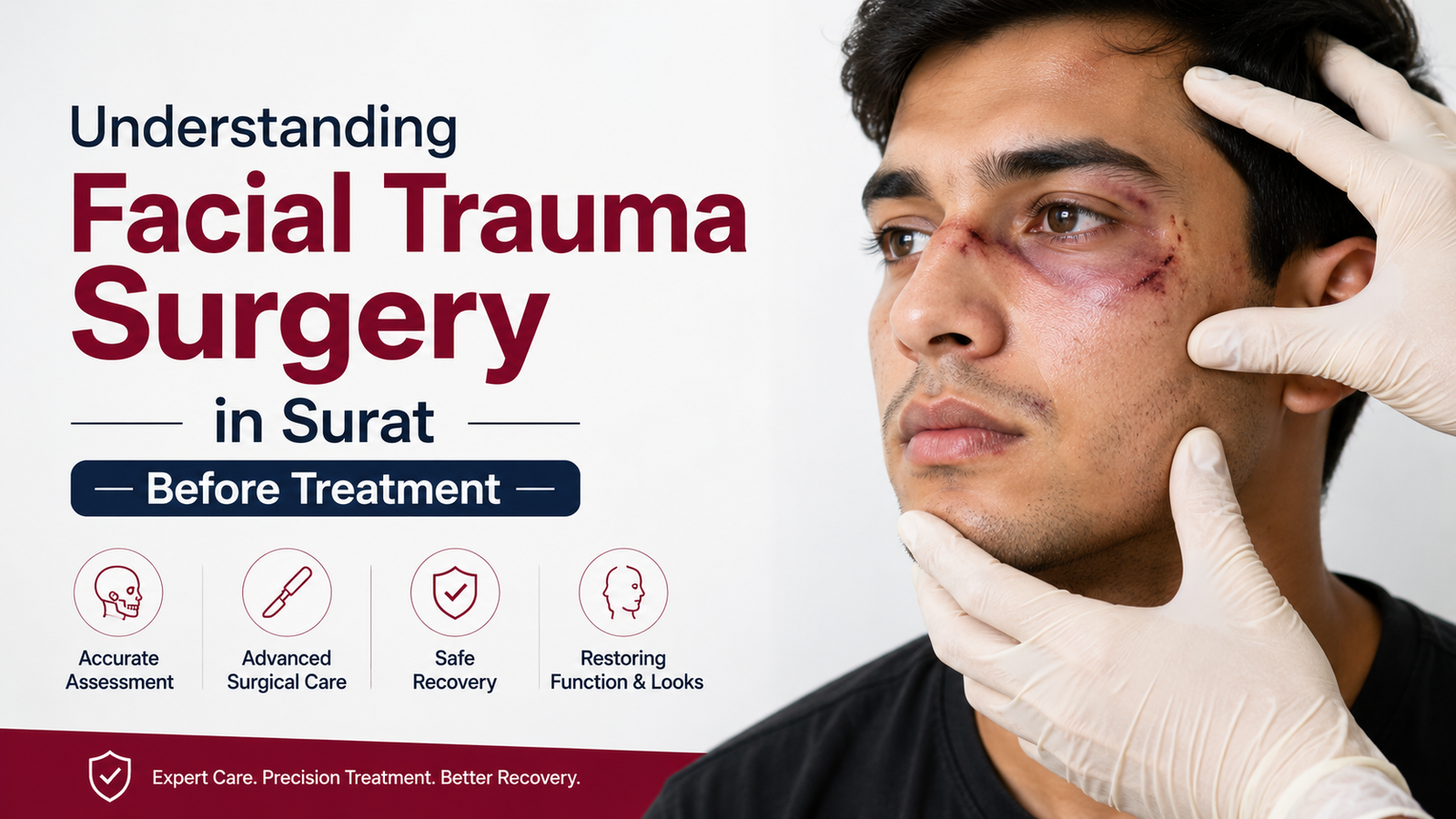
Understanding Facial Trauma Surgery in Surat Before Treatment
Facial trauma can affect much more than appearance. An accident, fall, sports injury, or other impact can damage the facial bones, jaw, nose, cheekbones, eye socket, soft tissues, teeth, or nerves. Because the face is closely connected to important functions such as breathing, chewing, speaking and vision, facial injuries require careful assessment and treatment planning.
For patients searching for facial trauma surgery in Surat, understanding what happens before treatment can make the process less confusing. The appropriate treatment depends on the location and severity of the injury, whether bones are displaced, whether function has been affected, and whether other injuries are present.
What Is Facial Trauma Surgery?
Facial trauma surgery refers to surgical procedures used to repair injuries involving the facial bones and surrounding soft tissues. Depending on the injury, treatment may involve repositioning fractured bones, stabilising them with plates and screws, repairing soft-tissue damage, or performing reconstructive procedures.
The main objectives are generally to:
- Restore facial bone alignment
- Preserve or restore normal facial function
- Correct significant deformity
- Protect structures such as the eyes and nerves
- Restore the relationship between the upper and lower jaws
- Support proper healing
- Improve facial symmetry where appropriate
Not every facial injury requires surgery. Some minor injuries may be managed without an operation, while displaced or complex fractures may require surgical repair.
What Can Cause Facial Trauma?
Facial trauma can occur in many situations. Common causes include:
- Road traffic accidents
- Falls
- Sports injuries
- Workplace accidents
- Physical assault
- Blunt or penetrating injuries
- Impact-related facial injuries
A facial injury can involve one area or several facial structures at the same time. Complex injuries may affect multiple facial bones and require a carefully coordinated treatment approach.
Which Facial Injuries May Need Surgery?
The need for facial trauma surgery in Surat is determined after a clinical examination and appropriate imaging.
Treatment may be considered for injuries involving:
1. Jaw Fractures
A fractured upper or lower jaw can affect the way the teeth come together and may make chewing or speaking difficult. Surgical fixation may be required when the fracture is displaced or compromises normal function.
2. Cheekbone Fractures
A cheekbone fracture can change facial contour and may sometimes affect sensation or the surrounding eye structures. Treatment depends on the degree of displacement and associated injuries.
3. Orbital Fractures
The eye socket can be injured during facial trauma. Symptoms such as double vision, changes in eye movement or significant swelling require prompt medical assessment because injuries around the eye can involve important structures.
4. Nasal Bone Fractures
Nasal injuries can affect both appearance and nasal breathing. Depending on the fracture pattern, treatment may range from conservative management to surgical correction.
5. Multiple Facial Fractures
Severe trauma can involve several facial bones simultaneously. These injuries require detailed evaluation and treatment sequencing based on the patient's overall condition and the pattern of the fractures.
Why Is Diagnosis Important Before Facial Trauma Surgery?
Facial trauma should not be evaluated only by looking at the visible injury. Some fractures or deeper injuries may not be obvious externally.
A surgeon may assess:
- Facial symmetry
- Bone tenderness or movement
- Jaw movement and bite
- Eye movement and vision-related symptoms
- Nasal breathing
- Sensation in the face
- Soft-tissue injuries
- Dental injuries
- Signs of nerve involvement
Imaging, particularly CT scanning when indicated, can help identify facial fractures and understand their location and severity.
Does Every Facial Fracture Require Surgery?
No. The decision depends on the fracture's location, displacement, stability, functional effects and overall severity.
Some fractures can be monitored or treated conservatively. Others may need reduction and fixation to restore alignment and stability.
In surgical treatment, reduction means bringing the fractured bone segments back into an appropriate position, while fixation involves keeping them stable during healing. Plates and screws may be used when appropriate.
This is why an individual assessment is more useful than deciding on surgery based only on the presence of a fracture.
What Happens During Facial Trauma Surgery?
The exact procedure varies considerably between patients.
Depending on the injury, surgery may involve:
- Accessing the injured area through carefully planned incisions.
- Repositioning displaced facial bones.
- Stabilising the bones using suitable fixation methods when required.
- Repairing associated soft-tissue injuries.
- Addressing functional problems such as bite or structural instability.
- Closing the surgical area and beginning postoperative care.
For more extensive injuries, reconstructive procedures may also be necessary. The surgical plan is based on the patient's anatomy, fracture pattern and functional requirements.
What About Scarring After Facial Trauma Surgery?
Scarring depends on the type and location of the injury, the surgical approach, wound healing and individual factors.
When surgery is necessary, surgeons generally consider access to the injured structures while also taking facial aesthetics into account. However, no surgical procedure can guarantee invisible scars.
Following postoperative wound-care instructions and attending follow-up appointments are important parts of recovery.
Recovery After Facial Trauma Surgery
Recovery varies according to the injury and procedure performed.
Swelling and bruising are common after facial trauma and surgery. Some patients may require dietary modifications, activity restrictions or additional follow-up depending on the area treated.
Recovery can be influenced by:
- Extent of the fracture
- Number of facial bones involved
- Type of surgery
- Soft-tissue damage
- Overall health
- Healing response
- Presence of associated injuries
Some visible swelling may improve within weeks, while complete healing and refinement can take considerably longer.
When Should a Facial Injury Be Treated Urgently?
A serious facial injury should not be delayed, particularly when there are symptoms involving breathing, vision, consciousness or major bleeding.
Seek emergency medical attention for symptoms such as:
- Difficulty breathing
- Severe or uncontrolled bleeding
- Loss of consciousness
- Confusion or significant drowsiness
- Sudden vision changes
- Severe eye movement problems
- Major facial deformity
- Difficulty opening or closing the mouth
- Significant bite changes
- Severe facial swelling after major trauma
Facial trauma can occur alongside injuries to other parts of the body, so emergency evaluation may be necessary after significant accidents.
Choosing Facial Trauma Surgery in Surat
If you are looking for facial trauma surgery in Surat, the most important consideration is not simply the availability of a procedure. Facial trauma can involve multiple structures, so treatment planning should focus on both function and facial structure.
At Elegance Clinic in Surat, Dr. Ashutosh Shah evaluates facial trauma based on the location and severity of the injury, associated functional problems, imaging findings, and the patient's individual treatment needs. When surgery is required, the goal is to restore facial bone alignment while considering both facial function and appearance.
Facial Trauma Surgery in Surat: Key Takeaway
Facial trauma surgery is not simply about correcting a visible facial injury. The treatment plan may need to address bone alignment, facial symmetry, jaw function, vision-related concerns, breathing, soft-tissue damage and long-term healing.
If you have suffered a facial injury, early professional assessment is important, particularly when there is a suspected fracture or a change in normal facial function. Diagnostic imaging and clinical examination can help determine whether observation, nonsurgical treatment or surgery is appropriate.
Conclusion
If you are considering facial trauma surgery in Surat after an accident, fall, sports injury or facial fracture, do not rely only on the visible appearance of the injury. A proper evaluation can help identify underlying bone or soft-tissue damage and determine the most appropriate treatment approach.
Contact Elegance Clinic in Surat to discuss your facial injury and receive an individualized evaluation and treatment plan.