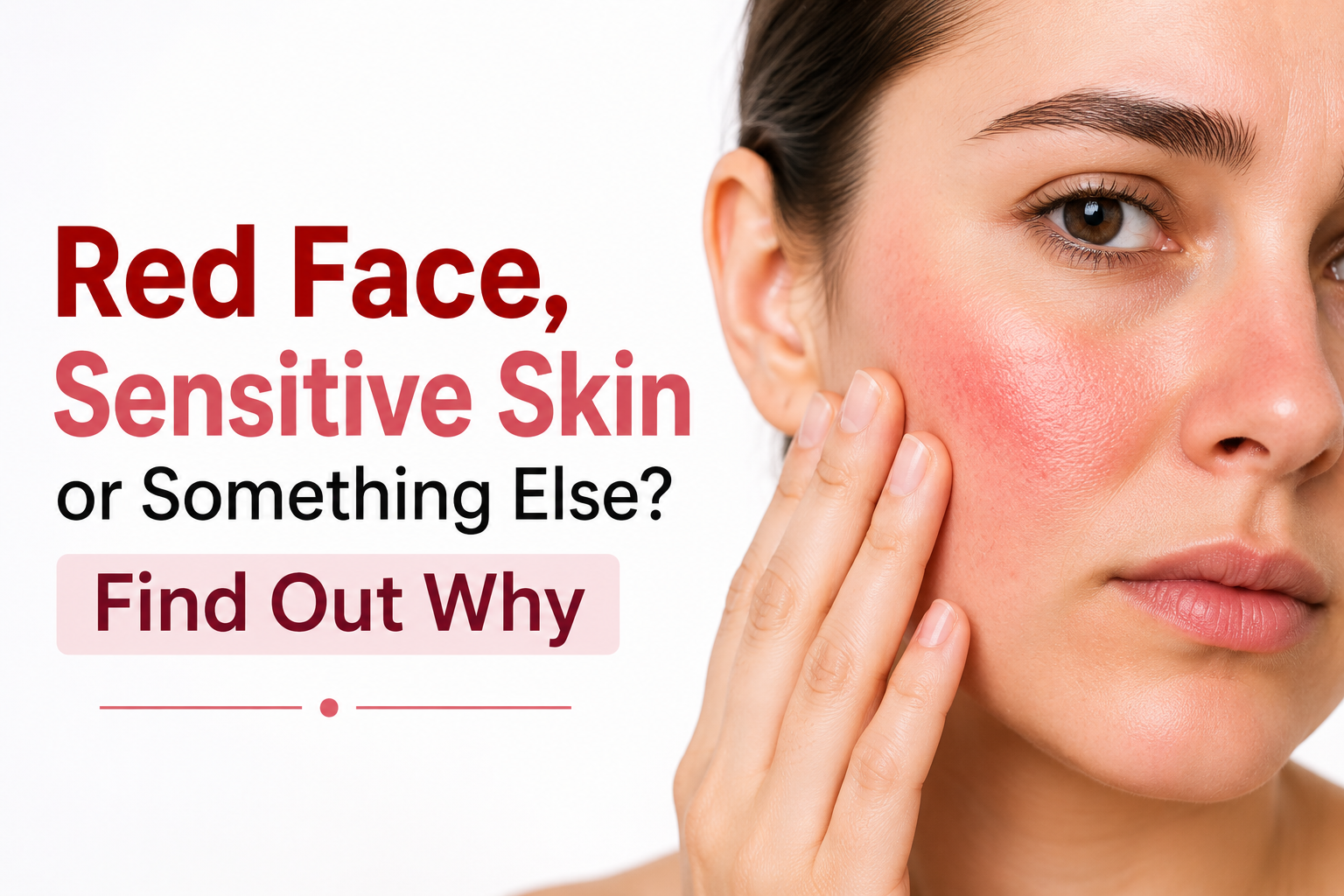
Red Face, Sensitive Skin or Something Else? Find Out Why
A red face is often dismissed as sensitive skin, but persistent facial redness can have several different causes. Temporary redness after exercise, heat, spicy food, or embarrassment is usually normal. However, redness that keeps returning or does not settle may need a closer look.
If you are dealing with a facial redness problem, the first step is understanding why your skin is becoming red. The right treatment depends on the cause, skin type, severity, and whether the redness is associated with visible blood vessels, pigmentation, irritation, or another skin condition.
For people looking for facial redness treatment in Surat, professional skin assessment can help determine whether treatments such as a photofacial or IPL-based approach may be appropriate.
What Causes Facial Redness?
Facial redness is not a single skin problem. It can occur because of temporary blood-vessel dilation, inflammation, irritation, sun exposure, or certain skin conditions.
Common triggers and causes include:
- Sun exposure and UV-related skin damage
- Heat or sudden temperature changes
- Exercise
- Spicy foods
- Alcohol
- Stress and emotional flushing
- Harsh skincare products
- Over-exfoliation
- Sensitive or reactive skin
- Acne-related inflammation
- Rosacea
- Visible small blood vessels
- Certain forms of dermatitis
This is why simply applying a moisturizer or using a “sensitive skin” product may not always solve persistent redness.
Redness From Sensitive Skin vs. Persistent Facial Redness
Sensitive skin generally reacts easily to products, environmental changes, heat, or friction. The skin may feel burning, stinging, tight, or irritated.
A facial redness problem, however, may involve redness that:
- Appears repeatedly in the same areas
- Remains visible even when you are not experiencing a trigger
- Is concentrated around the cheeks, nose, or central face
- Occurs with visible tiny blood vessels
- Becomes more noticeable after sun exposure
- Is accompanied by warmth, flushing, or irritation
- Does not improve despite changing skincare products
Persistent redness should not automatically be labelled as sensitive skin.
Why Does the Face Become Red?
One important reason is increased blood flow near the skin's surface. When superficial blood vessels widen, more blood becomes visible through the skin, creating a red or flushed appearance.
Repeated flushing can make redness increasingly noticeable in some people.
The appearance can also be influenced by:
- Skin tone
- Sun damage
- Inflammation
- Broken or visible capillaries
- Skin barrier damage
- Underlying dermatological conditions
Understanding the cause is more important than simply trying to make the skin look lighter.
Can Sun Damage Cause Facial Redness?
Yes. Repeated UV exposure can contribute to skin inflammation, uneven pigmentation, visible blood vessels, and changes in skin texture.
Someone may notice that facial redness becomes more prominent after years of sun exposure, particularly around the cheeks and nose.
Daily broad-spectrum sunscreen is therefore an important part of managing many forms of facial redness. Professional treatments may complement skincare when visible redness or vascular changes remain.
Can Skincare Products Make Facial Redness Worse?
Yes.
Some products can irritate the skin, particularly when the skin barrier is already compromised.
Potential triggers include:
- Strong exfoliating acids
- Excessive retinoid use
- Fragrances
- Aggressive scrubs
- Frequent chemical exfoliation
- Very hot water
- Excessive cleansing
If redness began after introducing a new product, simplifying the routine may be useful. However, persistent or unexplained redness should be evaluated rather than repeatedly experimenting with products.
When Is Facial Redness a Sign of Rosacea?
Rosacea is one possible cause of persistent facial redness, particularly when redness primarily affects the cheeks, nose, forehead, or chin.
Some people with rosacea experience:
- Frequent flushing
- Persistent redness
- Burning or stinging
- Visible small blood vessels
- Acne-like bumps
- Increased sensitivity
Not every red face is rosacea, and not every person with rosacea should receive the same treatment.
A qualified medical professional should assess the skin before choosing a procedure.
Can a Photofacial Help Facial Redness?
A photofacial, commonly performed using intense pulsed light (IPL), can be considered for certain types of facial redness.
IPL delivers controlled light energy to targeted skin structures. Depending on the technology and treatment settings, it may help reduce the appearance of some superficial vascular redness and uneven pigmentation.
However, a photofacial is not a universal treatment for every cause of facial redness.
The suitability of IPL depends on factors such as:
- The reason for the redness
- Skin tone
- Degree of pigmentation
- Presence of visible blood vessels
- Sensitivity of the skin
- Current medications and skincare
- History of pigmentation changes
- Overall skin condition
A consultation before treatment is therefore important.
What Happens During a Facial Redness Treatment Consultation?
A professional assessment generally looks at the pattern and appearance of redness rather than treating redness as a cosmetic issue alone.
The clinician may consider:
- Where the redness appears
Cheeks, nose, chin, forehead, or other areas can provide useful clues. - Whether the redness is temporary or persistent
Occasional flushing and constant redness can have different explanations. - Whether blood vessels are visible
Fine visible vessels may respond differently from generalized inflammation. - Your skin type and tone
These factors matter when selecting energy-based treatments. - Your skincare routine
Irritating products can contribute to ongoing redness. - Your history of sun exposure and pigmentation
This can influence both treatment choice and treatment safety.
Facial Redness Treatment in Surat
If you are searching for facial redness treatment in Surat, avoid choosing a procedure solely because it is advertised as a quick solution for red skin.
At Elegance Clinic, Dr. Ashutosh Shah can assess the underlying cause of facial redness and determine whether a photofacial, IPL-based treatment, skincare approach, or another option may be appropriate for your individual skin.
For selected cases, photofacial or IPL-based treatment may be considered when redness is associated with superficial vascular changes or other suitable concerns. The treatment plan should always be personalized according to your skin type, condition, and treatment goals.
The goal should not simply be to “remove redness.” The goal is to understand why the redness is occurring and choose an appropriate treatment strategy.
How to Reduce Facial Redness at Home
Professional treatment is not the only part of redness management. Everyday skin care also matters.
Use sunscreen consistently
UV exposure can worsen several types of redness and pigmentation. Use a broad-spectrum sunscreen and reapply as appropriate for your exposure.
Keep your skincare routine simple
Avoid repeatedly adding new active ingredients when your skin is already irritated.
Avoid aggressive exfoliation
Scrubbing or excessive exfoliation can damage the skin barrier and make irritation more noticeable.
Identify your triggers
Notice whether your redness increases after:
- Heat
- Sun exposure
- Exercise
- Spicy foods
- Stress
- Alcohol
- Particular skincare products
Knowing your triggers can help you manage recurring flushing.
Avoid very hot water
Hot showers and facial steaming may increase flushing in people prone to facial redness.
Is Facial Redness Always a Cosmetic Problem?
No.
Although many people seek treatment because they dislike the appearance of redness, persistent redness can sometimes be associated with an underlying dermatological condition.
Seek medical evaluation if redness is persistent, worsening, painful, associated with significant burning or itching, accompanied by bumps or swelling, or suddenly develops without an obvious explanation.
Treating the visible redness without understanding its cause may not provide the best long-term solution.
What Is the Best Treatment for Facial Redness?
There is no single best treatment for facial redness because the treatment depends on its cause.
For example:
- Irritation may require barrier repair and trigger avoidance.
- Sun-related changes require strict photoprotection.
- Certain vascular concerns may be treated with light- or laser-based procedures.
- Rosacea may require medical management.
- Product-related irritation may improve after removing the trigger.
This is why an individualized assessment is more useful than choosing a treatment based only on the symptom “red face.”
Facial Redness: When Should You Consider Professional Treatment?
Consider a professional consultation if:
- Your redness keeps returning.
- Your cheeks or nose remain visibly red.
- You have noticeable facial blood vessels.
- Skincare products have not improved the appearance.
- Your redness is affecting your confidence.
- Sun exposure makes the redness significantly worse.
- You want to know whether IPL or another treatment is suitable for your skin.
The earlier the cause is identified, the easier it can be to choose an appropriate treatment strategy.
Conclusion: Redness Is a Symptom, Not Always the Diagnosis
A red face does not automatically mean sensitive skin. Facial redness can result from temporary flushing, irritation, sun exposure, visible blood vessels, rosacea, or other skin-related causes.
If you have a persistent facial redness problem, understanding the underlying cause should come before choosing a cosmetic procedure. For suitable candidates, professional treatments such as photofacial or IPL may help improve the appearance of certain types of redness and uneven skin tone.
Looking for Facial Redness Treatment in Surat?
If facial redness is persistent or affecting your confidence, consider a professional skin assessment at Elegance Clinic in Surat. A personalized evaluation can help determine whether a photofacial or another approach is appropriate for your skin.
Book a consultation to understand the cause of your facial redness and explore suitable treatment options for your skin.