Face Makeover Surgery in Varachha, Surat: Procedure, Recovery and Cost Guide
Face makeover surgery in Varachha Surat refers to personalised facial plastic surgery procedures designed to improve facial proportions, address aging changes, or correct specific structural concerns. It may help suitable adults who want changes to their nose, eyelids, cheeks or facial contours. Before deciding, patients should understand that treatment plans, recovery, and risks differ significantly between procedures.
A face makeover is not one standard operation. It may involve a single procedure or a carefully planned combination of treatments.
Some patients want to address loose facial skin, while others are concerned about facial balance, prominent features, or changes after weight loss.
The right approach depends on facial anatomy, medical history, personal goals, and a detailed surgical assessment.
What Is Face Makeover Surgery and Who Is It For?
Face makeover surgery is a broad term for surgical procedures that change or restore selected facial features.
It may involve improving facial contours, correcting structural concerns or addressing age-related changes.
Unlike a standard cosmetic treatment, a surgical face makeover requires an individualised plan.
Common Procedures Included in a Face Makeover
1. Facelift Surgery
A facelift may help improve selected signs of facial ageing, including loose skin and tissue descent around the cheeks, jawline and lower face.
2. Rhinoplasty
Rhinoplasty changes the structure or appearance of the nose. Some procedures also address functional breathing concerns.
3. Eyelid Surgery
Blepharoplasty may remove or reposition selected excess skin and fat around the eyelids.
4. Facial Fat Grafting
Fat grafting may restore volume in areas affected by ageing or tissue loss.
5. Chin or Facial Contouring
Selected procedures can change facial proportions and improve balance between the chin, cheeks and jawline.
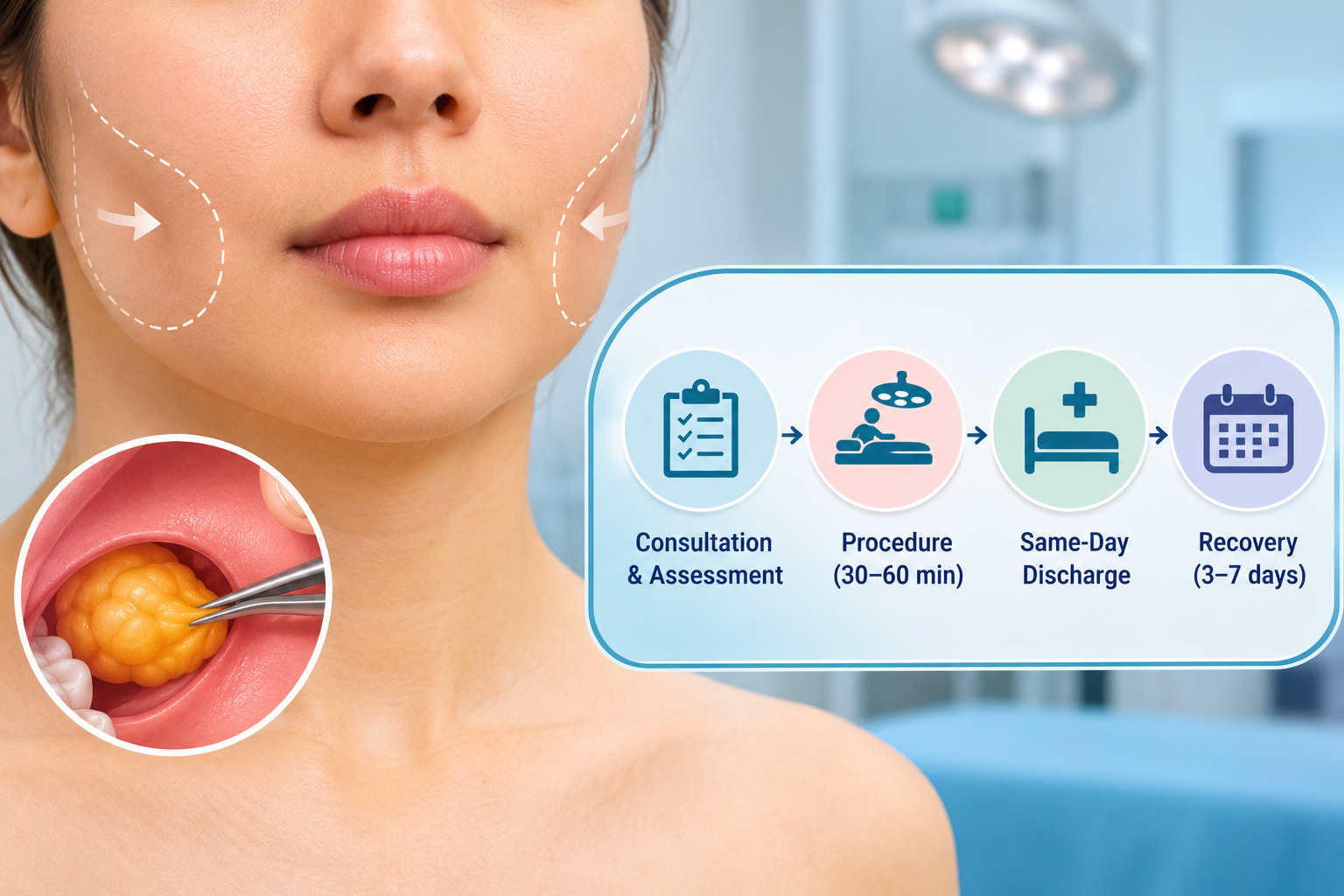
6. Buccal Fat Removal
Buccal fat removal reduces selected cheek fat volume in suitable patients. It is not appropriate for every face, particularly when there is already limited facial volume.
Who May Be a Suitable Candidate?
A patient may be considered for surgery when they:
-
Have a clearly defined facial concern.
-
Are in suitable general health.
-
Have realistic expectations.
-
Understand the possible risks and limitations.
-
Can follow postoperative instructions.
-
Can allow sufficient recovery time.
Patients with uncontrolled medical conditions, active infections or unrealistic expectations may need treatment postponed or reconsidered.
Can Several Procedures Be Combined?
Sometimes.
Combining procedures may reduce the need for separate anaesthetic sessions, but it can also increase operating time, swelling and overall surgical risk.
The surgeon must assess whether combining treatments is appropriate.
Patients considering face makeover surgery in Varachha Surat should focus on the specific changes they want rather than assuming that more procedures will produce better results.
How Face Makeover Surgery Is Done, Step by Step
The surgical process varies according to the chosen procedures.
However, most treatment plans follow several common stages.
Step 1: Initial Consultation
The surgeon examines facial structure, skin quality, symmetry and areas of concern.
The consultation should include a discussion of:
-
Medical and surgical history
-
Current medications
-
Previous facial procedures
-
Smoking or nicotine use
-
Desired changes
-
Expected limitations
-
Recovery requirements
Photographs may be taken with appropriate consent for clinical planning.
Step 2: Personalised Treatment Planning
The surgeon identifies which procedures may address the patient's concerns.
For example, a patient with loose lower-face skin may benefit from a different procedure than someone concerned about nasal shape.
Not every facial concern requires surgery.
Some patients may be better suited to non-surgical treatment or observation.
Step 3: Preoperative Assessment
Depending on the procedure and the patient's health, assessment may include:
-
Blood tests
-
Anesthesia evaluation
-
Review of medications
-
Relevant imaging
-
Assessment of existing medical conditions
Patients should disclose all medications and supplements because some can affect bleeding or anesthesia.
Step 4: Anesthesia
The type of anesthesia depends on the procedure.
Smaller operations may be performed under local anesthesia, sometimes with sedation.
More extensive procedures commonly require general anesthesia.
The anesthesia plan should be discussed before surgery.
Step 5: Surgical Procedure
The surgeon performs the planned operation using techniques appropriate to the facial concern.
Incision placement, tissue repositioning, sutures, and dressings depend on the procedure.
The aim is to achieve the agreed surgical objectives while protecting important facial structures.
Step 6: Immediate Postoperative Care
After surgery, the medical team monitors the patient for pain, bleeding, swelling, and anesthesia-related concerns.
Some patients can return home the same day.
Others may need observation or a hospital stay.
Step 7: Follow-Up and Recovery
Follow-up appointments help the surgeon assess healing, review wounds, and identify complications.
Patients should follow instructions about cleaning, medicines, sleeping position, and physical activity.
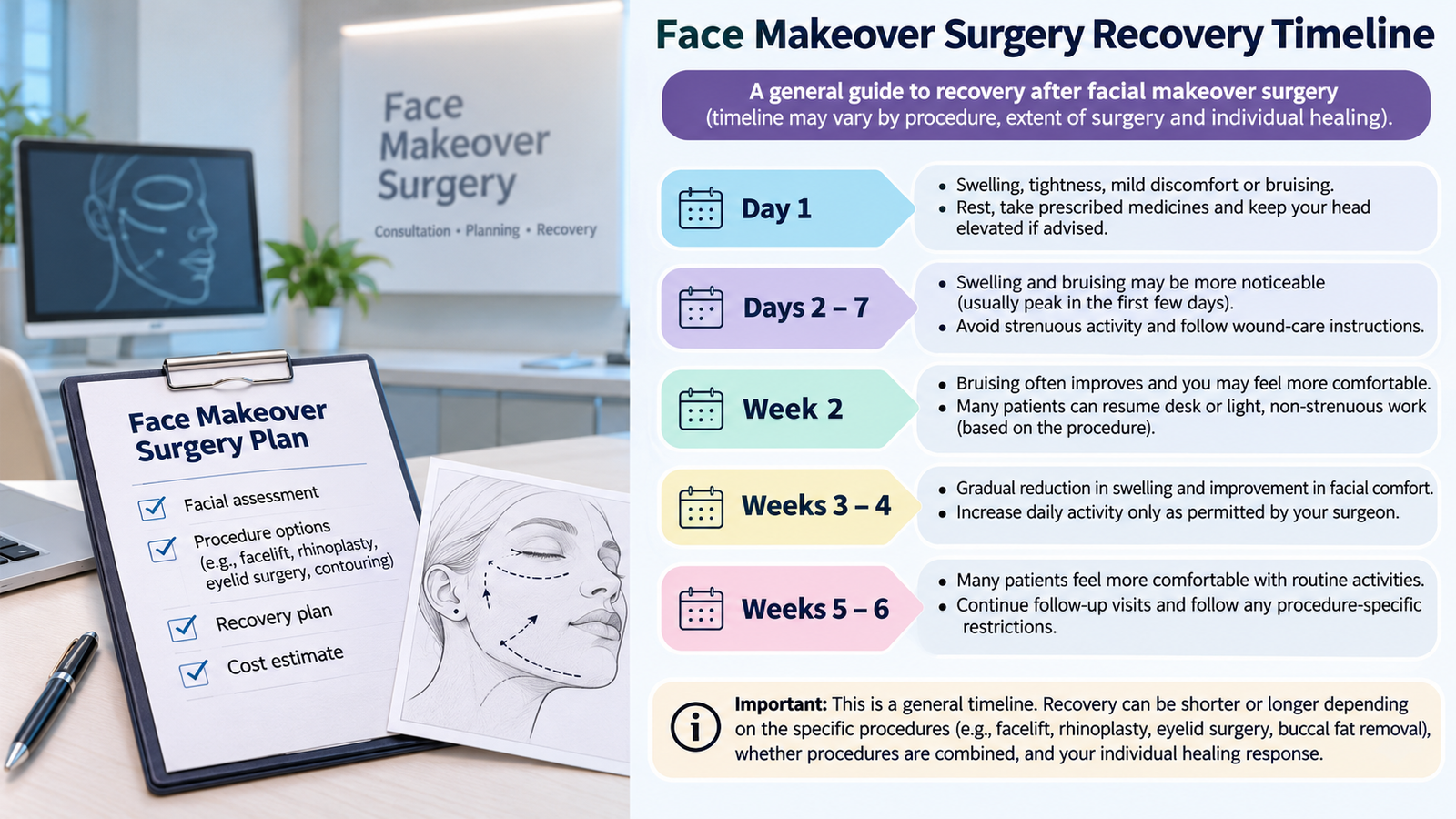
Recovery Timeline: Day 1 to Week 6
Recovery after face makeover surgery in Varachha Surat depends on the procedures performed, their extent, and the patient's healing response.
A small eyelid procedure may have a different recovery timeline from a facelift or combined facial operation.
The following table provides a general guide rather than a fixed recovery schedule.
| Recovery period | What patients may experience | General care |
|---|---|---|
| Day 1 | Swelling, tightness, mild discomfort, or bruising | Rest, prescribed medication, and head elevation if advised |
| Days 2-3 | Swelling and bruising may become more noticeable. | Avoid strenuous activity and follow wound-care instructions. |
| Days 4-7 | Early swelling may begin to improve. | Attend scheduled review and follow dressing instructions. |
| Week 2 | Bruising often improves; some patients resume desk work | Avoid pressure on healing areas |
| Weeks 3-4 | Gradual reduction in swelling and improvement in comfort | Increase activity only as permitted |
| Weeks 5-6 | Many patients feel more comfortable with routine activities. | Continue follow-up and follow procedure-specific restrictions. |
When Can You Return to Work?
Return to work depends on the operation and the physical demands of the job.
Some patients resume desk work after approximately one to two weeks.
More extensive surgery or physically demanding work may require additional recovery.
When Will Swelling Disappear?
Visible swelling often improves during the first several weeks.
However, subtle swelling and tissue changes can continue for months.
The final result may not be apparent until healing has progressed substantially.
When Can You Exercise?
Light walking is often encouraged when medically appropriate.
Strenuous exercise, heavy lifting, and activities that increase facial pressure may need to be avoided during early healing.
The surgeon should provide a procedure-specific return-to-exercise plan.
What About Buccal Fat Removal Recovery?
Patients considering cheek contouring can also read what is the recovery time after buccal fat removal in surat.
This helps explain how recovery differs when the treatment involves cheek fat reduction rather than skin lifting or other facial procedures.
What Affects the Cost of Face Makeover Surgery in Surat?
The cost of facial makeover surgery varies because different patients require different procedures.
There is no single reliable price for every face makeover.
A written estimate should be prepared after consultation and treatment planning.
1. Type of Procedure
A single facial procedure may cost less than a combination of operations.
The complexity of the surgery is an important factor.
2. Surgical Technique
Different techniques require different equipment, operating time and surgical planning.
3. Anaesthesia
Local anaesthesia, sedation and general anaesthesia have different resource requirements.
4. Hospital or Day-Care Charges
Facility fees may include operating-room use, recovery monitoring and any necessary hospital stay.
5. Combined Procedures
Combining procedures can change the overall quotation.
Although some shared costs may be reduced, longer operating time and additional treatment can increase the total expense.
6. Medicines and Follow-Up
Patients should clarify whether the quotation includes:
-
Preoperative tests
-
Anaesthesia fees
-
Facility charges
-
Postoperative medicines
-
Dressings
-
Follow-up appointments
-
Any required garments
-
Management of unexpected complications
Cost Planning Checklist
| Cost component | Question to ask |
|---|---|
| Surgeon fee | Is the complete planned procedure included? |
| Anesthesia | Is the anesthetist's fee included? |
| Facility | Are operating-room and recovery charges included? |
| Investigations | Are blood tests and imaging charged separately? |
| Medicines | Are postoperative medicines included? |
| Follow-ups | How many visits are included? |
| Additional treatment | What happens if revision or complication management is needed? |
Important: A lower quotation does not necessarily mean better value. Patients should compare the scope of treatment, qualifications, safety arrangements, and what the estimate includes.
For related treatment considerations, see face makeover surgery in gujarat.
Risks and How They Are Kept Low
Every surgical procedure carries risks.
The likelihood and severity depend on the operation, the patient's health and other individual factors.
Possible Risks
Swelling and bruising
These are common after many facial operations and usually improve gradually.
Bleeding or haematoma
Bleeding beneath the skin may require additional treatment.
Infection
Although preventive measures reduce risk, infections can still occur.
Scarring
Incisions can leave scars. Their visibility depends on placement, healing and individual skin characteristics.
Asymmetry
Perfect symmetry cannot be guaranteed because facial structures and healing responses differ.
Nerve-related changes
Certain operations carry risks of temporary or persistent changes in sensation or facial movement.
Anaesthesia complications
Sedation and general anaesthesia have potential risks that should be discussed before surgery.
Unsatisfactory results
A patient may require additional treatment if the outcome differs from the planned result.
How Can Risks Be Reduced?
Risk reduction begins before the operation.
Important steps include:
-
A thorough medical assessment.
-
Selecting an appropriate procedure.
-
Reviewing medicines and supplements.
-
Avoiding smoking and nicotine as advised.
-
Using suitable surgical and anaesthesia facilities.
-
Following wound-care instructions.
-
Attending postoperative appointments.
-
Reporting concerning symptoms promptly.
Warning Signs After Surgery
Seek urgent medical attention for:
-
Rapidly increasing swelling
-
Significant or persistent bleeding
-
Severe or worsening pain
-
Fever with concerning wound changes
-
Sudden visual disturbance
-
Breathing difficulty
-
New significant facial weakness
These symptoms should not be dismissed as routine postoperative discomfort.
Getting to the Clinic From Varachha
Patients researching face makeover surgery in Varachha Surat may need to plan travel for the initial consultation, surgery and follow-up appointments.
At Elegance Clinic, Dr. Ashutosh Shah, MS, MCh, DNB, Plastic and Reconstructive Surgeon practising since 2004, provides consultations for facial plastic surgery concerns and discusses suitable treatment options according to individual anatomy and clinical needs.
What Should You Bring to Your Consultation?
Bring:
-
Previous medical records
-
A list of current medicines
-
Details of earlier facial procedures
-
Relevant test results or scans
-
Information about allergies
-
Questions about surgery and recovery
How Should You Plan Travel After Surgery?
Patients should arrange transport home when sedation or general anaesthesia is used.
Driving immediately after anaesthesia or while taking sedating pain medicines is unsafe.
For larger operations, a responsible adult may need to accompany the patient and remain available during early recovery.
How Many Visits Should You Plan?
The number of appointments depends on the operation.
A typical treatment journey may involve an initial consultation, preoperative assessment, surgery and several postoperative reviews.
The surgeon should explain the expected schedule before treatment.
Questions to Ask Before You Decide
Choosing face makeover surgery in Varachha Surat requires careful consideration of benefits, limitations, recovery and potential complications.
Before consenting to a procedure, ask:
-
Which specific facial concern will the operation address?
-
Is surgery necessary, or are non-surgical alternatives appropriate?
-
What changes are realistically achievable?
-
Where will the incisions be placed?
-
What type of anaesthesia will be used?
-
What are the main risks for my medical history?
-
How long should I take off work?
-
When can I resume exercise?
-
How many follow-up visits will I need?
-
What is included in the written cost estimate?
-
What happens if I experience a complication?
-
How long will the result take to settle?
A consultation should provide enough information for the patient to make an informed decision without pressure.
Key Takeaways
-
Face makeover surgery is not one fixed operation; it may involve one or more facial procedures.
-
The right treatment depends on facial anatomy, medical health and individual goals.
-
A consultation should identify which changes are realistic.
-
Recovery varies according to the procedure and may take several weeks or longer.
-
The final appearance can take months to settle.
-
Cost depends on surgical complexity, anaesthesia, facility charges and follow-up care.
-
Combining procedures is not automatically safer or more effective.
-
Patients should understand the risks of bleeding, infection, scarring, asymmetry and nerve-related changes.
-
A written treatment plan and cost estimate help patients make informed decisions.
-
Medical review and postoperative follow-up are important parts of surgical care.
Conclusion
Face makeover surgery in Varachha Surat may involve different procedures depending on whether the concern relates to facial ageing, proportions, contours or structural changes.
There is no single technique, recovery period or cost that applies to everyone.
A suitable treatment plan should explain what surgery can achieve, which risks are involved, how recovery is expected to progress and what the full treatment estimate includes.
At Elegance Clinic, patients can discuss their concerns with Dr. Ashutosh Shah and receive an individual assessment of appropriate facial plastic surgery options.
Have questions about your situation? Book a consultation (Monday to Saturday) or contact the clinic to ask about sending relevant medical reports through its official WhatsApp channel. Confirm appointment availability and contact details before visiting.