Permanent Makeup Healing Day By Day: What Is Normal In The First Month
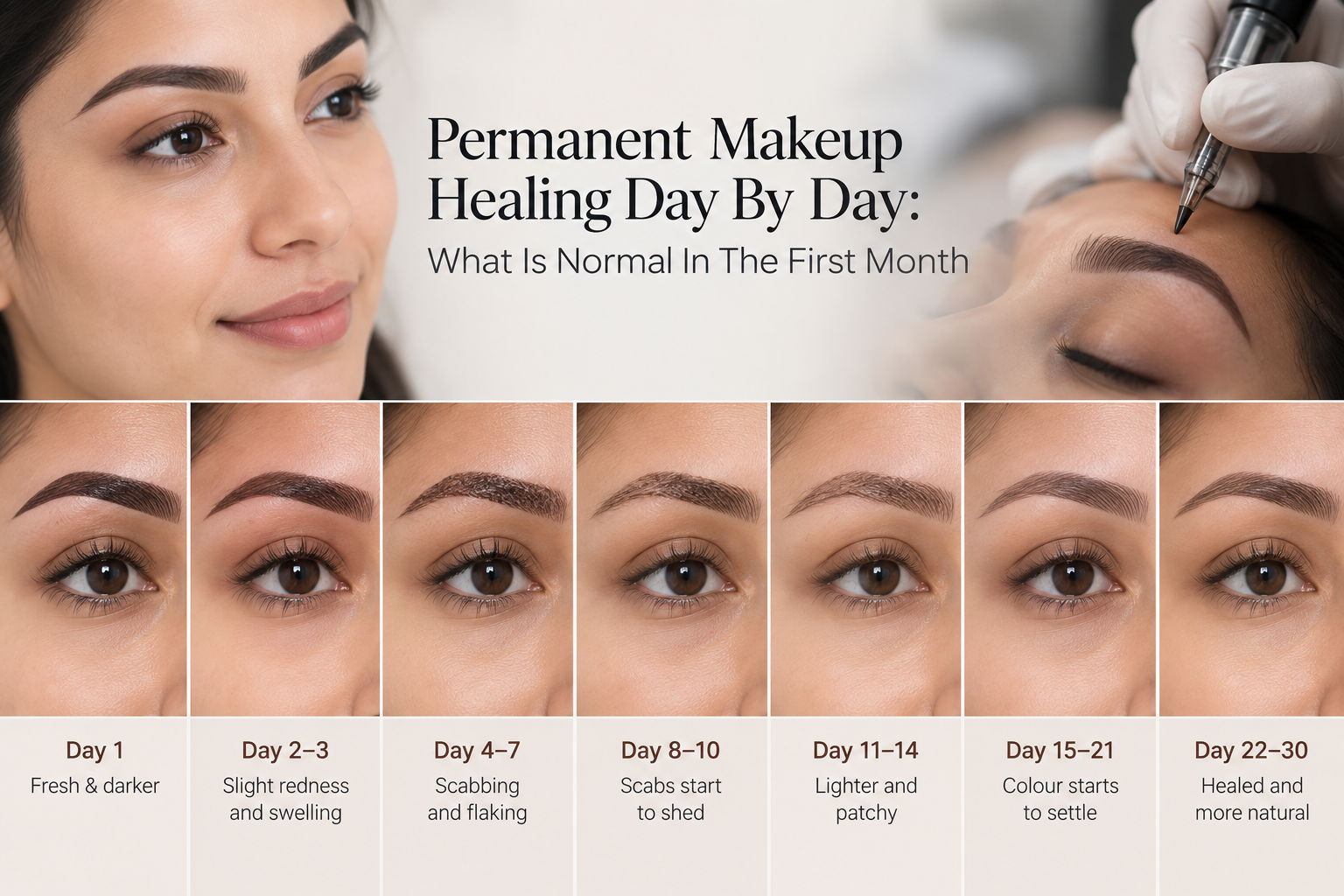
Colour looks darkest on days one to three, flakes between days four and seven, then almost vanishes in week two as the skin regenerates over the pigment. The true healed shade reappears around week three to four, which is when the first perfecting session is booked. This changing appearance is a normal part of the permanent makeup healing process.
Why does the colour look darkest in the first three days?
Fresh permanent makeup usually looks much stronger than the final healed result. Immediately after treatment, newly placed pigment sits beneath skin that has just been treated, while temporary redness, mild swelling and surface changes can make the colour appear even more intense.
During days one to three, you may notice:
- Darker or brighter pigment than expected
- Sharper-looking borders
- Mild redness or tenderness
- Slight swelling
- A tight or dry feeling
- Minor differences between treated areas
This early appearance does not represent the final colour.
If your colour looks too dark after PMU, avoid trying to lighten it with scrubs, acids, home remedies or unapproved skincare. Allow the skin to heal according to the aftercare instructions provided by your practitioner.
The pigment generally begins to soften as surface healing progresses.
For an overview of available treatments, see Semi permanent makeup in Surat.
What happens during the flaking and ghosting phase?
Between approximately days four and seven, the treated surface may become dry and begin to flake.
With eyebrow procedures, people often describe this stage as scabbing after microblading. The amount of visible flaking varies from person to person and between procedures.
The area can temporarily look:
- Patchy
- Uneven
- Dry
- Lighter in certain places
- Darker in other places
Do not pick the flakes
Even when a flake appears ready to fall away, avoid pulling or scratching it.
Picking can disturb the healing surface and may contribute to uneven pigment retention. Allow dry skin and flakes to separate naturally.
Days 8–14: why has the pigment disappeared?
Week two can cause another concern: the colour may suddenly appear extremely faint.
This is commonly called the ghosting phase.
The skin continues to regenerate after visible flaking has finished, temporarily making the pigment appear lighter. It may look as though much of the permanent makeup has disappeared.
Do not immediately assume that the treatment has failed.
A proper assessment should wait until the skin has progressed further through the permanent makeup healing process.
When does the true healed colour appear?
During weeks three and four, the pigment generally becomes easier to assess.
By this stage, the initial darkness and visible flaking have usually settled, while the temporary ghosting effect becomes less noticeable.
The permanent makeup should begin to look:
- Softer
- More natural
- Less intense
- More even
- Better integrated with the surrounding skin
This is also when the practitioner can start assessing actual pigment retention rather than temporary changes caused by healing.
Permanent Makeup Healing Day-by-Day Timeline
| Healing Period | What It May Look Like | Aftercare | Warning Signs |
|---|---|---|---|
| Days 1–3 | Dark, intense colour with possible mild redness or tenderness | Follow prescribed cleansing and aftercare; avoid unnecessary products | Increasing redness, severe pain, marked swelling or concerning discharge |
| Days 4–7 | Dryness, flaking and temporary patchiness | Do not pick or peel flakes | Worsening pain, spreading redness or increasing inflammation |
| Days 8–14 | Colour may appear unusually light during ghosting | Continue gentle care and avoid unnecessary irritation | Persistent or worsening inflammation |
| Days 15–30 | Colour becomes softer and the healed result becomes clearer | Gradually return to normal skincare as advised | Persistent pain, swelling, skin reaction or abnormal discharge |
The exact timeline varies with the procedure, skin response and individual healing. Procedure-specific instructions from your treating practitioner should take priority over a general timeline.
You can also read about Permanent makeup for face in Surat.
When is the first perfecting session considered?
A perfecting or touch-up session should be considered after enough healing has occurred for the practitioner to assess:
- Healed pigment retention
- Final colour
- Shape
- Symmetry
- Lighter areas
- Areas that may need additional pigment
Trying to correct apparent patchiness too early can be misleading because the appearance continues changing during the first few weeks.
Which aftercare mistakes cause patchy healing?
Correct PMU aftercare helps protect the treated skin while it heals. Some avoidable habits can irritate the area or interfere with normal healing.
Picking or peeling flakes
This is one of the most important mistakes to avoid. Pulling flakes away before they separate naturally can disturb the healing surface.
Scrubbing the area
Avoid facial scrubs, cleansing brushes and exfoliating products directly over actively healing permanent makeup.
Using strong skincare products
Retinoids, acids and exfoliating ingredients should not be applied directly over a newly treated area unless your practitioner specifically advises otherwise.
Heavy sweating
Intense exercise can expose the area to sweat, friction and repeated wiping. Follow your practitioner's advice about when you can return to strenuous workouts.
Swimming too early
Pools and other prolonged water exposure should generally be avoided while the treated surface is actively healing. Follow the timeline given for your particular procedure.
Applying makeup too early
Avoid putting conventional makeup directly over an actively healing treatment area until your practitioner says it is appropriate.
Trying to lighten dark pigment yourself
Do not use bleaching products, acids, scrubs or home remedies because the pigment looks dark during the first few days.
Early darkness is expected to soften during healing.
For related aesthetic options, see Non-surgical treatments at Elegance Clinic.
When should you call the studio rather than wait for the touch-up?
Dark colour, mild tenderness, temporary flaking, patchiness and ghosting can occur during normal healing.
However, symptoms that are severe or becoming progressively worse should not simply be ignored until your scheduled touch-up.
Contact your practitioner if you notice:
- Increasing rather than improving redness
- Significant or worsening swelling
- Increasing pain
- Concerning discharge
- Significant warmth around the area
- An unusual or extensive rash
- Possible allergic reaction
- Concerning eye symptoms following eyeliner treatment
If symptoms are severe or rapidly worsening, seek appropriate medical assessment rather than relying only on a routine cosmetic follow-up.
For consultation information, visit Book a permanent makeup consultation.
Conclusion
The permanent makeup healing process changes considerably during the first month. Colour can look darkest during days one to three, followed by flaking around days four to seven and an unexpectedly light ghosting phase during week two.
By weeks three to four, the true healed shade becomes clearer and the practitioner can more accurately assess pigment retention and whether a perfecting session is needed.
Good PMU aftercare means allowing these stages to progress naturally. Avoid picking, scrubbing or trying to correct the colour prematurely, and contact your practitioner if symptoms become increasingly painful, swollen, red or otherwise concerning.
.png)