Lip Blush Micropigmentation For Naturally Dark Lips: What It Can And Cannot Change
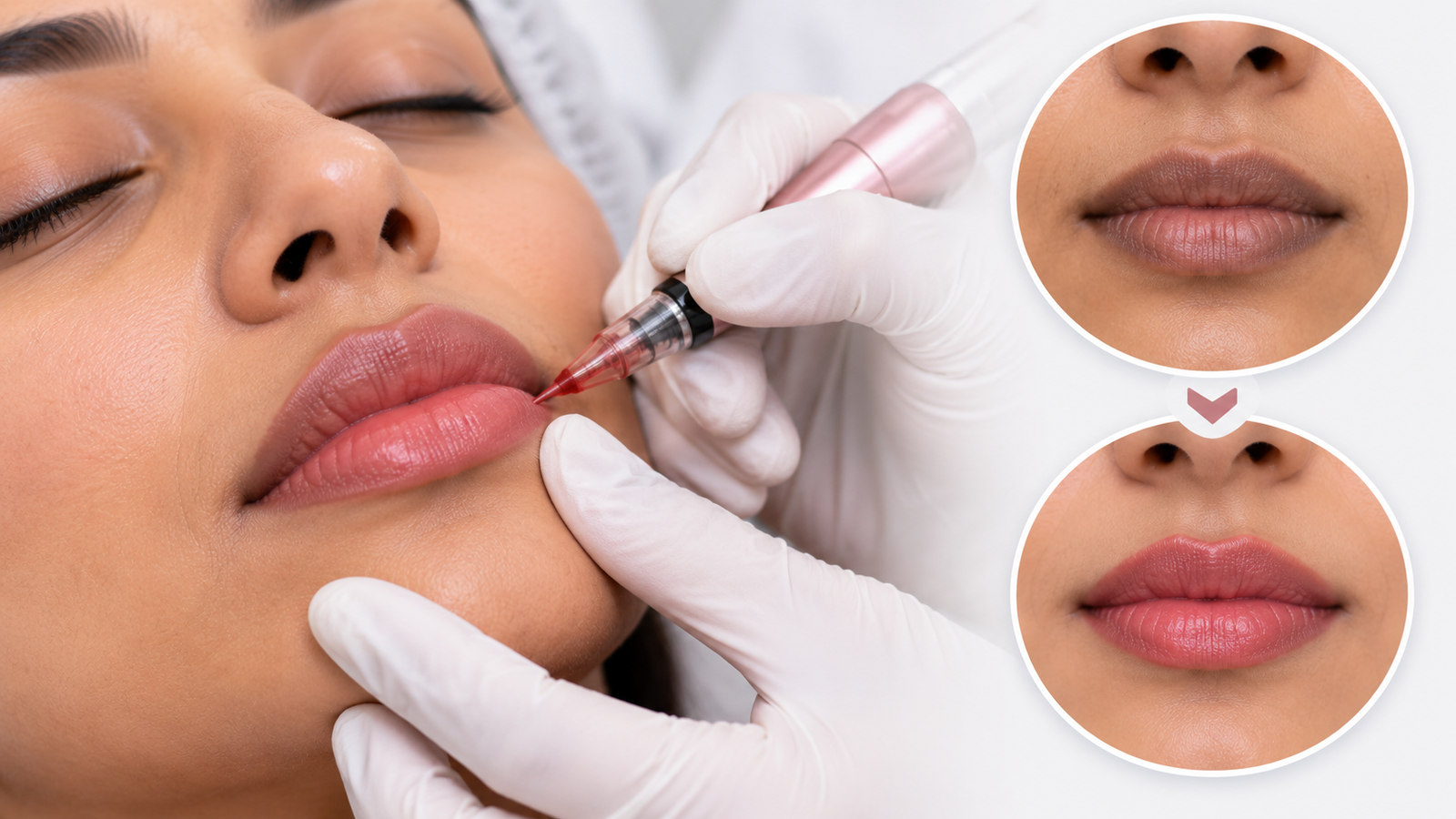
Lip blush for dark lips deposits carefully selected pigment to help even out lip tone and improve border definition. On naturally dark or pigmented lips, the aim is usually to neutralise or balance the existing colour rather than simply turn the lips pink. More deeply pigmented lips may require a neutralisation stage before the desired colour can be built gradually.
Understanding what lip micropigmentation can realistically change is important because the result depends on the starting lip colour, pigment pattern, skin tone, healing response and chosen pigment.
Why Are Some Lips Naturally Darker, and What Does Pigment Correction Actually Do?
Natural lip colour varies significantly from person to person.
Some people naturally have brown, purple, grey, mauve or uneven tones in their lips. Genetics and natural melanin production can play an important role.
Lip colour may also appear different because of lifestyle, environmental exposure, irritation or other causes of pigmentation.
Before treatment, the practitioner should therefore assess whether the darker colour is simply the person's natural lip tone or whether there is an active cause of pigmentation that needs attention.
What Does Lip Blush Actually Do?
Lip blush is a form of lip micropigmentation in which pigment is introduced into the lips to improve the appearance of colour and definition.
For naturally darker lips, treatment may be used to:
- Make uneven colour appear more balanced
- Add warmth to cool or grey-brown tones
- Improve the appearance of the lip border
- Create a more consistent overall lip colour
- Add a subtle tint once healing is complete
The goal should be realistic colour correction rather than completely covering the natural characteristics of the lips.
Can Lip Blush Turn Dark Lips Pink?
Not predictably.
This is one of the most important expectations to understand before undergoing treatment.
Naturally dark lips contain underlying pigment that influences how an implanted colour will heal. Simply placing a light pink pigment over a dark or cool-toned base does not guarantee pink healed lips.
In some cases, the existing tone first needs to be neutralised.
Lip Blush Is Not the Same as Lip Lightening
Lip blush and lip-lightening treatments should not automatically be considered interchangeable.
Lip blush adds pigment to influence the visible colour. A treatment aimed at pigmentation may address the underlying reason the lips have become darker.
If pigmentation is the main concern, read more about lip lightening treatment in Surat.
What Is Lip Neutralisation and When Is an Extra Session Needed?
Lip neutralisation is a colour-correction approach used when the natural lip tone is too dark or cool for the desired pigment to heal predictably.
Rather than immediately trying to create the final colour, the practitioner may first use corrective tones intended to balance the existing base.
Why Is Neutralisation Needed?
Permanent makeup pigments interact visually with the colour already present in the lips.
For example, lips with prominent cool, purple, grey or brown tones may require colour correction before a softer target shade can be developed.
The treatment plan should therefore be based on colour theory and the individual's starting pigmentation.
Does Everyone With Dark Lips Need Neutralisation?
No.
The decision depends on:
- Natural lip colour
- Depth of pigmentation
- Warm or cool undertones
- Whether pigmentation is uniform
- Previous permanent makeup
- Desired final colour
- Condition of the lip skin
Some lips may be suitable for direct lip blush, while others may need one or more colour-correction stages.
Why Might More Than One Session Be Needed?
A very dark natural base cannot always be safely or predictably changed in a single treatment.
The first session may focus mainly on neutralisation. After healing, the practitioner can assess how the colour has settled before deciding whether additional correction or the target shade should be added.
Trying to force a dramatic colour transformation in one session may produce an unnatural or unpredictable result.
What If the Lips Are Becoming Darker?
If the pigmentation is active or changing, the cause should be assessed before simply covering it with pigment.
Permanent makeup should not be used as a substitute for investigating unexplained or evolving changes in the lips.
For a broader overview of pigmentation and cosmetic lip options, see semi permanent makeup in Surat.
What Does Healing Look Like From Day 1 to Week 4?
Fresh permanent lip colour does not look the same as the final healed result.
Immediately after treatment, the lips may look brighter, darker or more intense than expected. The colour then changes during healing.
This is why patients should not judge their final result from photographs taken immediately after treatment.
Lip Blush Healing Timeline
| Healing Stage | How the Colour May Look | What Aftercare Is Generally Allowed | Warning Signs |
|---|---|---|---|
| Day 1–3 | Brighter, darker or more intense than the expected healed colour; mild swelling may occur | Follow prescribed gentle aftercare and keep the area clean | Severe or increasing swelling, significant pain, spreading redness or other concerning symptoms |
| Day 4–7 | Lips may become dry or flaky and colour can appear uneven | Continue prescribed aftercare; allow flakes to shed naturally | Increasing pain, pus, significant inflammation or worsening symptoms |
| Week 2 | Colour may look considerably lighter or temporarily uneven | Gentle normal care according to practitioner instructions | Persistent sores or signs of infection |
| Week 4 | Healed colour becomes easier to assess | Normal lip care unless otherwise instructed | Persistent abnormal changes should be reviewed |
| Touch-up point | Practitioner evaluates retention, tone and remaining uneven areas | Further treatment only after adequate healing | Unhealed or inflamed lips should not be retreated |
Aftercare instructions can vary according to technique and individual circumstances, so the practitioner's specific advice should take priority.
Day 1 to 3: Fresh Colour
Fresh pigment may look much stronger than the shade selected during consultation.
Mild swelling and tenderness may also occur.
This stage should not be used to decide whether the pigment is too bright.
Day 4 to 7: Flaking Stage
As the surface heals, dryness and flaking may occur.
Do not pick or peel healing skin. Removing flakes prematurely can interfere with healing and pigment retention.
Week 2: The Colour May Look Very Light
After the initial surface healing, the colour may appear significantly softer.
Some people worry that the pigment has disappeared completely.
It is better to wait for the full healing period before deciding whether the colour has retained adequately.
Week 4: Assessing the Healed Result
By around the fourth week, the practitioner can begin getting a clearer idea of the healed colour and overall retention.
Any decision about further neutralisation or colour enhancement should be based on the healed result rather than the fresh treatment.
How Long Does the Colour Hold Before It Needs Refreshing?
There is no exact lifespan for lip blush for dark lips that applies to everyone.
Lip blush is designed to fade gradually.
How quickly this happens depends on several factors, including the starting pigmentation, pigment used, technique, individual healing and lifestyle.
Why Does Lip Blush Fade?
Pigment placed through micropigmentation does not necessarily remain at its original intensity indefinitely.
Over time, the colour becomes softer.
This gradual fading is why the treatment is often described as semi-permanent rather than conventional permanent makeup.
What Can Affect Colour Retention?
Retention can be influenced by:
- Individual skin and lip characteristics
- Initial pigmentation
- Pigment selection
- Healing response
- Sun exposure
- Lifestyle
- Aftercare
- Previous lip treatments
- Frequency of exfoliating or irritating products
Because these factors differ, it is better to discuss a likely range and maintenance plan rather than promise that lip blush will last an exact number of years.
Does Darker Lip Pigmentation Need More Maintenance?
Not necessarily more frequent maintenance forever, but the initial correction process may require additional sessions.
A patient requiring neutralisation may first need the base colour corrected and then return after healing for further assessment.
Once an appropriate healed result is achieved, future refresh sessions depend on how the colour fades.
When Should a Refresh Be Considered?
A refresh should be based on the appearance of the healed pigment rather than an automatic calendar date.
If the colour has faded significantly or the patient wants to restore definition, the practitioner can reassess the lips and decide whether another session is appropriate.
Who Is Not Suitable, Including Active Pigmentation and Cold Sores?
Lip blush should not automatically be performed on every person requesting a colour change.
A proper consultation should assess the lips, medical history, pigmentation and expected result first.
Active Cold Sores
Lip procedures can be relevant for people with a history of herpes simplex or cold sores because trauma to the lips may trigger an outbreak.
Anyone with a history of cold sores should tell the practitioner before treatment.
Treatment should not be performed over an active cold sore. Medical advice regarding appropriate prevention or management may be needed.
Active Infection or Significant Inflammation
Lip blush should be postponed if the lips have an active infection, significant inflammation, open sores or another condition that could interfere with healing.
The underlying problem should be managed first.
Unexplained or Changing Pigmentation
If pigmentation is newly appearing, changing rapidly, asymmetric or otherwise unusual, it should be assessed rather than simply covered with cosmetic pigment.
Very Dry, Cracked or Injured Lips
Healthy skin provides a better foundation for treatment.
Severely cracked, irritated or injured lips may need to recover before micropigmentation is considered.
Unrealistic Colour Expectations
Someone expecting very dark natural lips to become permanently pale pink after one session may not be an appropriate candidate until expectations are clarified.
A consultation should explain what can realistically be achieved from the existing base colour.
Previous Lip Pigment
Old permanent makeup can affect the colour plan.
The practitioner should evaluate the existing pigment before deciding whether neutralisation, correction or another approach is suitable.
Individual Medical Considerations
Medical conditions, medicines, allergies and previous reactions should be discussed before treatment.
When appropriate, medical clearance may be advised.
At Elegance Clinic, Dr. Ashutosh Shah and the clinical team can assess the cause and pattern of lip pigmentation and discuss whether cosmetic treatment or another approach is appropriate before proceeding.
You can also explore non-surgical treatments at Elegance Clinic.
Conclusion
Lip blush for dark lips is best understood as colour balancing and enhancement rather than a guaranteed way to turn naturally dark lips pink.
For some people, direct lip blush may be suitable. For others, especially those with deeper brown, grey, purple or cool tones, lip neutralisation may be required before the desired colour can be developed.
The result also changes significantly during healing. Fresh pigment can appear strong during the first few days, become lighter or uneven during healing, and then settle into a softer colour.
A proper consultation should assess your natural lip colour, whether the pigmentation is stable, previous permanent makeup, history of cold sores and the result you hope to achieve.
Most importantly, realistic expectations matter. The aim should be a healed colour that complements your natural lips not an artificial colour promised regardless of your starting pigmentation.
.png)