Ear Piercing For A Baby Girl: What Age Is Sensible, Gun Or Needle, And When To See A Doctor
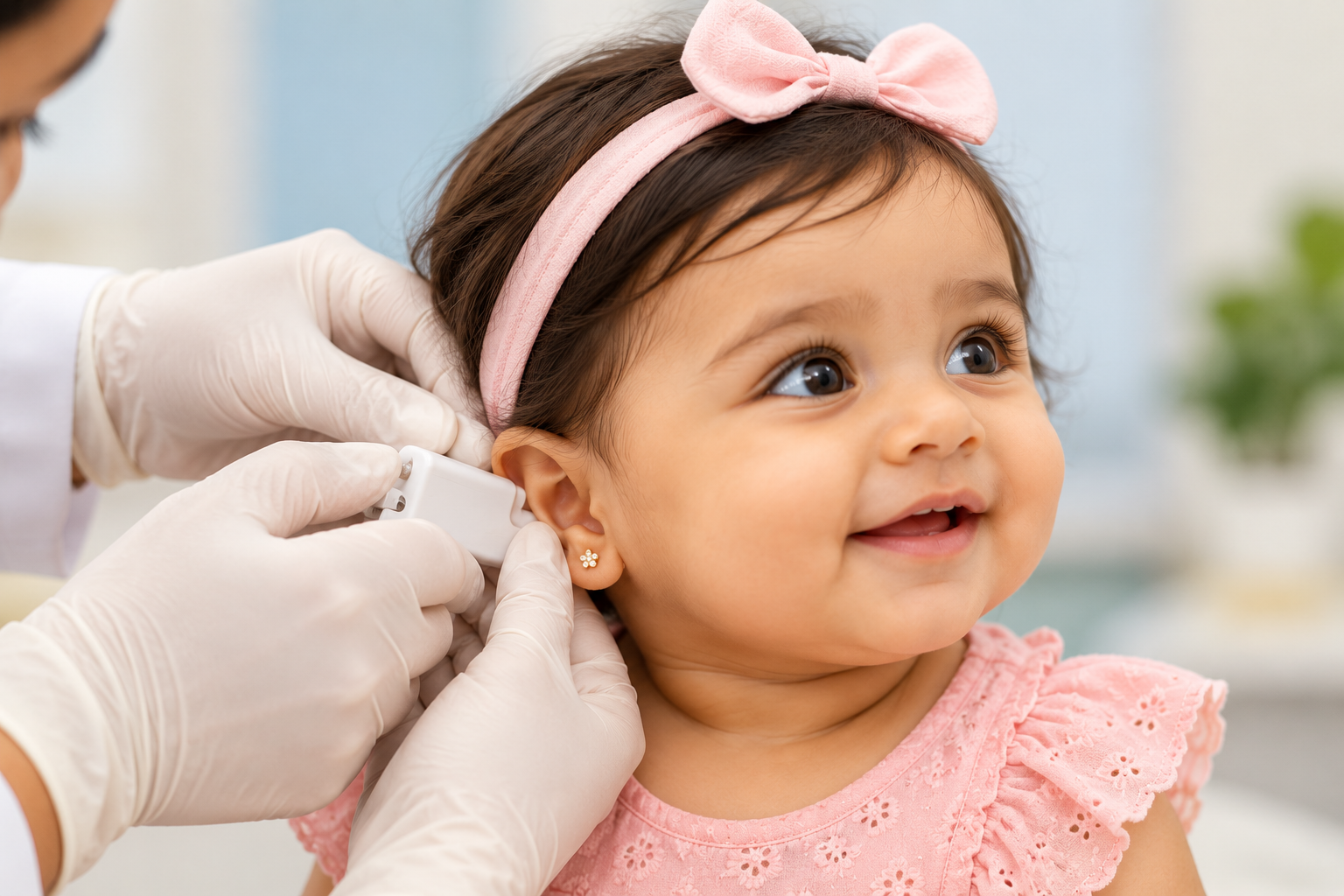
Many paediatric sources suggest waiting until at least 3 to 4 months, after the first vaccines, before piercing a baby's ears, and the American Academy of Pediatrics advises delaying until the child can care for the site. A sterile needle or single-use cartridge, a flat-backed medical-grade stud and correct placement matter more than the exact age.
For parents searching for the right ear piercing for baby girl age, there is no single birthday that makes piercing completely risk-free. Hygiene, sterile equipment, jewellery material, placement and aftercare are equally important.
Cultural traditions such as Karnavedha may influence when a family wants piercing performed. From a medical perspective, however, the priority should be a clean procedure and a plan for recognising infection, allergy or an embedded earring early.
What Age Do Doctors Suggest for Piercing a Baby's Ears?
Parents commonly ask whether ears should be pierced during the newborn period, after the first few months or when the child is old enough to request it.
The American Academy of Pediatrics takes the most conservative approach: piercing can be performed at any age if done carefully, but as a general guideline it recommends postponing it until the child is mature enough to care for the pierced site herself.
Some families nevertheless choose infant piercing for cultural or personal reasons. When piercing is planned during infancy, waiting until the baby has started receiving routine vaccinations provides a practical opportunity to discuss timing and general health with the child's paediatrician.
The ideal ear piercing for baby girl age therefore depends not only on tradition but also on the baby's health and the family's ability to maintain aftercare.
Piercing should be postponed if the baby is unwell, has fever, has an active skin infection around the ears or has another medical issue for which the paediatrician recommends waiting.
Parents who want to understand how piercing may be performed in a clinical setting can view ear piercing at the clinic (video).
Is a Needle or a Piercing Gun Safer for a Baby?
The important distinction is not simply “gun versus needle.” The sterility and design of the equipment matter.
A traditional reusable spring-loaded piercing gun can create concerns because parts of the device may be difficult to sterilise completely and the stud is pushed through the tissue using force.
A sterile single-use needle allows controlled piercing when used by an appropriately trained professional. Modern single-use cartridge systems are another option because the parts contacting the ear and jewellery are discarded after use.
For a baby, ask specifically:
-
Is the equipment sterile and single-use?
-
Does the operator wash hands and wear clean gloves?
-
Is the jewellery sterile?
-
Is each ear marked before piercing?
-
Can the parent inspect the marks for symmetry?
-
Is the backing designed to avoid excessive pressure?
-
What written aftercare instructions will be provided?
At Elegance Clinic, placement should be marked before piercing so the parent can check the position and symmetry before the procedure begins. This is especially useful because a small difference in position can become more noticeable as the child grows and wears different earrings.
Which Earring Metal and Back Design Is Safe?
The first earring should prioritise biocompatibility and healing rather than appearance.
Nickel is a common cause of allergic contact dermatitis, so jewellery with significant nickel exposure is not a good choice for a fresh piercing.
Depending on the piercing system, suitable options may include implant-grade titanium or appropriately manufactured medical-grade jewellery. Gold may be considered when its composition and quality are suitable, but simply being described as “gold” does not automatically make an earring appropriate for a new piercing.
The backing matters too.
A very tight conventional butterfly back can press against swollen tissue and may trap moisture and debris. A correctly fitted flat-backed or medical piercing stud can provide more appropriate space for initial swelling.
Jewellery should not be so loose that a baby can easily pull it out, but it should not compress the earlobe either.
Baby Ear-Piercing Safety Checklist
| Check | What parents should confirm |
|---|---|
| Age | Timing discussed according to the baby's health, vaccinations and paediatric advice |
| Method | Sterile single-use needle or appropriate sterile single-use system |
| Stud metal | Suitable medical-grade, low-allergy material |
| Back type | Secure design with enough room for normal swelling |
| Placement mark | Both ears marked and symmetry checked with the parent before piercing |
| Aftercare | Clear instructions for cleaning and handling |
| Watch for | Increasing redness, spreading swelling, pus, fever or worsening pain |
| Emergency concern | Earring or backing becoming embedded in the earlobe |
How Should the Piercing Be Cleaned for the First Six Weeks?
Good aftercare is one of the most important parts of infant ear piercing.
Wash your hands before touching the baby's ears. Follow the cleaning instructions provided by the clinician or piercing professional and avoid repeatedly handling the jewellery when it is unnecessary.
During healing:
-
Keep the piercing clean as instructed.
-
Touch the ears only with clean hands.
-
Avoid unnecessary pulling or twisting.
-
Do not apply unprescribed harsh antiseptics or home remedies.
-
Watch whether clothing or towels repeatedly catch on the earrings.
-
Check that the backing is not becoming tight against the skin.
-
Watch both the front and back of the earlobe for increasing redness or swelling.
Do not rush to change the first earrings simply because the outside of the piercing looks normal. The channel inside the earlobe still needs time to heal.
Your clinician can tell you when the initial jewellery can safely be changed based on healing and the piercing method used.
Which Signs Mean the Baby Needs to See a Doctor?
Mild local tenderness immediately after piercing is different from an infection that progressively worsens.
Seek medical assessment if you notice:
-
Redness spreading beyond the piercing
-
Increasing swelling
-
Significant warmth around the earlobe
-
Pus or persistent discharge
-
Increasing tenderness
-
Fever or an unwell baby
-
Jewellery becoming embedded in the skin
-
The earring backing disappearing into the earlobe
-
A significant allergic-looking rash
-
Bleeding that does not settle
An embedded earring back should not be forcibly dug out at home. Trying to remove it using needles, tweezers or repeated squeezing can cause additional tissue injury and introduce infection.
A clinician can examine how deeply the jewellery is embedded and determine the safest way to remove it.
Choosing Baby Ear Piercing Near Vesu: What Should Parents Check?
When considering baby ear piercing near vesu, do not choose a provider based only on speed, jewellery design or price. Ask how the equipment is sterilised, whether single-use components are used, what material the first stud contains and how placement is checked before piercing.
Parents should also know whom to contact if swelling, infection or an embedded stud develops afterward.
At Elegance Clinic, Dr. Ashutosh Shah can assess ear-related concerns and advise parents when a problem after piercing needs medical attention. A clinical assessment becomes particularly important when an earring has become embedded, the earlobe is significantly swollen or the piercing has caused tissue damage.
If you need an assessment, you can book a clinic appointment.
What If the Piercing Becomes Uneven or the Earlobe Tears Later?
A piercing that initially looks slightly uneven does not always need immediate correction, particularly while swelling is present.
Allow the area to settle before judging the final position.
If the piercing is clearly misplaced, a clinician may advise allowing it to close completely before considering re-piercing. Do not immediately create another hole beside a fresh piercing without appropriate advice.
Problems can also develop years later. Heavy earrings, accidental pulling or progressively stretched piercing holes can split or elongate the earlobe.
For these problems, parents or older patients can learn about earlobe repair if a hole tears later or review available ear repair treatment.
Safe Piercing Is More Than Choosing the Right Age
When parents search for the ideal ear piercing for baby girl age, it is easy to focus entirely on whether the baby should be three months, six months or older.
Age is only one part of safe piercing.
The method should be sterile, the jewellery should be appropriate for fresh tissue, the placement should be checked before piercing and parents should receive clear aftercare instructions.
Most importantly, know the warning signs that should not be managed at home. Spreading swelling, pus, fever or an embedded earring deserves medical assessment.
A carefully planned piercing with appropriate hygiene, jewellery and follow-up is more important than choosing a date simply because it is traditional or convenient.

.png)