Why Your Fake Teeth May Not Feel Comfortable
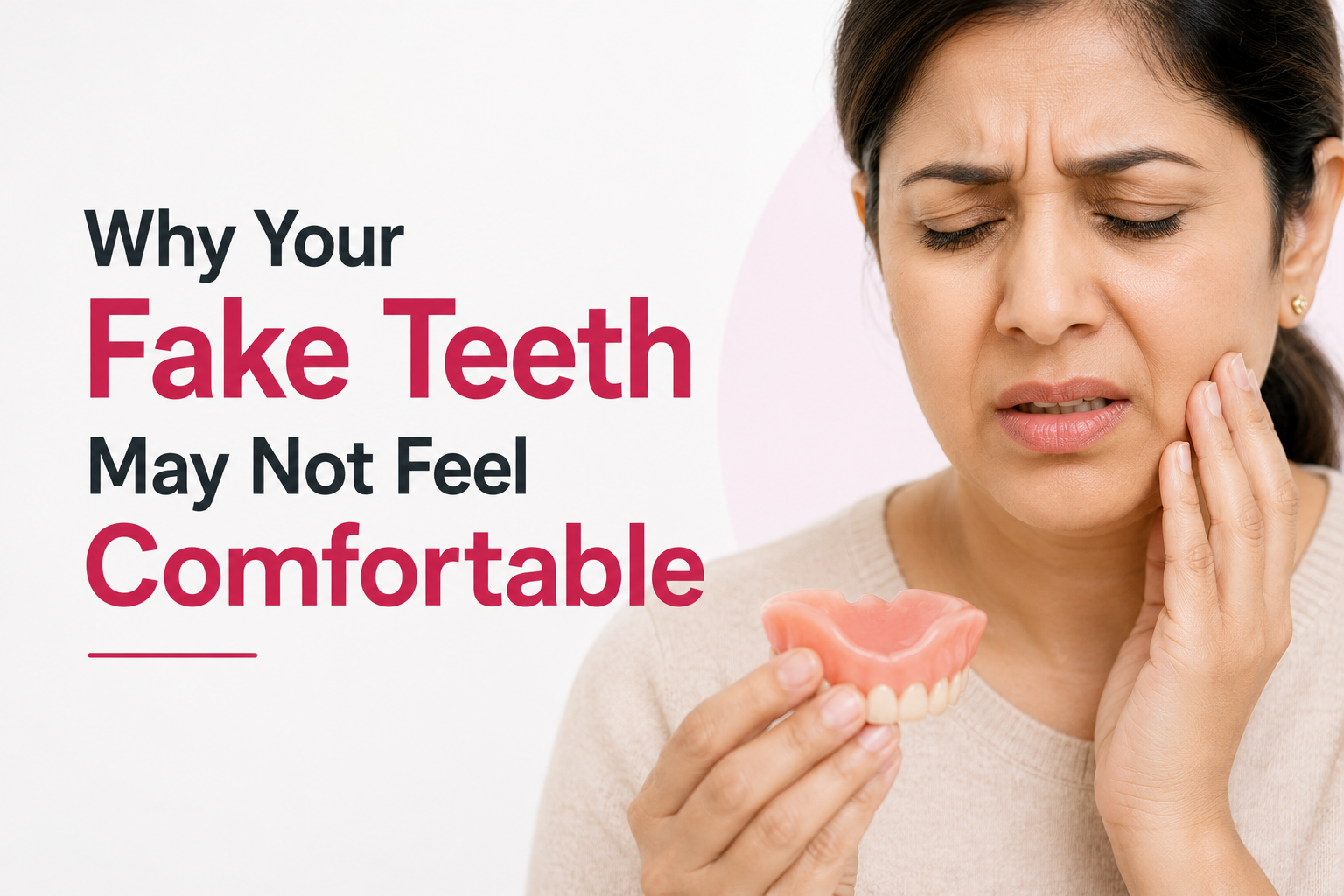
If your dentures feel loose, cause gum soreness, make chewing difficult, or seem awkward while speaking, the problem may not be the dentures themselves it may be the fit, design, bite alignment, or adjustment process.
For people looking for comfortable fake teeth in Surat, understanding why discomfort happens can help you choose a denture solution that fits your mouth and lifestyle more effectively.
Why Do Fake Teeth Feel Uncomfortable?
Fake teeth or dentures may feel uncomfortable because of poor fit, changes in the gums and jawbone, incorrect bite alignment, pressure points, unsuitable denture design, or insufficient adjustment after placement.
A properly evaluated and fitted denture can improve comfort, chewing ability, speech, appearance, and confidence.
1. Your Dentures May Not Fit Properly
One of the most common reasons dentures feel uncomfortable is an inaccurate or changing fit.
A denture that is too loose may:
- Move while eating or speaking
- Rub against the gums
- Make chewing difficult
- Affect speech
- Create insecurity while smiling or talking
On the other hand, a denture that puts excessive pressure on certain areas can cause soreness or irritation.
What helps?
Professional denture fitting and adjustments can help identify areas where the appliance is creating unnecessary pressure or movement.
2. Your Gums and Jawbone Can Change
Your mouth does not remain exactly the same after tooth loss.
Over time, the jawbone can gradually change shape because the natural tooth roots are no longer stimulating it. The gums can also change.
As a result, dentures that initially fit well may eventually become:
Comfortable → less stable → loose or irritating
This is one reason regular dental evaluation is important, particularly if your dentures have become uncomfortable after previously feeling fine.
3. Your Bite May Need Adjustment
Comfort isn't only about how the denture sits on your gums.
Your upper and lower teeth also need to come together appropriately.
If the bite is not balanced, you may notice:
- Difficulty chewing
- Pressure in certain areas
- Denture movement
- Jaw fatigue
- Uneven contact between the teeth
A professional evaluation can determine whether the denture requires adjustment or whether another denture solution would be more appropriate.
4. There Can Be an Adjustment Period
Even well-made dentures may initially feel different from natural teeth.
Your mouth needs time to adapt to:
- The presence of the denture
- A new bite
- Speaking with the appliance
- Chewing with artificial teeth
- Changes in saliva flow
Some people experience mild soreness or increased saliva initially.
However, persistent or worsening discomfort should not simply be ignored. A dental professional can check whether the denture needs adjustment.
What Makes Fake Teeth More Comfortable?
Think of denture comfort as a combination of several factors rather than just the material.
| Factor | Why It Matters |
|---|---|
| Accurate fit | Helps reduce movement and gum irritation |
| Proper bite | Supports more comfortable chewing |
| Denture design | Can influence stability and everyday use |
| Quality impressions | Helps create a more precise appliance |
| Adjustments | Corrects pressure points and fit problems |
| Oral health | Healthy gums can improve tolerance |
| Follow-up care | Helps address changes over time |
This is why simply searching for the cheapest “fake teeth” may not provide the best long-term experience.
Removable vs Fixed Fake Teeth: Which Is More Comfortable?
There isn't one option that is automatically best for everyone.
Removable Dentures
Removable dentures can be taken out for cleaning and maintenance. They may be suitable for people who need to replace several or all missing teeth.
Their comfort depends heavily on:
- Fit
- Stability
- Gum condition
- Denture design
- Proper adjustment
Fixed Tooth Replacement
Fixed solutions are designed to remain in place rather than being removed by the patient.
Depending on your dental condition, number of missing teeth, bone support, and overall oral health, your dentist may discuss different tooth-replacement options.
The most comfortable choice is ultimately the one that is appropriately matched to your mouth and needs.
How Are Comfortable Fake Teeth Made?
A professional denture process generally involves more than simply creating artificial teeth.
Step 1: Dental Evaluation
Your dentist evaluates your remaining teeth, gums, jaw, bite, and overall oral condition.
Step 2: Measurements and Impressions
Accurate measurements and impressions help create a denture that is designed for your individual mouth.
Step 3: Denture Design
The artificial teeth and supporting structure are planned according to your oral anatomy and functional requirements.
Step 4: Trial Fitting
A trial stage can help assess the appearance, bite, and fit before the final appliance is completed.
Step 5: Placement and Adjustment
Once the denture is delivered, adjustments may be made if particular areas feel uncomfortable.
Step 6: Follow-Up
Follow-up allows your dentist to assess how you are adapting and whether additional adjustments are required.
Can Comfortable Fake Teeth Help You Eat Normally?
Yes, properly fitted dentures can help restore chewing function, although adjustment may take time.
People who are new to dentures may initially find certain foods difficult to chew. Starting with softer foods and gradually introducing different textures can help with adaptation.
Chewing slowly and using both sides of the mouth may also improve stability while learning to use new dentures.
If your dentures repeatedly slip, cause pain, or make eating difficult, professional assessment is recommended rather than continuing to tolerate the problem.
What About Speaking With Fake Teeth?
Speech can temporarily feel different after getting dentures.
You may notice changes when pronouncing certain sounds because your tongue is adapting to the new appliance.
With practice, many people become more comfortable speaking with their dentures.
Reading aloud or having regular conversations can help you adapt. However, if dentures repeatedly move while speaking, the fit should be checked.
When Should You Get Your Dentures Checked?
Don't assume discomfort is something you simply have to live with.
Consider a dental evaluation if you experience:
- Persistent gum soreness
- Repeated denture slipping
- Difficulty chewing
- Pain while wearing dentures
- Difficulty speaking
- Frequent mouth irritation
- A noticeable change in denture fit
- Dentures that no longer feel stable
These symptoms can indicate that your dentures need adjustment, replacement, or a different tooth-replacement approach.
Comfortable Fake Teeth in Surat: Choosing the Right Approach
If you're searching for comfortable fake teeth in Surat, the goal should not simply be to find artificial teeth that look natural.
A successful denture should also be evaluated for:
Comfort + Fit + Function + Stability + Appearance
At Elegance Clinic in Surat, patients can discuss their missing-tooth concerns and explore suitable removable or fixed denture options based on their individual dental needs.
Dr. Ashutosh Shah can assess your oral condition and help determine which tooth-replacement approach may be appropriate for you.
Key Takeaways
- Uncomfortable fake teeth are often related to fit, bite, pressure points, or changes in the mouth.
- Even well-made dentures can require an adjustment period.
- Proper measurements and professional fitting can improve denture comfort.
- Loose or painful dentures should be evaluated rather than tolerated.
- Removable and fixed tooth-replacement options have different advantages.
- The right solution depends on your oral health, number of missing teeth, jaw support, lifestyle, and treatment goals.
- For people searching for comfortable fake teeth in Surat, a professional dental consultation is an important first step.
Conclusion: How to Get More Comfortable Fake Teeth in Surat
Fake teeth don't have to mean constantly dealing with slipping, soreness, or difficulty eating.
Comfort starts with the right diagnosis, accurate fitting, appropriate denture design, and necessary adjustments. If your existing dentures feel uncomfortable—or you're considering dentures for the first time—a dental evaluation can help identify the most suitable option for you.
Looking for Comfortable Fake Teeth in Surat?
Elegance Clinic provides denture and tooth-replacement solutions designed around individual dental needs. Schedule a consultation to discuss your missing teeth, denture concerns, fit, comfort, and available treatment options.
Book a consultation with Elegance Clinic in Surat and take the first step toward a more comfortable, confident smile.