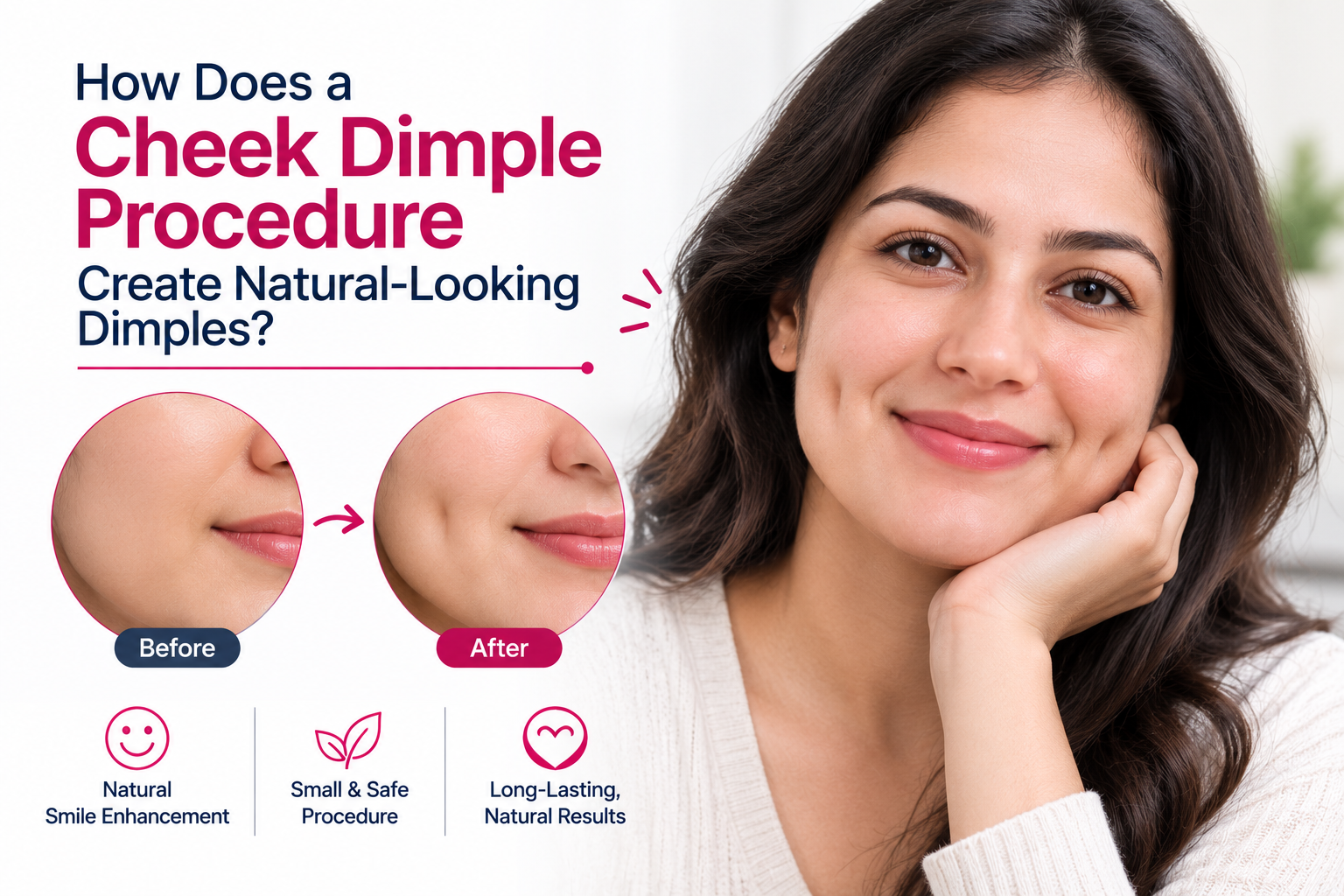
How Does a Cheek Dimple Procedure Create Natural-Looking Dimples?
A smile can change the entire appearance of the face, and cheek dimples can add a subtle sense of character and expression. While natural dimples are largely related to individual facial anatomy and the way facial muscles connect with the skin, modern cosmetic surgery can recreate a similar effect through dimpleplasty, also known as a cheek dimple procedure.
For people considering a Cheek Dimple Procedure in Surat, the goal is not simply to create a visible indentation. The procedure should be carefully planned so that the dimple complements the person's smile, facial proportions and overall appearance.
What Is a Cheek Dimple Procedure?
A cheek dimple procedure is a minimally invasive cosmetic surgery designed to create one or more dimples on the cheeks.
Natural dimples generally occur because of variations in the underlying facial muscle and its attachment to the skin. When a person smiles, the muscle pulls the skin inward, producing the characteristic depression. Dimpleplasty aims to reproduce this relationship surgically by creating a controlled connection between the inner cheek tissues and the skin.
Unlike fillers or makeup techniques that temporarily change facial appearance, dimple creation surgery is intended to produce a lasting structural change.
How Does Dimpleplasty Create a Natural-Looking Dimple?
The key to a natural result is controlled positioning and tissue attachment rather than simply making a hole or indentation in the cheek.
During a typical dimple creation procedure:
- Facial assessment and dimple positioning
The desired location is assessed while the patient smiles. Facial proportions, existing asymmetry and the natural movement of the cheek are considered. - Local anaesthesia
The treatment area is numbed to improve comfort during the procedure. Dimpleplasty is commonly performed using local anaesthesia. - Small internal access point
The surgeon works through the inside of the cheek, avoiding a conventional visible facial scar. - Creation of a controlled skin-muscle connection
A specialised suturing technique is used to connect deeper cheek tissues with the dermal layer of the skin. This creates the tethering effect responsible for the dimple. - Formation of the cheek indentation
As the cheek heals, the controlled attachment allows the skin to pull inward with facial movement, particularly while smiling.
This dynamic behaviour is important because a well-designed dimple should ideally complement facial expressions rather than look like an unrelated depression on the cheek.
Why Dimple Placement Matters
One of the most important aspects of a Cheek Dimple Procedure in Surat is deciding exactly where the dimple should be positioned.
A dimple that is too close to the nose, too low on the cheek or poorly matched to the opposite side can make the result look less natural. Surgeons therefore evaluate the face dynamically rather than relying only on measurements taken while the face is relaxed.
Factors that may be considered include:
- Facial width and proportions
- Cheek structure
- Smile pattern
- Existing facial asymmetry
- Desired dimple depth
- Whether the patient wants one or two dimples
- The relationship between the cheeks, mouth and eyes
The scientific literature also describes marking the proposed dimple at the point where the cheek naturally shows maximum depression during facial movement.
Can You Choose One Dimple or Two?
Yes, dimple creation can generally be planned for one cheek or both cheeks, depending on the individual's aesthetic preference and facial structure.
Some people prefer bilateral dimples for a balanced appearance, while others choose a single dimple for a more distinctive look. The decision should be made after a facial assessment rather than simply copying the position of another person's dimples.
What Makes Surgical Dimples Look Natural?
A natural-looking result depends on several factors rather than the procedure alone.
1. Appropriate positioning
The dimple should fit the patient's existing facial proportions.
2. Controlled depth
An excessively deep indentation may look artificial. A subtle depression can blend more naturally with the smile.
3. Dynamic movement
The ideal result should interact with facial expressions and become more noticeable during smiling.
4. Individual anatomy
Skin thickness, cheek tissue and facial muscle anatomy can influence the final appearance.
5. Surgical technique
Different dimpleplasty techniques exist, and the appropriate technique depends on the patient's anatomy and the surgeon's approach.
Is the Cheek Dimple Procedure Permanent?
Dimpleplasty is generally performed with the intention of creating a long-lasting or permanent dimple, but the final appearance can vary between individuals.
During healing, a newly created dimple may initially appear more pronounced even when the face is relaxed. As the tissues settle, its appearance can soften and become more dynamic. Some techniques and individual healing patterns can produce different degrees of permanence, so patients should discuss realistic expectations during consultation.
Therefore, it is better to view the procedure as a long-term facial enhancement, rather than expecting an identical result to naturally occurring dimples.
What Is Recovery Like After Dimple Creation Surgery?
Because dimpleplasty is usually performed through the inner cheek, there is generally no conventional external facial incision. Recovery is typically relatively short, although swelling, tenderness or temporary changes in the appearance of the dimple can occur.
Your surgeon may recommend:
- Maintaining careful oral hygiene
- Following dietary instructions during the initial healing period
- Avoiding unnecessary irritation of the treated area
- Taking prescribed medicines as directed
- Attending follow-up appointments
- Allowing the cheek tissues sufficient time to settle
Recovery recommendations can differ according to the surgical technique and individual healing.
Is Cheek Dimple Surgery Safe?
Like any surgical procedure, dimpleplasty has potential risks. These can include infection, bleeding, swelling, asymmetry, changes in dimple appearance and unsatisfactory cosmetic results. Rare complications can involve injury to nearby structures, which is why appropriate anatomical knowledge and surgical planning are important.
A consultation allows the surgeon to determine whether the procedure is appropriate and explain its potential benefits and limitations.
Who May Consider a Cheek Dimple Procedure?
A Cheek Dimple Procedure in Surat may be considered by adults who:
- Want to add dimples to their smile
- Prefer a subtle facial enhancement
- Do not naturally have prominent dimples
- Want to enhance faint existing dimples
- Prefer one or two cheek dimples
- Have realistic expectations about the outcome
- Are medically suitable for a minor cosmetic procedure
The suitability of treatment should always be determined through an individual consultation.
Why Choose Professional Dimple Creation in Surat?
Choosing a qualified cosmetic or plastic surgeon is particularly important because dimple placement requires an understanding of facial anatomy, muscle movement and facial proportions.
At Elegance Clinic, the focus can be placed on personalised facial assessment and creating a result that complements the individual's natural appearance. Dr. Ashutosh Shah can evaluate the desired dimple position and discuss the appropriate approach based on facial anatomy and aesthetic goals.
Cheek Dimple Procedure vs Natural Dimples
| Feature | Natural Dimples | Dimpleplasty |
|---|---|---|
| Cause | Natural facial anatomy | Surgically created tissue connection |
| Present from birth | Often | No |
| Custom placement | No | Can be planned |
| One or both cheeks | Naturally variable | Can be selected |
| Appearance | Naturally dynamic | Designed to mimic natural movement |
| Treatment required | No | Minor cosmetic surgery |
Key Takeaways
- A Cheek Dimple Procedure in Surat is also known as dimpleplasty.
- The procedure creates a controlled connection between cheek tissues and the skin.
- Proper dimple positioning is essential for a natural-looking result.
- Dimples can be created on one or both cheeks.
- Dimpleplasty is generally performed under local anaesthesia.
- The incision is typically made inside the cheek, so there is no conventional visible external scar.
- Final results can change as swelling decreases and the tissues heal.
- Individual results vary, making personalised consultation important.
Conclusion
A Cheek Dimple Procedure in Surat can provide a subtle way to enhance the character of a smile without changing the overall structure of the face. The procedure works by creating a carefully controlled attachment between the skin and deeper cheek tissues, allowing the skin to form a dimple with facial movement.
The most natural results depend on precise placement, appropriate depth, facial symmetry, individual anatomy and careful surgical technique. If you are considering dimple creation surgery, a personalised assessment is the best way to understand whether the procedure suits your facial features and aesthetic goals.
Looking for cheek dimple creation in Surat? Consult Elegance Clinic to discuss your desired dimple position, expected results, procedure technique and recovery. Schedule a consultation with Dr. Ashutosh Shah to determine the most suitable approach for your facial features.